

Carbon Filter Not Working: Leaks, Speed, Humidity, and Breakthrough
When the unmistakable, pungent aroma of flowering cannabis escapes an indoor cultivation space and permeates residential living quarters or neighborhood streets, growers immediately realize their carbon filtration system has suffered catastrophic failure. Odor breakthrough is not merely a cosmetic annoyance; in residential and commercial settings alike, uncontrolled botanical odors invite landlord disputes, municipal code citations, law enforcement scrutiny, and devastating security breaches. Faced with sudden odor leakage, cultivators frequently blame defective virgin carbon and rush to replace their filter canisters, only to find that the new filter leaks odor just as severely within forty-eight hours.
Diagnosing an ineffective carbon filter requires looking beyond the canister casing to understand the physical chemistry of molecular adsorption and fluid dynamics. Activated carbon does not function like a mechanical sieve that traps physical particles; it operates via van der Waals forces, physically adsorbing volatile organic compounds (VOCs), monoterpenes, sesquiterpenes, and organic thiols onto microscopic micropore surfaces. When a carbon filter fails to scrub exhaust air completely, the breakdown is almost invariably caused by physical and thermodynamic operational errors: excessive air velocity stripping contact dwell time, high relative humidity flooding carbon pores with liquid water, or micro-fissure duct leaks bypassing the carbon bed entirely.
Physical Chemistry Principle: The Contact Dwell Time Equation
For activated carbon to capture volatile terpene molecules effectively, the contaminated air stream must remain in physical contact with the carbon bed for a minimum critical duration known as contact dwell time (or residence time). In horticultural odor control, the minimum effective contact dwell time is strictly 0.10 to 0.15 seconds. If an oversized inline fan forces air through a thin carbon bed at high velocity, dwell time drops below 0.05 seconds. The terpene molecules blast past the carbon granules too rapidly for van der Waals adsorption to occur, resulting in immediate, severe odor breakthrough regardless of carbon quality.
Calculating contact dwell time demystifies why simply buying a higher-CFM exhaust fan often ruins odor filtration. Dwell time is mathematically defined as the physical volume of the packed carbon bed (in cubic feet) divided by the volumetric airflow rate (in cubic feet per minute) multiplied by 60 seconds. A compact 6-inch carbon filter containing 0.35 cubic feet of packed carbon operating at 150 CFM provides a healthy dwell time of 0.14 seconds. If the grower replaces the fan with a high-velocity 450 CFM unit, dwell time plummets to 0.046 seconds, and intense cannabis terpenes immediately exhaust untreated into the outside air.
Furthermore, relative humidity (RH) plays a profoundly destructive role in carbon adsorption physics. Activated carbon is naturally porous and hydrophilic at elevated vapor pressures. When relative humidity in the exhaust stream exceeds 70 percent, water vapor molecules compete aggressively with volatile organic terpenes for binding sites across the carbon micropores. At 80 percent RH and above, capillary condensation occurs: water vapor condenses into liquid water inside the microscopic pores, physically flooding the carbon bed and destroying its adsorption capacity.

To eliminate odor breakthrough permanently, indoor cultivators must execute a systematic diagnostic protocol. By auditing duct connection seals, matching fan speed to carbon bed dwell volume, controlling exhaust air psychrometrics, and recognizing physical carbon compaction settlement, growers restore total molecular filtration and establish absolute perimeter stealth.
This technical troubleshooting guide breaks down the fluid mechanics, thermodynamic limits, and inspection sequences required to diagnose, repair, and commission high-performance cannabis odor filtration systems across all cultivation scales.
Defining the Odor Breakthrough Problem and Controlling Variables
A Rigorous Odor Diagnosis Begins by Defining
A rigorous odor diagnosis begins by defining the specific physical and fluid dynamic variables governing molecular gas-phase adsorption. The controlling parameters include volumetric airflow rate (CFM), carbon bed static pressure drop (inches of water gauge), superficial air face velocity (feet per minute), relative humidity (RH percentage), exhaust air dry-bulb temperature, carbon bed depth (inches), and the specific surface area and CTC (carbon tetrachloride) activity rating of the virgin activated carbon.
Cultivators must distinguish between mechanical bypass leakage and molecular carbon breakthrough. Mechanical bypass leakage occurs when untreated, terpene-laden air escapes the grow enclosure without physically passing through the activated carbon bed. This is almost always caused by loose worm-drive duct clamps, pinhole tears in flexible aluminum ducting, unsealed tent zip seams, or negative pressure failure. Molecular carbon breakthrough occurs when air passes directly through the carbon bed, but the carbon fails to adsorb the volatile terpenes due to velocity over-speed, pore saturation, or water vapor flooding.
“My 6-inch carbon filter is only three months old, but during week six of flowering I suddenly started smelling strong weed outside my exhaust vent. I am running a 6-inch inline fan at 100% speed. Why is my filter already failing?”
Question sent by: Reid Ashworth, via email.
Your filter has not necessarily reached the end of its chemical lifespan; it is almost certainly suffering from either high air velocity or moisture saturation. If your fan moves 400 CFM through a filter rated for 300 CFM, the air velocity is too fast for terpenes to bind to the carbon pores. Additionally, if your flowering tent humidity is running above 70% at night, water vapor has condensed inside the carbon pores, blocking terpene adsorption. Throttle your fan speed down by 25 to 30 percent to increase dwell time, and lower your relative humidity below 60 percent. In most cases, odor scrubbing is restored immediately.
Julians Inquiry Highlights the Two Most Common
Julian’s inquiry highlights the two most common culprits behind premature filter failure: excessive volumetric velocity and excessive hygrometric moisture. When an inline fan is run at 100 percent speed without considering the maximum scrub rating of the attached canister, the air simply moves too fast. In high-velocity air streams, monoterpenes (such as limonene, pinene, and myrcene) bounce off carbon granules rather than diffusing into the deep micropores where capillary adsorption occurs.
Furthermore, week six of bloom represents the exact biological phase when plant transpiration peaks. A dense flowering canopy transpiring multiple gallons of water daily can easily drive tent exhaust humidity to 75 or 80 percent during the dark cycle. The combination of maximum terpene output and high transpirational moisture overwhelms the carbon bed, triggering sudden odor breakthrough that growers mistakenly interpret as a worn-out filter.
System Layout: Canister Placement, Fan Configuration, and Leak Geometry
The Physical Orientation and Spatial Arrangement
The physical orientation and spatial arrangement of ventilation components dictate whether an exhaust system operates with airtight integrity or leaks odor through mechanical flaws. A classic debate among cultivators is whether to pull air through the carbon filter (suction configuration) or blow air through the filter (push configuration).
The most proven, fail-safe layout for indoor cultivation is the negative-pressure suction configuration, where the carbon filter is suspended at the highest ceiling point inside the grow tent, connected directly to the intake collar of the inline fan. The fan then pushes scrubbed air out through the exhaust ductwork. In this suction layout, the entire duct connection between the filter and the fan is situated inside the grow tent and operates under negative static pressure. If a small pinhole or loose clamp exists at the filter collar, the fan simply sucks dirty tent air inward through the hole and pushes it through the exhaust; it never leaks untreated odor into the surrounding room.
“My grow room logs look stable on paper, but I am still unsure about the physical orientation and spatial arrangement. Should I adjust my equipment settings immediately or run a baseline verification test first?”
Question sent by: Reid Pemberton, via contact form.
Start by taking a direct baseline measurement rather than guessing from foliar symptoms alone. In practice, Duct collar sealing requires meticulous mechanical discipline.
Once you have confirmed the baseline reading, adjust only one variable at a time and log the response over the next 24 to 48 hours. If the pre-filter is omitted, airborne dust penetrates deep into the activated carbon micropores, permanently clogging the adsorption sites and ruining the filter within weeks.
Duct collar sealing requires meticulous mechanical discipline. Standard flexible aluminum ducting features spiral wire coils that prevent ducting from clamping flat against smooth metal collars. Simply tightening a hose clamp over flexible ducting leaves micro-channels beneath the wire ridges where air escapes. Technicians must first wrap two layers of heavy-duty closed-cell foam gasket tape or mastic tape around the metal filter collar, slide the flexible duct over the gasket, tighten a heavy-duty stainless steel worm-drive clamp directly over the gasket, and seal the outer seam with UL 181-certified aluminum foil tape.
Equipment Placement Inside the Enclosure
Equipment placement inside the enclosure must also prevent thermal and moisture stratification from fouling the filter. Warm air and water vapor rise naturally toward the ceiling. The carbon filter should be suspended horizontally using heavy-duty nylon webbing straps or ratcheting rope hangers, maintaining at least six inches of clear radial airspace around the entire perforated outer cylinder. Jamming a carbon filter flush against a tent fabric wall or ceiling blocks 25 percent of its surface area, forcing all air through the remaining carbon bed at elevated velocity.
Aerodynamic Rule: The Danger of Positive Pressure Duct Runs
If you place an inline exhaust fan inside the grow tent and locate your carbon filter outside the room (blowing air into the filter), the entire duct run connecting the fan to the filter operates under positive static pressure. Under positive pressure, any microscopic tear, unsealed duct seam, or loose hose clamp acts like an open aerosol nozzle, violently spraying raw, concentrated cannabis odor into your living space before the air ever reaches the carbon bed. Positive pressure duct runs carrying unscrubbed air must be completely avoided.
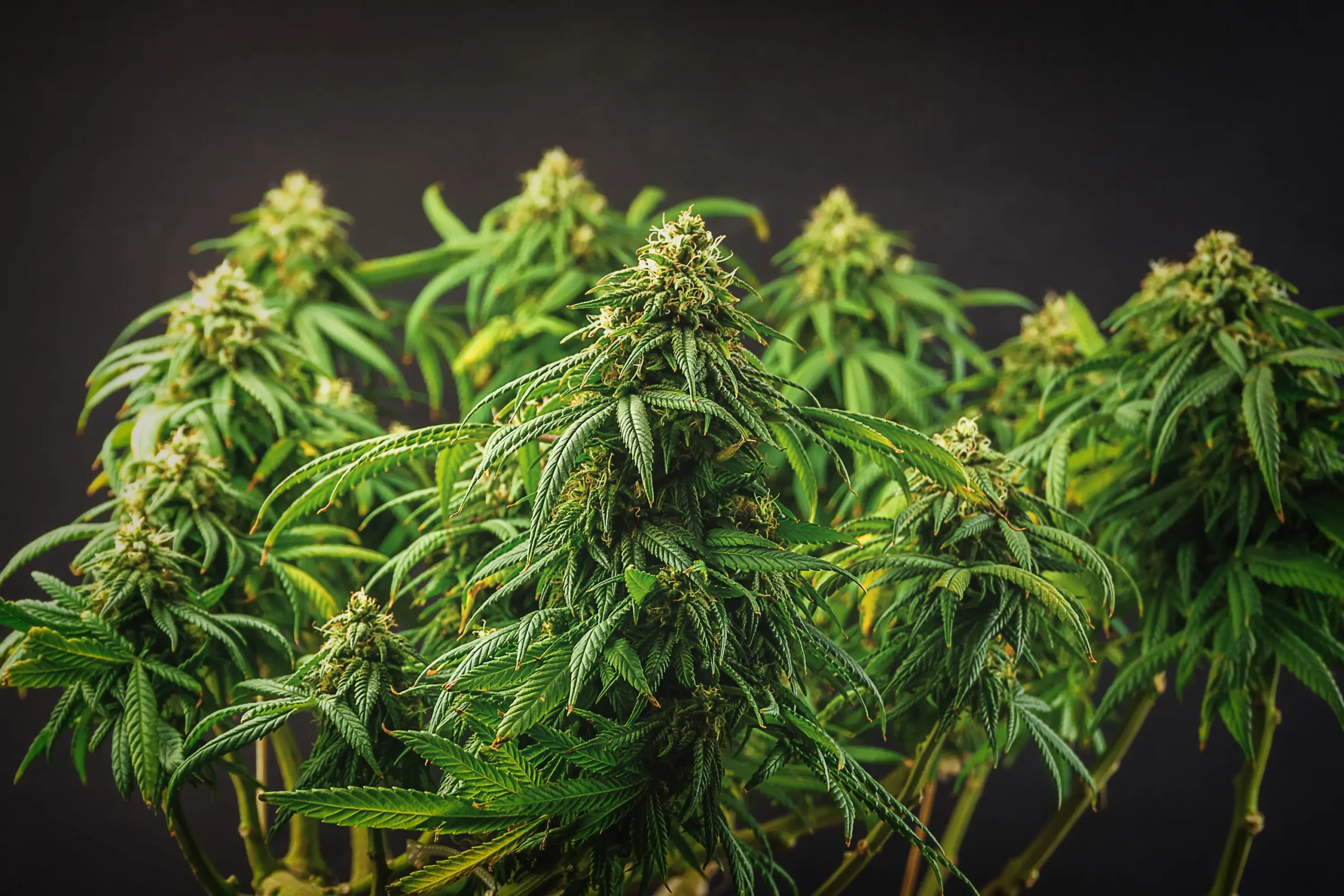
Circulation Fan Trajectory
Circulation fan trajectory must be audited to prevent direct boundary layer impingement on the carbon filter. If oscillating clip fans are angled upward, blowing high-velocity air directly against the outer filter pre-sleeve, they disrupt uniform air intake distribution. High-velocity air currents force localized zones of the carbon bed to experience excessive air flux while the rest of the cylinder remains underutilized. Circulation fans should be oriented to move air horizontally through the canopy, allowing the exhaust fan to draw air into the carbon filter through gentle, omnidirectional convection.
Furthermore, the outer fabric pre-filter sleeve must be properly installed and maintained. The white polyester pre-filter is engineered to capture coarse airborne particulates (dust, pulverised perlite, hair, and dried nutrient mist) before they reach the carbon bed. If the pre-filter is omitted, airborne dust penetrates deep into the activated carbon micropores, permanently clogging the adsorption sites and ruining the filter within weeks.
Installed Sizing Workflow: Matching Fan CFM to Carbon Bed Dwell Capacity
Sizing an Odor Filtration System
Sizing an odor filtration system requires matching the fan volumetric delivery to the installed static pressure and adsorption capacity of the carbon canister. Cultivators who size equipment based on manufacturer “free-air” ratings almost invariably experience operational failure.
Every commercial carbon filter features two distinct CFM ratings: the Exhaust CFM Rating (the maximum airflow the filter can physically pass without creating catastrophic static pressure backpressure) and the Scrubbing CFM Rating (the maximum airflow that guarantees a 0.10-second dwell time for 100 percent single-pass odor elimination). The Scrubbing CFM Rating is always 25 to 35 percent lower than the Exhaust CFM Rating. Cultivators must always size their systems using the lower Scrubbing CFM Rating.
“How much margin for error do I really have with sizing an odor filtration system during peak flowering when plant demand is at its highest?”
Question sent by: Reid Gillingham, via email.
Start by taking a direct baseline measurement rather than guessing from foliar symptoms alone. In practice, A virgin packed carbon bed introduces an immediate static pressure drop of 0.25 to 0.45 inches of water gauge (60 to 110 Pascals).
Once you have confirmed the baseline reading, adjust only one variable at a time and log the response over the next 24 to 48 hours. When duct bends, intake louvers, and dusty pre-filters are added, total system static pressure frequently exceeds 0.65 inches of water gauge.
| Filter Flange & Bed Size | Packed Carbon Mass | Max Exhaust Rating | Single-Pass Scrub Rating | Recommended Fan Size & Speed |
|---|---|---|---|---|
| 4-inch × 12-inch Bed | 5.5 lbs (2.5 kg) RC-48 Carbon | 200 CFM | 130 to 140 CFM | 4-inch EC Fan throttled to 50% to 65% speed. |
| 6-inch × 16-inch Bed | 12.0 lbs (5.4 kg) RC-48 Carbon | 450 CFM | 300 to 320 CFM | 6-inch EC Fan throttled to 60% to 75% speed. |
| 8-inch × 24-inch Bed | 26.5 lbs (12.0 kg) RC-48 Carbon | 750 CFM | 500 to 550 CFM | 8-inch EC Fan operating at 65% to 80% speed. |
| 10-inch × 39-inch Bed | 48.0 lbs (21.8 kg) RC-48 Carbon | 1,200 CFM | 850 to 900 CFM | 10-inch Commercial Blower with VFD control. |
| 12-inch × 48-inch Bed | 72.0 lbs (32.6 kg) RC-48 Carbon | 1,700 CFM | 1,200 to 1,300 CFM | Industrial Mixed-Flow or Centrifugal Air Handler. |
The Sizing Matrix Above Demonstrates the Critical
The sizing matrix above demonstrates the critical relationship between carbon bed mass, airflow velocity, and single-pass scrubbing efficiency. A high-efficiency EC mixed-flow fan should always be selected with an electronic variable-speed controller. Operating an 8-inch fan throttled to 60 percent speed through an 8-inch carbon filter is infinitely superior to operating a 6-inch fan screaming at 100 percent speed through a 6-inch filter: the larger system moves equivalent CFM while maintaining lower air face velocity, longer dwell time, significantly lower static pressure resistance, and virtually silent acoustic decibel levels.
Static pressure derating must also be calculated. A virgin packed carbon bed introduces an immediate static pressure drop of 0.25 to 0.45 inches of water gauge (60 to 110 Pascals). When duct bends, intake louvers, and dusty pre-filters are added, total system static pressure frequently exceeds 0.65 inches of water gauge. Cultivators must verify that their chosen fan impeller (preferably backward-curved centrifugal or mixed-flow) can deliver the required CFM against this elevated static backpressure without stalling.
Dynamic Environmental Loads: Flowering Phenology, Transpiration, and Weather
Odor Generation and Filtration Loads Fluctuate Dramatically
Odor generation and filtration loads fluctuate dramatically across the crop cycle. A ventilation setup that controls odor effortlessly during the third week of vegetative growth will be pushed to the brink of failure by week seven of floral bloom.
Terpene synthesis is directly linked to trichome gland development. During early vegetative growth, cannabis plants emit minor green grassy aromas driven by common hexanols and aldehydes, requiring minimal carbon adsorption capacity. However, as floral bracts swell and glandular trichomes mature in mid-to-late bloom, terpene synthesis accelerates exponentially. A mature flowering canopy produces hundreds of distinct volatile organic compounds, including pungent monoterpenes, heavy sesquiterpenes (such as caryophyllene and humulene), and volatile sulfur compounds (VSCs, primarily prenylthiol), which possess human olfactory detection thresholds in the parts-per-billion range.
“My exhaust smells completely clean during the day, but late at night during the dark cycle I can smell weed outside the exhaust vent. Why does odor escape only when the lights are off?”
Question sent by: ColumbiaGorgeGrow, via contact form.
Your nighttime odor breakthrough is caused by psychrometric relative humidity spikes. When grow lights turn off, ambient temperature drops by 5 to 7 degrees Celsius. Because cool air holds less moisture, relative humidity surges past 75 or 80 percent. At high humidity, water vapor condenses inside the microscopic pores of your carbon filter, displacing the trapped terpene molecules and blocking new adsorption. To solve this, you must run a dedicated dehumidifier during the dark cycle to keep nighttime humidity below 65 percent, or program your exhaust controller to maintain minimum nighttime airflow floors.
Malcolms Dilemma Illustrates the Chemical Phenomenon Known
Malcolm’s dilemma illustrates the chemical phenomenon known as competitive adsorption and moisture breakthrough. Activated carbon has a high affinity for volatile hydrocarbons, but water vapor is polar and ubiquitous. When relative humidity reaches 75 percent, water molecules begin forming multimolecular layers across the carbon surface. At 80 to 85 percent RH, capillary flooding occurs: liquid water fills the micropores, physically pushing out previously adsorbed terpenes in a sudden, intense burst of odor release. Cultivators must maintain exhaust air relative humidity strictly below 65 percent to safeguard carbon pore integrity.

Seasonal Meteorological Weather Events Also Impact Filter Dynamics.
Seasonal meteorological weather events also impact filter dynamics. During prolonged rainy seasons or humid summer weather, outdoor ambient air drawn into the facility arrives already near saturation. If an open-loop cultivation setup pulls 85 percent RH outdoor air across the canopy, the exhaust air exiting through the carbon filter will reach 90 to 95 percent RH. Under these meteorological conditions, carbon filters will suffer complete breakthrough within hours. Cultivators operating in humid climates must pre-condition incoming intake air through commercial dehumidifiers before it reaches the carbon bed.
Photoperiod lighting intensity shifts also interact with odor volatility. Photons emitted by high-output LED fixtures warm the foliar canopy surface through radiant energy transfer. When leaf temperatures reach 28 to 30 degrees Celsius, volatile monoterpenes evaporate rapidly from trichome heads into the air. If the exhaust fan controller is programmed with a broad temperature deadband that allows the room to warm significantly before ramping fan speed, massive pulses of evaporated terpenes are sucked into the filter simultaneously, temporarily overloading the carbon bed surface.
Failure Modes: Carbon Settlement, Channeling, Bypass Leaks, and Dust Fouling
When Systematic Diagnosis Confirms That Fan Speed
When systematic diagnosis confirms that fan speed and relative humidity are within acceptable parameters, cultivators must inspect for internal mechanical failure modes within the carbon canister assembly itself.
A prevalent mechanical failure mode is carbon bed settlement and air channeling. High-quality carbon filters are machine-packed using high-frequency pneumatic vibration tables to achieve maximum bulk density. However, during shipping, rough handling, or prolonged vertical hanging, the dense granular carbon bed can settle downward. If the carbon settles by even half an inch, an empty air void forms at the top collar of the cylinder. Air, following the path of least aerodynamic resistance, rushes through this empty void without passing through any carbon at all. Cultivators observing sudden odor leakage should unhang the filter and inspect the top flange: if carbon has settled, gently tapping the casing with a rubber mallet or topping off the bed with virgin activated carbon eliminates the channel.
Diagnostic Warning: Duct Tape and Pinhole Leak Degradation
Standard cloth duct tape must never be used to seal carbon filter duct joints. Cloth duct tape utilizes a rubber-based adhesive that dries out, cracks, and degrades rapidly under warm, humid horticultural exhaust air. Within three to six months, cloth duct tape peels away, creating microscopic bypass fissures that leak concentrated odor. All duct connections must be sealed using heavy-duty mechanical worm-drive hose clamps, backed exclusively by UL 181-certified aluminum foil tape featuring high-tack acrylic adhesive that withstands moisture and temperature extremes indefinitely.
Dust Fouling Represents Another Insidious Failure Mode
Dust fouling represents another insidious failure mode. In indoor facilities utilizing powdered mineral nutrients, perlite substrates, or sulfur vaporizers, airborne particulate dust is constantly sucked into the exhaust ventilation stream. If the white fabric pre-filter sleeve becomes choked with dust, two compounding failures occur: first, the dust layer increases static pressure backpressure, cutting fan airflow by up to 50 percent; second, ultra-fine dust penetrates the pre-filter and coats the activated carbon granules, sealing off micropores and rendering the carbon chemically inert. Pre-filter sleeves must be inspected monthly and washed or replaced between cropping cycles.
Carbon bed chemical saturation (end-of-life) is the ultimate physical limitation of any filter. High-grade Australian virgin RC-48 activated carbon typically possesses an adsorption capacity of approximately 20 to 25 percent by weight (meaning 100 pounds of virgin carbon can capture roughly 20 to 25 pounds of pure volatile organic compounds before all micropores are filled). In continuous commercial service, a properly sized carbon filter maintains an active service life of 12 to 18 months. Cultivators who track cropping cycles should proactively replace carbon canisters at the 12-month mark rather than waiting for catastrophic odor breakthrough during mid-bloom.
Commissioning Test and Odor Verification Protocol
Before Relying on a Newly Installed Carbon
Before relying on a newly installed carbon filter or declaring an odor leakage issue resolved, cultivators must execute a rigorous commissioning protocol to verify single-pass scrubbing efficiency under simulated full-load conditions.
Begin by conducting the static negative pressure deflection audit. Power on the exhaust fan to its standard operating speed. Inspect all duct joints, filter collars, and tent fabric walls. The tent walls must deflect inward slightly, confirming that the enclosure is under negative static pressure relative to the surrounding room. Run a bare hand along all duct seams, elbows, and collar connections: you should feel zero air escaping outward.
Standard Operating Verification Checklist
- Negative Pressure Visual Check: Confirm enclosure walls pull inward with mild, continuous deflection.
- Mechanical Collar Seal Audit: Verify stainless steel worm-drive clamps are torqued tightly over mastic foam gaskets.
- Aerosol Tracer Smoke Test: Release theatrical smoke or incense outside duct seams; confirm zero smoke enters exhaust stream.
- Olfactory Scent Challenge Test: Spray concentrated aerosol oil (peppermint or synthetic terpene) inside tent; audit exterior exhaust.
- Exhaust Relative Humidity Check: Verify exhaust air stream measures strictly below 65% RH with calibrated hygrometer.
- Fan Dwell Velocity Calibration: Confirm fan speed controller is dialed to keep CFM within single-pass scrub rating.
- Secondary Odor Failsafe Setup: Verify standalone circulating carbon scrubber is operational in adjacent lung room.
Executing This Commissioning Checklist Eliminates Guesswork
Executing this commissioning checklist eliminates guesswork and guarantees perimeter security. To definitively test single-pass carbon scrubbing efficiency without waiting for late-flowering colas, perform the olfactory scent challenge test. Place an open bottle of concentrated pure peppermint essential oil, eucalyptus oil, or commercial synthetic botanical terpenes inside the empty grow tent directly beneath the carbon filter, or spray three bursts of aerosol tracer scent into the air. Power on the exhaust fan and walk outside to the exterior exhaust termination point: you should smell zero trace of peppermint or fragrance.
If any scent escapes the exterior exhaust during the challenge test, molecular breakthrough or duct bypass is actively occurring. Systematically inspect the duct line with a high-intensity flashlight to identify pinhole tears, re-torque hose clamps, and verify that the fan speed controller is dialed down into the optimal dwell time window.
Preventative Maintenance Schedule and Carbon Bed Care
Maintaining Flawless Odor
Maintaining flawless odor control across continuous harvest cycles requires disciplined, scheduled preventative maintenance. Activated carbon and filtration fabrics steadily degrade under continuous agricultural duty cycles.
Establish a monthly pre-filter maintenance routine. Disconnect power to the exhaust fan, slide off the white polyester pre-filter sleeve, and inspect it for dust, pet hair, and mineral scale. Hand-wash the pre-filter sleeve in a sink of warm water with a mild, fragrance-free detergent to dissolve accumulated grease and dust. Rinse thoroughly with clean water and allow the pre-filter to air-dry completely before sliding it back over the carbon cylinder. Never operate a carbon filter without its pre-filter sleeve, and never reinstall a wet pre-filter, as moisture will instantly saturate the underlying carbon bed.
Field Advice: Maintenance Protocol: Carbon Bed Regeneration and Rotation Audit. Between cropping cycles, unhang the carbon canister and inspect the top and bottom flanges. Wipe the outer perforated galvanized metal casing clean of accumulated dust using a microfiber cloth dampened with isopropyl alcohol. Rotate the filter 180 degrees (flipping it end-for-end if designed with reversible flanges, or hanging it from the opposing side) to balance air exposure across the carbon cylinder. If the filter has experienced high humidity (> 75% RH) during late bloom, blow warm, dry air (26 °C / 30% RH) through the filter for 24 hours in an empty room to desorb trapped moisture before starting a new crop.
Quarterly Maintenance Must Include a Physical Carbon
Quarterly maintenance must include a physical carbon bed compaction check. Gently tap the exterior steel mesh casing with the palm of your hand: if you hear carbon granules shifting loosely or observe hollow sounds near the top collar, carbon settlement has occurred. Top off the bed with fresh virgin activated carbon or gently vibrate the canister on a rubber mat to re-settle the granules uniformly.
By understanding the physical chemistry of gas-phase adsorption, respecting contact dwell time equations, maintaining exhaust humidity strictly below 65 percent, and executing airtight negative-pressure duct connections, indoor cannabis cultivators eliminate the threat of odor breakthrough completely. The cultivation facility operates with rock-solid discretion, protecting grower privacy and security while crops mature in a perfectly scrubbed, high-performance indoor environment.
Scientific References
- Ruthven, D. M. (1984). Principles of Adsorption and Adsorption Processes. John Wiley & Sons. Foundational chemical engineering text covering gas-phase molecular adsorption, van der Waals forces, and contact dwell time equations.
- ASHRAE. (2019). ASHRAE Handbook: HVAC Applications (SI Edition). Chapter 46: Control of Gaseous Indoor Air Contaminants. American Society of Heating, Refrigerating and Air-Conditioning Engineers. Engineering standards for activated carbon bed sizing, face velocities, and relative humidity limits in gas-phase filtration.
- Albright, L. D. (1990). Environment Control for Animals and Plants. American Society of Agricultural and Biological Engineers. Comprehensive analysis of fluid dynamics, static pressure drop across granular media, and ventilation fan-duct interactions.
- Calgon Carbon Corporation. (2018). Activated Carbon Adsorption Fundamentals. Technical Bulletin, Calgon Carbon Engineering. Technical specifications on CTC activity ratings, virgin coconut versus coal carbon, and capillary condensation under elevated relative humidity.
Share this article
A quick overview of the topics covered in this article.
Follow us
Latest articles
November 7, 2026

November 7, 2026

November 7, 2026

November 7, 2026
