Cannabis Nutrient Use Efficiency: Physiology, Benchmarks, and Agronomic Optimization
In commercial cannabis cultivation, an enduring industry myth asserts that delivering ever-higher concentrations of mineral fertilizers directly correlates with heavier yields and higher potency. Grow room culture has long celebrated heavy feeding regimes, with electrical conductivity (EC) targets pushed to 2.5, 3.0, or even 3.5 dS/m under the belief that “more nutrients equal bigger flowers.” However, peer-reviewed agronomic research and plant physiology demonstrate that cannabis, like all higher angiosperms, is strictly governed by the law of diminishing returns. When fertilizer application exceeds the plant’s real physiological uptake capacity, Nutrient Use Efficiency (NUE) collapses. The surplus fertilizer is not converted into cannabinoids or dried flower mass; instead, it accumulates as encrusted mineral salts in the substrate, induces osmotic drought stress, wastes substantial financial capital, and causes significant environmental contamination through high-nitrate wastewater discharge. Mastering Nutrient Use Efficiency allows commercial cultivators to cut fertilizer input costs by 30% to 50%, reduce canopy disease pressure, and produce cleaner, higher-terpene finished flower without sacrificing a single gram of yield.
Defining Nutrient Use Efficiency: Plant Physiology and Cellular Uptake
In agronomic science, Nutrient Use Efficiency (NUE) is broadly defined as the ratio of economic yield produced per unit of nutrient applied to the crop. To optimize cannabis production with commercial precision, agronomists divide NUE into two fundamental physiological sub-components:
- Nutrient Uptake Efficiency (NUpE): The physical ability of the plant root system to scavenge, absorb, and mobilize available mineral ions from the growing medium into the vascular xylem stream: NUpE = Total Nutrient Absorbed by Plant / Total Nutrient Supplied in Fertigation.
- Nutrient Utilization Efficiency (NUtE): The internal metabolic efficiency with which the plant converts absorbed elemental ions into dry harvestable flower biomass and secondary metabolites: NUtE = Dried Inflorescence Yield / Total Nutrient Absorbed by Plant.
Multiplying these two components yields overall Nutrient Use Efficiency (NUE = NUpE × NUtE). High fertilizer concentrations in the root zone do not automatically produce high NUE. In fact, when substrate electrical conductivity rises above 2.2 to 2.4 dS/m, root osmotic pressure increases sharply, inhibiting water uptake and causing root hairs to down-regulate plasma membrane nutrient transporters. As a result, Nutrient Uptake Efficiency drops precipitously, and the majority of applied mineral mass is lost to drainage runoff.
Agronomic Law: Luxury Consumption vs Economic Yield
Cannabis exhibits a pronounced capacity for “luxury consumption” – the physiological phenomenon where roots continue absorbing mineral ions (particularly potassium and nitrate) far beyond what is required for maximum metabolic growth, accumulating surplus salts within cellular vacuoles. Luxury consumption artificially inflates leaf tissue nutrient percentages without generating any additional dried flower yield or cannabinoid mass. In fact, luxury nitrogen consumption actively delays floral maturation, promotes loose and leafy bud architecture, and leaves excess stored nitrates that create harsh, dark ash in finished smokable flower.
Root Surface Architecture and Transmembrane Proton Pumping
Nutrient Uptake Efficiency (NUpE) is fundamentally determined by root morphological architecture and cellular bioenergetics. Fine feeder roots and microscopic root hairs (which possess a diameter of only 10 to 15 micrometers) supply over 85% of total root surface area. The uptake of negatively charged anions, such as nitrate (NO3–) and orthophosphate (H2PO4–), is an active, energetically demanding process powered by plasma membrane H+-ATPase proton pumps.
These molecular pumps extrude hydrogen ions (H+) into the rhizosphere, creating an electrochemical proton motive force across the root cell wall. High-affinity symporters then pull nitrate and phosphate into the cell against a steep concentration gradient, coupling their transport with the inward movement of extruded protons. When cultivators over-feed and waterlog substrate matrices, oxygen depletion stalls root mitochondrial ATP production. Without cellular ATP, H+-ATPase proton pumps shut down, and the plant becomes incapable of absorbing nutrients, causing NUpE to collapse regardless of fertilizer abundance in the pot.
Photosynthetic Nitrogen Use Efficiency (PNUE) and Rubisco Allocation
At the foliar cellular level, Nutrient Utilization Efficiency (NUtE) is dominated by how the plant partitions absorbed nitrogen into photosynthetic machinery. Ribulose-1,5-bisphosphate carboxylase-oxygenase (Rubisco) is the primary carbon-fixing enzyme in cannabis chloroplasts, accounting for 30% to 50% of total soluble leaf protein and over 20% of total leaf nitrogen. Photosynthetic Nitrogen Use Efficiency (PNUE) measures the rate of net carbon assimilation (A_net in μmol CO2/m2/s) per unit of organic nitrogen invested in the leaf blade.
When cannabis receives optimal nitrogen (140 to 160 ppm N), Rubisco is synthesized in high concentrations, and PNUE is maximized. However, when growers push luxury nitrogen levels (220 to 300+ ppm N), the leaf blade becomes saturated with surplus inorganic nitrate stored in vacuoles or converted into non-photosynthetic storage proteins. Because photosynthetic photon flux density (PPFD) and ambient CO2 become the limiting factors, the plant cannot fix carbon any faster. Consequently, PNUE plummets, and the excess nitrogen merely fuels structural internodal stretch and dark green chlorophyll accumulation that must be flushed out before harvest.
Bioenergetics of Nitrate vs Ammonium Assimilation
The metabolic efficiency of nitrogen utilization depends heavily on the chemical ionic form of nitrogen supplied. Absorbing nitrate (NO3–) requires substantial cellular energy: the plant must expend 12 to 15 ATP equivalents per nitrogen atom to reduce nitrate to nitrite via cytoplasmic nitrate reductase, transport nitrite into the chloroplast, reduce it to ammonium via ferredoxin-dependent nitrite reductase, and incorporate it into glutamate via the GS-GOGAT pathway. Supplying 10% to 15% of nitrogen as pre-reduced ammonium (NH4+) bypasses this massive energetic reduction bottleneck, allowing the plant to conserve photosynthetic NADPH and ATP for secondary cannabinoid and terpene synthesis.
Phloem Remobilization and Sink-Source Nutrient Dynamics
Internal Nutrient Utilization Efficiency (NUtE) culminates during generative flowering through the systematic remobilization of stored mobile elements. Phloem-mobile nutrients – specifically Nitrogen (N), Phosphorus (P), Potassium (K), and Magnesium (Mg) – are not permanently fixed in vegetative foliage. During peak floral bulking and late ripening (Weeks 5 to 9), swelling floral calyxes and developing trichomes act as powerful metabolic sinks, demanding vast quantities of amino acids, orthophosphate, and potassium ions.
Rather than continuously pulling these elements from the root zone, a high-NUE cannabis plant down-regulates root uptake and actively catabolizes chloroplast proteins (including Rubisco) in mature lower fan leaves. Released amino acids and potassium cations are loaded into the vascular phloem sieve tubes by active companion cell proton symporters, translocating directly to swelling floral clusters. Cultivators who understand this internal remobilization gracefully taper fertilizer inputs in late flowering, allowing the plant to consume its own internal nutrient reserves (manifesting as a healthy natural leaf fade) rather than saturating the substrate with unnecessary mineral salts.

Healthy vegetative fan leaf architecture allocating absorbed mineral nitrogen efficiently into photosynthetic Rubisco enzymes.
Demand Dynamics: Phenological Stages, Substrates, and Transpiration Flux
Nutrient Use Efficiency is not a static property; it changes dynamically across phenological growth stages, cultivation mediums, and environmental transpiration drivers:
1. Crop Steering and Precision Substrate Leaching
In soilless substrates (rockwool and buffered coco coir), NUE is heavily influenced by the irrigation leaching fraction (the percentage of applied nutrient solution that exits the bottom of the container as runoff). In amateur drain-to-waste systems, growers frequently generate a 30% to 40% leaching fraction on every feeding event to prevent salt accumulation. Discarding 40% of all applied water and fertilizer guarantees that facility NUE cannot exceed 60%, resulting in immense operational waste.
Precision commercial operations utilize substrate volumetric water content (VWC) sensors and electrical conductivity probes to execute crop steering. By delivering micro-irrigation pulses matched precisely to the plant’s instantaneous transpiration rate, growers maintain root-zone EC within optimal targets while reducing the leaching fraction to 10% to 15% (or achieving closed-loop recirculation). This precision irrigation management elevates facility Nutrient Uptake Efficiency from 50% to over 85%.
2. Transpiration Coupling under High PPFD and Supplemental CO2
Under high-intensity LED lighting delivering 1,000 to 1,400 μmol/m2/s PPFD and enriched carbon dioxide (1,200 ppm CO2), canopy transpiration rates double. Plant xylem vessels pull large volumes of water through the stem to satisfy evaporative demand at the leaf stomata. In these hyper-transpiring environments, nutrient solutions should actually be formulated at lower electrical conductivity (1.6 to 2.0 dS/m) rather than higher EC. Because the plant drinks vastly more total water mass per hour, feeding a low-to-moderate EC solution delivers the exact stoichiometric mass of mineral ions needed for maximum carbon fixation, while preventing osmotic salt accumulation in the root zone.
3. Vapor Pressure Deficit (VPD) Calibration and Mass Flow Coupling
Nutrient ions reach root surfaces through three distinct physical mechanisms: mass flow, diffusion, and root interception. Highly mobile nutrients – primarily nitrate (NO3–), calcium (Ca2+), and magnesium (Mg2+) – move through the substrate predominantly via mass flow, carried along with the convective stream of water pulled toward the root by plant transpiration. The driving force behind mass flow is Vapor Pressure Deficit (VPD):
- In vegetative growth, maintaining room VPD between 0.8 and 1.1 kPa prevents excessive transpiration shock, allowing tender root systems to establish high Nutrient Uptake Efficiency.
- In generative flowering, elevating VPD to 1.2 to 1.5 kPa increases transpirational suction, pulling calcium ions through the xylem directly into expanding floral bracts, preventing calcium deficiency tip burn without requiring higher fertilizer concentrations.
- If room VPD drops below 0.6 kPa (stagnant, humid air), transpiration ceases. Mass flow halts completely, and calcium cannot reach flower tips, inducing severe nutrient starvation even in pots saturated with high-EC fertilizer. Calibrating VPD is therefore an indispensable prerequisite for optimizing real-world Nutrient Use Efficiency.
If I cut my fertilizer concentration by 30%, will my harvest yield drop?
Question sent by: Derek Vance, via email.
“We are feeding our flowering cannabis at 2.6 dS/m EC (about 1,800 ppm on the 700 scale) with commercial bottled bloom boosters. Our consultant recommended dropping input EC to 1.8 dS/m to improve nutrient efficiency and lower input costs. I am terrified that cutting our feed strength by 30% will cause our buds to lose density and shrink our yield. Is this fear justified?”
Your fear is completely understandable, but agronomically unjustified. Controlled academic trials (Saloner & Bernstein, 2021; Bugbee, 2020) have repeatedly proven that cannabis flower yields follow a standard saturation curve (the Mitscherlich-Baule yield response law), not an infinite straight line.
In cannabis, dried inflorescence biomass yield reaches 100% of its genetic potential at an elemental nitrogen supply of approximately 160 mg/L (ppm) and an overall fertigation electrical conductivity between 1.6 and 1.9 dS/m. When you feed at 2.6 dS/m EC, the surplus 0.7 to 1.0 dS/m of mineral mass provides zero additive yield. The plant cannot metabolize that surplus ion mass into additional calyx cells; instead, the high osmotic pressure forces root cells to expend cellular ATP manufacturing internal compatible solutes (like proline and betaine) to resist osmotic dehydration.
By dropping your feed strength from 2.6 down to 1.8 dS/m while maintaining balanced elemental ratios, your harvest yield will remain identical (or even increase slightly due to improved root hydraulic conductance), while your fertilizer expenses drop by 30%, your root-zone salt accumulation drops dramatically, and your finished flower exhibits superior burn quality and terpene preservation.
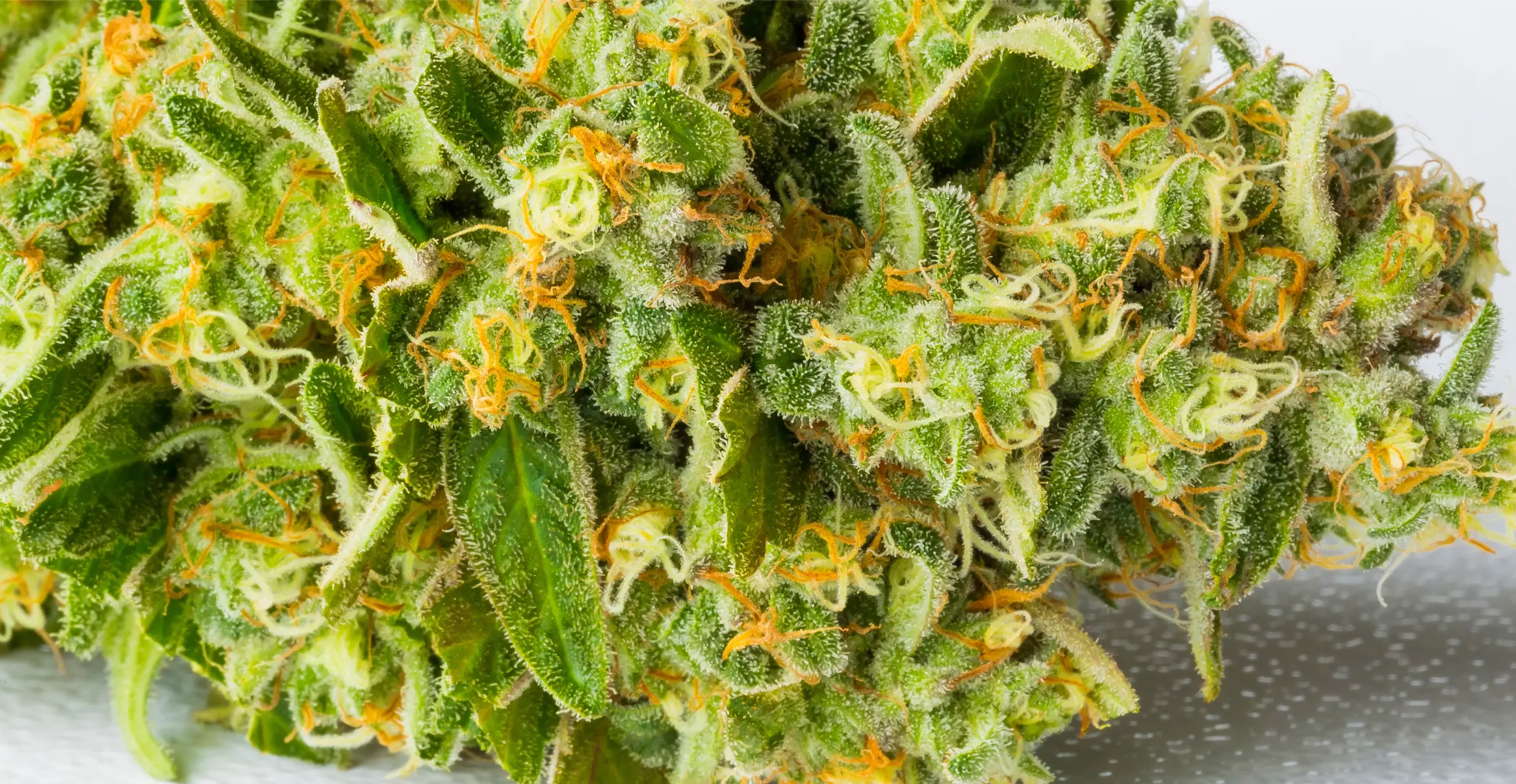
Dense trichome and floral bract development achieved by matching elemental potassium and phosphorus supply to physiological demand.
The Law of Diminishing Returns: Antagonisms and Disease Vulnerability
Operating at depressed Nutrient Use Efficiency creates cascading physiological vulnerabilities that compromise plant defense and harvest quality:
1. The Mitscherlich-Baule Yield Response Law
The relationship between nutrient supply and crop yield is governed by the Mitscherlich-Baule law of diminishing returns: each successive unit of fertilizer applied yields a smaller increment of biomass growth than the unit before it, eventually reaching an absolute plateau. Beyond this optimum threshold, further fertilizer additions enter the zone of toxicity, where yield actively declines due to osmotic stress, ion antagonisms, and root cell damage. In conventional commercial cannabis facilities, over 80% of operations operate deep within the luxury consumption plateau or the negative toxicity zone, pouring expensive fertilizer mass into substrates with zero economic return.
2. Nitrogen Excess and Pathogen Susceptibility
Depressed Nitrogen Use Efficiency (NUEN) is directly linked to increased disease incidence in indoor canopies. When cannabis roots absorb luxury concentrations of nitrogen, the plant synthesizes excessive vegetative cell volume with thin, fragile primary cell walls. Low silicon and calcium incorporation into cell walls creates physical entry points for fungal pathogens. Furthermore, high free amino acid and nitrate concentrations in leaf apoplast fluids act as rich nutrient sources for necrotrophic and biotrophic fungi, drastically increasing the severity of powdery mildew (Golovinomyces spadiceus) and botrytis bud rot (Botrytis cinerea).
3. Phosphorus Use Efficiency (PUE): The Luxury Phytate Bottleneck
In commercial bloom fertigation, cultivators frequently overdose phosphorus, applying 100 to 150 ppm elemental P under the mistaken belief that phosphorus drives bud density. In reality, peer-reviewed cannabis research (Shiponi & Bernstein, 2021; Cockson et al., 2020) proves that floral dry weight and cannabinoid synthesis reach a definitive saturation plateau at 30 to 45 ppm elemental P. Supplying higher phosphorus provides zero additive floral biomass; instead, the plant stores excess phosphorus within root cortical vacuoles as phytic acid (inositol hexakisphosphate).
Phytic acid strongly chelates divalent cations (iron, zinc, and magnesium) within the root cytoplasm, precipitating them into insoluble intracellular phytate salts. As a result, luxury phosphorus consumption directly induces severe iron and zinc deficiencies in newly expanding apical bracts, causing bright yellow bleached crowns that growers mistakenly treat by adding more micronutrient fertilizers. Capping elemental phosphorus at 45 ppm maximizes Phosphorus Use Efficiency (PUE) while preventing induced trace mineral precipitation.
4. Potassium Use Efficiency (KUE) and Water Coupling
Potassium is the primary osmotic regulator in plant biology, maintaining cellular turgor, driving phloem sugar loading from leaves to swelling flowers, and opening stomatal guard cells. However, when potassium is applied in extreme excess (exceeding 250 to 300 ppm K), Potassium Use Efficiency (KUE) drops sharply. The surplus potassium ions compete directly with magnesium (Mg2+) and calcium (Ca2+) at root uptake channels (Mulder’s antagonism). High potassium competitively displaces magnesium from the chlorophyll porphyrin ring and blocks calcium needed for pectate middle lamella cell wall strength, inducing blossom-end rot on lower bract margins and acute interveinal chlorosis.

Canopy transpiration and leaf stomatal conductance driving trans-vascular xylem sap flow and nutrient uptake efficiency.
How to Measure and Benchmark Facility Nutrient Use Efficiency
To transition from subjective feeding folklore to precision agronomy, commercial facilities must calculate and track standardized Nutrient Use Efficiency metrics across every production cycle:
1. The Nitrogen Agronomic Efficiency Formula (NAE)
Agronomic efficiency measures how many grams of dried, marketable flower are produced per gram of pure elemental nitrogen applied to the crop over its lifespan:
NAE (g flower / g N) = Dried Inflorescence Yield (grams) / Total Elemental Nitrogen Applied (grams)
In inefficient commercial facilities running heavy 2.8 dS/m synthetic feeds with 30% runoff, NAE frequently registers below 8 to 12 grams of flower per gram of N applied. In high-efficiency precision facilities optimizing root dry-back and balanced elemental feeds, NAE reaches 22 to 30 grams of flower per gram of N, achieving identical canopy yield with one-third the total nitrogen mass.
2. Phosphorus Recovery Efficiency (PRE)
Phosphorus is a finite global resource and the most common pollutant in agricultural runoff. Phosphorus Recovery Efficiency measures the percentage of applied phosphorus actually assimilated into harvestable biomass:
PRE (%) = [Total Plant Phosphorus Content (g) / Total Fertilizer Phosphorus Applied (g)] × 100
Facilities feeding extreme “10-30-20” bloom boosters register PRE values below 15%, discharging 85% of applied phosphorus straight into municipal sewer systems. Benchmarked high-efficiency facilities maintain PRE between 45% and 65% by capping elemental phosphorus at 45 to 60 ppm P.
3. Potassium Agronomic Efficiency (KAE) and Water Use Coupling
Potassium Agronomic Efficiency (KAE = g dried flower / g K applied) reflects how effectively osmotic potassium drives floral expansion. High KAE (typically 15 to 22 g flower / g K) indicates that potassium was delivered in tight synchronization with canopy transpiration. Furthermore, KAE couples directly with Water Use Efficiency (WUE in grams of biomass per liter of water transpired). When potassium is balanced, stomatal guard cells open and close responsively, maximizing carbon dioxide uptake while minimizing non-productive cuticular water evaporation.
4. In-Situ Mass Balance Auditing via PourThru Leachate Testing
To audit facility NUE in real time without waiting for post-harvest yield numbers, commercial growers execute weekly mass balance tracking using PourThru leachate extractions (Cavins et al., 2000). Record input feed EC and volume applied versus composite runoff EC and drainage volume captured:
- Calculate the Daily Nutrient Retention Mass: Mass Retained (g) = (Vin × ECin) – (Vout × ECout).
- If mass retained approaches zero or becomes negative, the root zone is saturated and shedding accumulated salts; input fertigation concentration must be stepped downward immediately.
- If Delta EC (ΔEC = ECout – ECin) exceeds +0.6 dS/m, nutrient delivery exceeds plant transpiration absorption capacity, signaling suboptimal NUE.
Can biostimulants like fulvic acid and beneficial microbes actually increase nutrient use efficiency?
Question sent by: Chloe Bennett, via email.
“We are trying to improve our facility sustainability and lower our runoff EC. Sales reps claim that adding fulvic acid, kelp extract, and Bacillus inoculants allows us to cut our base fertilizer inputs while getting the same yield. Do biostimulants genuinely improve NUE, or is it just industry marketing?”
Peer-reviewed plant nutrition research demonstrates that certified biostimulants genuinely enhance Nutrient Uptake Efficiency (NUpE), provided they are deployed correctly within a disciplined fertility program.
Purified fulvic acids possess low molecular weights (<1,000 Daltons) and high cation exchange capacities. When applied in fertigation, fulvic molecules form neutral, low-molecular-weight organo-metallic complexes with iron, zinc, and calcium. These complexes penetrate root epidermal membranes via passive diffusion and peptide pathways, bypassing normal ion channel bottlenecks and increasing micronutrient uptake efficiency by up to 25% to 35%.
Similarly, Plant Growth-Promoting Rhizobacteria (such as Bacillus subtilis and Pseudomonas putida) secrete low-molecular-weight organic acids (citric and malic acids) and phosphatase enzymes into the rhizosphere. These bacterial secretions dissolve insoluble mineral phosphates and chelate ferric iron, converting bound elements into plant-available orthophosphate and chelated iron. By enhancing the bioavailability of existing media reserves, biostimulants allow cultivators to reduce synthetic fertilizer inputs by 15% to 20% while maintaining identical tissue nutrient levels and harvest yields. For a detailed guide on formulating balanced vegetative feed schedules that maximize uptake, review our comprehensive analysis of vegetative cannabis feeding strategy.
Nutrient Use Efficiency Across Cultivation Systems and Delivery Methods
The following reference table compares typical Nutrient Use Efficiency benchmarks, recovery percentages, and operational trade-offs across the four primary commercial cannabis production architectures:
| Cultivation System | Typical Nitrogen Recovery (NUEN) | Typical Phosphorus Recovery (PUE) | Primary Loss Vector | Input Cost per Gram Flower | Optimization Strategy |
|---|---|---|---|---|---|
| Precision Rockwool (Crop Steering) | 70% to 85% | 50% to 65% | Controlled 10%-15% drainage runoff to maintain block EC. | Lowest ($0.01 to $0.02 / g) | Deploy VWC/EC substrate sensors; steer dry-back; cap N at 160 ppm. |
| Buffered Coco Drain-to-Waste | 50% to 65% | 35% to 45% | Excessive 25%-35% runoff flushing unabsorbed mineral salts. | Low to Moderate ($0.02 to $0.04 / g) | Implement automated micro-pulse fertigation; reduce runoff to 15%. |
| Living Organic Soil (No-Till Beds) | 40% to 60% (seasonal) | 30% to 50% | Biological immobilization in soil organic matter; gaseous denitrification. | Moderate ($0.03 to $0.06 / g) | Inoculate mycorrhizae; maintain soil moisture tension; re-amend via soil testing. |
| Recirculating Deep Water Culture (DWC) | 75% to 90% | 60% to 75% | Full reservoir dumps during scheduled water changeouts. | Low ($0.01 to $0.03 / g) | Top-up with low-EC single elements; extend water change intervals via UV. |
Standard Operating Procedure: Facility NUE Optimization Sequence
To transition an existing cultivation facility from wasteful luxury feeding to high-efficiency precision production, follow this disciplined four-step optimization protocol:
Step 1: The Stepped EC Reduction Protocol
Never slash fertilizer concentrations overnight, as sudden osmotic shifts can cause leaf turgor shock. If currently feeding at 2.6 dS/m EC, reduce input fertigation by 0.2 dS/m every 5 to 7 days until reaching the optimal 1.8 dS/m ceiling. Monitor canopy expansion rate, leaf petiole angles, and Most Recently Matured Leaf (MRML) color daily.
Step 2: Substrate Dry-Back Calibration
Audit container dry-back curves using digital substrate probes or platform scale weighing. Ensure that containers achieve an 18% to 22% volumetric water content dry-back between daytime feeding events in coco and rockwool (or 35% to 45% dry-back overnight). Allowing oxygen to replenish pore spaces re-energizes root mitochondrial respiration, maximizing cellular ATP to power active nutrient transport.
Step 3: Bi-Weekly Leaf Tissue and Petiole Sap Auditing
Verify that reduced feed concentrations are satisfying cellular metabolic demand. Submit leaf tissue samples to a certified agronomic laboratory bi-weekly. Confirm that dry-weight total nitrogen stabilizes between 3.8% and 4.5% in vegetative growth and gracefully tapers to 2.8% to 3.2% in late flowering, while leaf phosphorus remains stable between 0.35% and 0.50%.
Step 4: Facility Economic ROI and Environmental Compliance Auditing
Calculate your facility-wide fertilizer mass balance per pound of finished dried flower produced. In conventional luxury-feed facilities, input costs frequently reach $25 to $45 per pound due to high-volume bottled additives and 30% runoff discharge. Transitioning to precision high-NUE recipes formulated from technical dry salts drops fertilizer costs to $3 to $8 per pound, yielding tens of thousands of dollars in annual chemical savings for commercial scale canopies.
Furthermore, precision NUE management aligns the facility with regional environmental wastewater regulations. In commercial cannabis jurisdictions across North America, municipal wastewater authorities and agricultural watershed boards actively enforce Clean Water Act nitrate standards, penalizing facilities whose effluent exceeds 10 mg/L (ppm) Nitrate-Nitrogen (NO3-N) or total dissolved phosphorus limits. High NUE minimizes effluent solute mass, eliminating regulatory fines while demonstrating authentic commercial sustainability.
Nutrient Use Efficiency Standard Operating Checklist
Verify these critical agronomic checkpoints to maximize nutrient efficiency across every harvest cycle:
- Input fertigation electrical conductivity is capped at 1.8 to 2.2 dS/m during peak flowering; 3.0+ dS/m feeds are eliminated.
- Elemental nitrogen is capped at 160 to 180 ppm in vegetative stretch and tapered below 100 ppm by mid-flowering.
- Elemental phosphorus is maintained strictly between 40 and 60 ppm P; extreme 100+ ppm bloom boosters are discontinued.
- Irrigation leaching fraction is monitored and calibrated to 10% to 15% using precision automated pulse scheduling.
- Substrate moisture is managed with 18% to 22% daytime dry-backs to maintain root-zone dissolved oxygen tension.
- Purified fulvic acid (0.5 mL/L) is integrated to enhance trans-membrane micronutrient uptake efficiency (NUpE).
- Root-zone substrate temperature is audited continuously, maintained strictly between 20 °C and 23 °C.
- Facility Nitrogen Agronomic Efficiency (NAE) is benchmarked, targeting >20 grams of dried flower per gram of N applied.
- Leaf tissue testing (Dumas combustion / ICP-OES) is scheduled bi-weekly to confirm true cellular assimilation.
- Late-flower nutrient tapering replaces harsh pure-water flushing with a low-salt mineral baseline plus fulvic sweeps.
Scientific References
- Barker, A. V., & Pilbeam, D. J. (2015). Handbook of Plant Nutrition (2nd ed.). CRC Press, Boca Raton, FL.
- Bernstein, N., Gorelick, J., Zerahia, R., & Koch, S. (2019). Impact of environmental conditions and nutrient availability on secondary metabolite production in medical cannabis. Industrial Crops and Products, 138, 111467.
- Bugbee, B. (2004). Nutrient management in recirculating hydroponic culture. Acta Horticulturae, 648, 99-112.
- Marschner, H. (2012). Marschner’s Mineral Nutrition of Higher Plants (3rd ed.). Academic Press, London.
- Saloner, A., & Bernstein, N. (2020). Response of medical cannabis (Cannabis sativa L.) to nitrogen supply under long photoperiod. Industrial Crops and Products, 154, 112647.
- Saloner, A., & Bernstein, N. (2021). Nitrogen supply affects cannabinoid and terpenoid profile in medical cannabis (Cannabis sativa L.). Industrial Crops and Products, 167, 113516.
- Shiponi, S., & Bernstein, N. (2021). The response of medical cannabis (Cannabis sativa L.) to arbuscular mycorrhizal fungal inoculation under varying phosphorus availability. Industrial Crops and Products, 169, 113645.
- Taiz, L., Zeiger, E., Møller, I. M., & Murphy, A. (2015). Plant Physiology and Development (6th ed.). Sinauer Associates, Sunderland, MA.
- Zheng, Y. (2021). Handbook of Cannabis Production in Controlled Environments. CRC Press, Boca Raton, FL.
Share this article
A quick overview of the topics covered in this article.