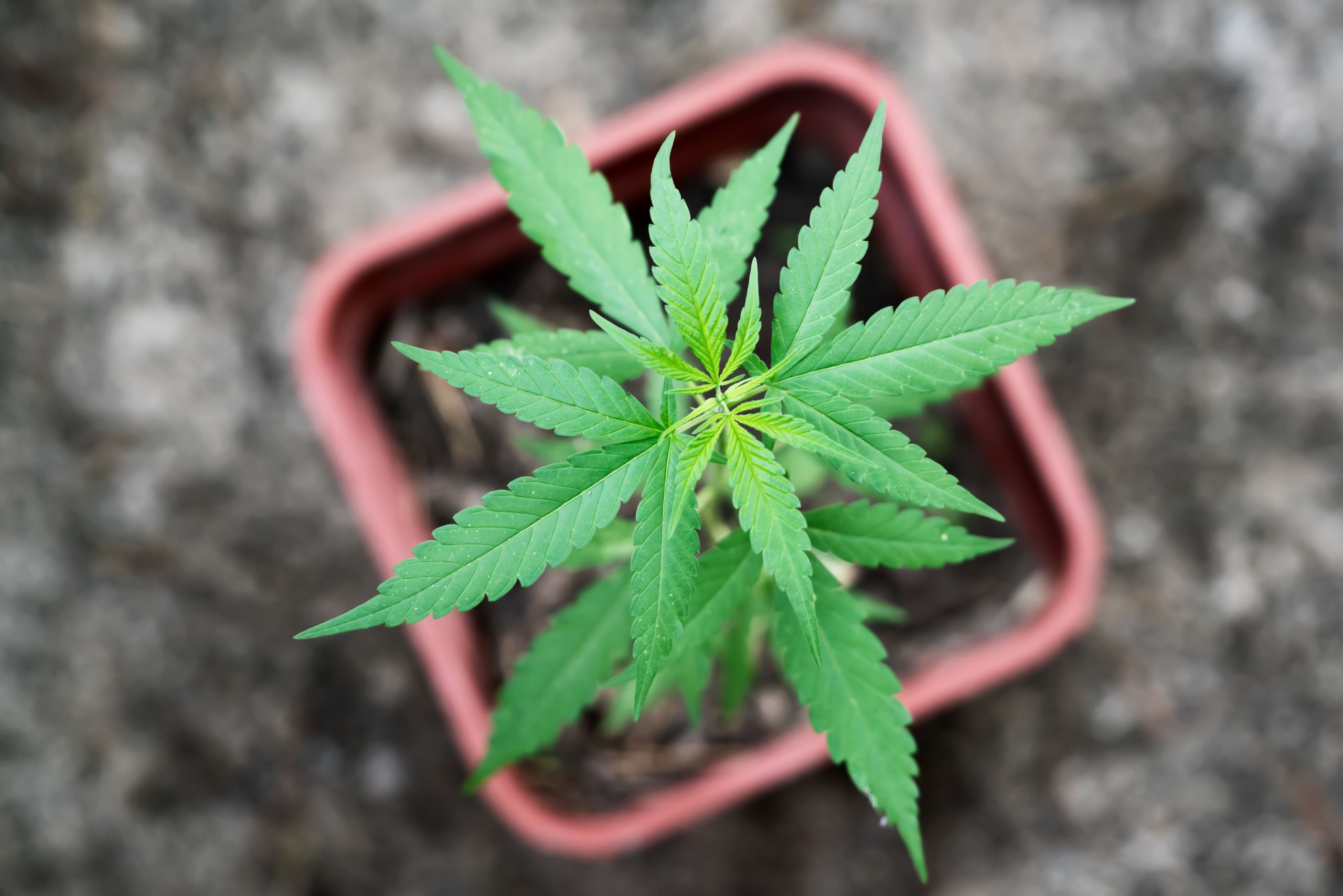
High Light, Calcium Movement, and Transpiration
Under high photosynthetic photon flux density, calcium becomes the most metabolically demanding and transport-vulnerable element in the cannabis plant. While mobile nutrients like nitrogen and potassium travel freely through both xylem and phloem vascular highways, calcium is strictly phloem-immobile: moving almost exclusively through transpirational mass flow within xylem vessels. When intense lighting drives rapid cell division while environmental humidity or root-zone issues choke transpiration, calcium cannot reach rapidly expanding apical meristems and nascent floral calyxes. Understanding the biophysics of calcium pectate cross-linking, xylem mass flow, and vapor pressure deficit is the definitive solution to conquering high-light tip burn and calyx necrosis.
- Plant Physiology and Xylem Mass Flow: Why Calcium is Strictly Transpiration-Driven
- How Light Intensity, Stage, Medium, and VPD Alter Calcium Demand
- Nutrient Antagonism, Precipitation, and Calcium Deficiency Look-Alikes
- What to Measure: Input Ratios, Runoff Calcium, and Leaf Tissue Testing
- Comparing Calcium Sources: Mineral Nitrates, Chelates, Organics, and Foliar Sprays
- Systematic Troubleshooting Sequence: Single-Variable Recovery Protocol
- Evidence Check, Final Decision Checklist, and Companion Weedth Resources
Plant Physiology and Xylem Mass Flow: Why Calcium is Strictly Transpiration-Driven
To comprehend why calcium deficiency plagues high-light indoor canopies, cultivators must deconstruct the unique vascular transport mechanics of divalent calcium ions ($Ca^{2+}$). In higher plants, mineral nutrients move through two vascular systems: the phloem, which transports organic sugars and mobile ions bidirectionally from source leaves to metabolic sinks, and the xylem, which transports water and inorganic minerals unidirectionally from roots to transpiring leaves.
Unlike nitrogen, phosphorus, potassium, and magnesium: which can be exported out of older foliage via the phloem and re-allocated to new shoots: calcium is strictly phloem-immobile. Once a calcium atom arrives in an older fan leaf and is integrated into cellular structures, it is permanently locked in place; the plant cannot remobilize it to nourish newly emerging shoots or developing flowers. Consequently, newly forming tissues depend 100% on a continuous, uninterrupted delivery of fresh calcium arriving through the upward transpirational stream in the xylem.
At the structural cellular level, calcium functions as the biochemical “mortar” that holds plant cell walls together. Divalent calcium ions cross-link polygalacturonic acid chains, forming calcium pectate within the middle lamella. This calcium pectate matrix provides structural rigidity, tensile strength, and membrane semi-permeability. Under 1,000 to 1,400 μmol/m²/s PPFD, rapid cell division demands vast quantities of calcium pectate to construct billions of new cell walls every hour. If xylem delivery falters for even a 12-hour window during peak floral expansion, newly divided cells collapse under their own turgor pressure, causing necrotic margin browning, distorted hook-shaped leaves, and calyx dieback.
From a molecular biophysics standpoint, plant scientists model this structural bonding via the “egg-box” model of pectin cross-linking. Pectin polymers in the middle lamella consist largely of homogalacturonan (HG), an unbranched polymer of D-galacturonic acid. As new cell plates form during cytokinesis, pectin methylesterase (PME) enzymes de-esterify HG chains, exposing negatively charged carboxyl groups ($-COO^-$). Two adjacent antiparallel HG chains fold into corrugated ribbon conformations, creating electronegative cavities that precisely accommodate divalent calcium ions ($Ca^{2+}$). The calcium ion fits snugly into this molecular pocket like an egg in a carton, forming electrostatic bridges between adjacent polymer chains. Under intense photon bombardment, cell division proceeds at maximum velocity. If the influx of $Ca^{2+}$ ions lags behind PME de-esterification, un-cross-linked pectins are rapidly degraded by endogenous polygalacturonase enzymes, causing middle lamella dissolution, cell wall lysis, and the rapid onset of necrotic tip burn.
Xylem Mass Flow and Calcium Pectate Cross-Linking
Xylem Mass Flow is the passive bulk physical transport of water and dissolved mineral solutes driven by negative hydrostatic pressure (suction tension) generated by leaf stomatal transpiration. Calcium Pectate is the insoluble salt formed by divalent calcium ($Ca^{2+}$) bridging carboxyl groups of pectic polysaccharides in the plant cell middle lamella, providing mechanical stability against cellular bursting.
Because xylem flow is governed strictly by the evaporation of water vapor through stomatal pores, calcium distribution is inherently biased toward high-transpiring organs. Large, fully expanded fan leaves sitting in direct light and breeze transpire massive volumes of water, accumulating luxury levels of calcium. Developing floral buds and inner calyxes, shielded beneath bracts with few functional stomata, transpire very little. If atmospheric Vapor Pressure Deficit (VPD) is too low or horizontal canopy airflow is stagnant, transpiration in dense buds drops to near zero, starving developing flowers of calcium even when the root zone is saturated with calcium nitrate.
Inviolable Botanical Principle: Calcium delivery is an aerodynamic and environmental phenomenon, not just a nutritional one. You can saturate your reservoir with calcium, but if transpirational pull is absent at the shoot tip, not a single milligram will reach the developing calyx.
How Light Intensity, Stage, Medium, and VPD Alter Calcium Demand
Calcium demand scales non-linearly with light intensity and is heavily modulated by crop developmental phase, substrate cation exchange dynamics, and atmospheric vapor pressure deficit.
Scaling Calcium PPM with Increasing PPFD
Under low vegetative lighting (300 to 500 μmol/m²/s PPFD), cell division is moderate, and an elemental calcium target of 100 to 120 PPM in nutrient solution easily supports tissue expansion. When light intensity is ramped to commercial levels (800 to 1,200 μmol/m²/s), cell expansion rates triple, requiring an elemental calcium concentration of 160 to 200 PPM $Ca$ in soilless fertigation. However, this increased concentration must be matched by environmental tuning; under LEDs, the absence of radiant infrared heating chills foliage, requiring daytime air temperatures of 82°F to 84°F to sustain transpirational pull.
The mathematical representation of calcium transport through the xylem vascular column is governed by convective solute mass flux: $$F_{Ca} = [Ca]_{xylem} \times J_v \times (1 – \sigma_{Ca})$$ Where $F_{Ca}$ is calcium transport rate, $[Ca]_{xylem}$ is calcium concentration in xylem sap, $J_v$ is whole-plant transpirational volume flux, and $\sigma_{Ca}$ is the reflection coefficient of xylem vessel walls (typically near zero for non-permeating mineral ions). Notice that calcium transport is strictly proportional to volume flux ($J_v$). If light intensity drives cellular division while cold canopy temperatures or low VPD suppresses $J_v$, the total mass of calcium delivered ($F_{Ca}$) drops below the minimum physiological threshold required for newly expanding floral meristems.
Furthermore, plants utilize a secondary, nocturnal mechanism to deliver calcium to low-transpiring floral buds: positive root pressure. During the dark period, roots continue actively pumping mineral ions into the central stele, lowering xylem solute potential and drawing water inward via osmosis. In an environment with low night VPD, this osmotic pressure builds positive hydrostatic pressure inside the xylem, pushing fluid upward to terminal shoot tips and exuding moisture through leaf hydathodes (guttation). This nighttime root pressure carries vital calcium into enclosed floral calyxes that cannot transpire during the day. Cultivators who run bone-dry dehumidification (VPD > 1.5 kPa) all night long suppress root pressure, preventing this nocturnal calcium delivery mechanism from functioning.
Substrate Interactions: The Cation Exchange Capacity (CEC) of Coco Coir
In unbuffered or poorly conditioned coco coir, cation exchange sites on coconut pith particles are naturally loaded with sodium ($Na^+$) and potassium ($K^+$) ions. When calcium nitrate is applied, coco particles chemically exchange their bound potassium and sodium for divalent calcium ($Ca^{2+}$), locking the calcium onto substrate particles and rendering it unavailable to plant roots.
Under high light, this cation exchange can strip 30% to 50% of dissolved calcium out of the irrigation stream within minutes. Cultivators using coco coir under high PPFD must pre-buffer media thoroughly with calcium-magnesium solutions and maintain continuous 160+ PPM calcium in every fertigation event to ensure that substrate binding sites remain permanently saturated, leaving free calcium ions in the pore water.
| PPFD Level (μmol/m²/s) | Target Elemental Ca (PPM) | Optimal Leaf VPD (kPa) | Transpirational Driving Force | Primary Deficiency Risk Zone |
|---|---|---|---|---|
| Low Light (300 – 500) | 100 – 120 PPM | 0.8 – 1.0 kPa | Moderate / Steady | Minimal risk; slow growth matches supply |
| Medium Light (600 – 800) | 130 – 160 PPM | 1.0 – 1.2 kPa | Active / Accelerated | Vegetative shoot tips during rapid drydowns |
| High Light (900 – 1,200) | 160 – 200 PPM | 1.2 – 1.4 kPa | Intense / High-Throughput | Apical floral clusters, calyx margins, and bracts |
| Ultra-High PPFD (1,200+) | 180 – 220 PPM | 1.3 – 1.5 kPa | Extreme / Cavitation Risk | Upper sugar leaves (tip burn) and inner floral buds |
Nutrient Antagonism, Precipitation, and Calcium Deficiency Look-Alikes
Diagnosing calcium disorders under intense grow lights is notoriously fraught with error because visual symptoms frequently mimic light stress, potassium toxicity, and chemical precipitation.
Cation Competition: The Potassium/Magnesium Antagonism
Positively charged cations compete for root absorption channels according to competitive transport kinetics. When growers apply aggressive potassium bloom boosters ($K^+$ > 300 PPM) under high light, the massive concentration of monovalent potassium ions out-competes divalent calcium ($Ca^{2+}$) at root uptake portals.
Even if the reservoir contains 180 PPM of calcium, the excess potassium creates severe cation antagonism, depressing calcium uptake. Upper leaves develop necrotic copper-colored spots along serrated margins, curling upward into sharp hooks. Adding more total fertilizer simply increases root-zone osmotic pressure, exacerbating the problem. The solution is re-balancing the cation ratio by lowering potassium, not blindly spiking fertilizer strength.
Chemical Precipitation with Sulfates and Phosphates
In concentrated stock tanks or unbuffered reservoirs with pH above 6.3, divalent calcium ions readily bind with sulfate ($SO_4^{2-}$) and orthophosphate ($HPO_4^{2-}$) ions, forming insoluble calcium sulfate (gypsum, $CaSO_4$) and calcium phosphate ($Ca_3(PO_4)_2$) precipitates. These white mineral crystals fall to the bottom of the reservoir or coat the inside of drip lines, leaving the water clear but completely devoid of bioavailable calcium. Always dissolve calcium nitrate in a separate “Part A” tank, keeping it completely separated from potassium phosphate and magnesium sulfate concentrates until diluted in working reservoirs.
The chemical thermodynamic threshold governing this reaction is dictated by the Solubility Product Constant ($K_{sp}$). For tricalcium phosphate, the precipitation equilibrium is defined by: $$Ca_3(PO_4)_2 \rightleftharpoons 3Ca^{2+} + 2PO_4^{3-} \quad (K_{sp} \approx 2.07 \times 10^{-33})$$ Because the solubility product is extremely low, any localized increase in solution pH above 6.3 dramatically shifts orthophosphate speciation from dihydrogen phosphate ($H_2PO_4^-$) to divalent monohydrogen phosphate ($HPO_4^{2-}$) and trivalent phosphate ($PO_4^{3-}$). The ion activity product immediately exceeds $K_{sp}$, causing calcium and phosphorus to crash out of solution as an insoluble colloidal milky haze. Under high PPFD, where root-zone pH often climbs during lights-on periods due to nitrate uptake, this precipitation occurs directly inside substrate pores, coating root hair surfaces with mineral scale and choking calcium absorption.
The High-Humidity / High-Light Calcium Paradox
Pushing 1,100 PPFD while allowing room relative humidity to climb above 75% RH (creating a low Leaf VPD below 0.8 kPa) guarantees calcium deficiency regardless of nutrient feeding strength. When ambient air is nearly saturated with moisture, leaf stomata cannot evaporate water vapor. Because xylem mass flow ceases, calcium delivery to growing tips halts. The grower observes severe necrotic spotting on upper colas and incorrectly dumps cal-mag additives into the reservoir, burning roots with excess salts. The fix is strictly environmental: drop room humidity and increase horizontal canopy air velocity immediately.
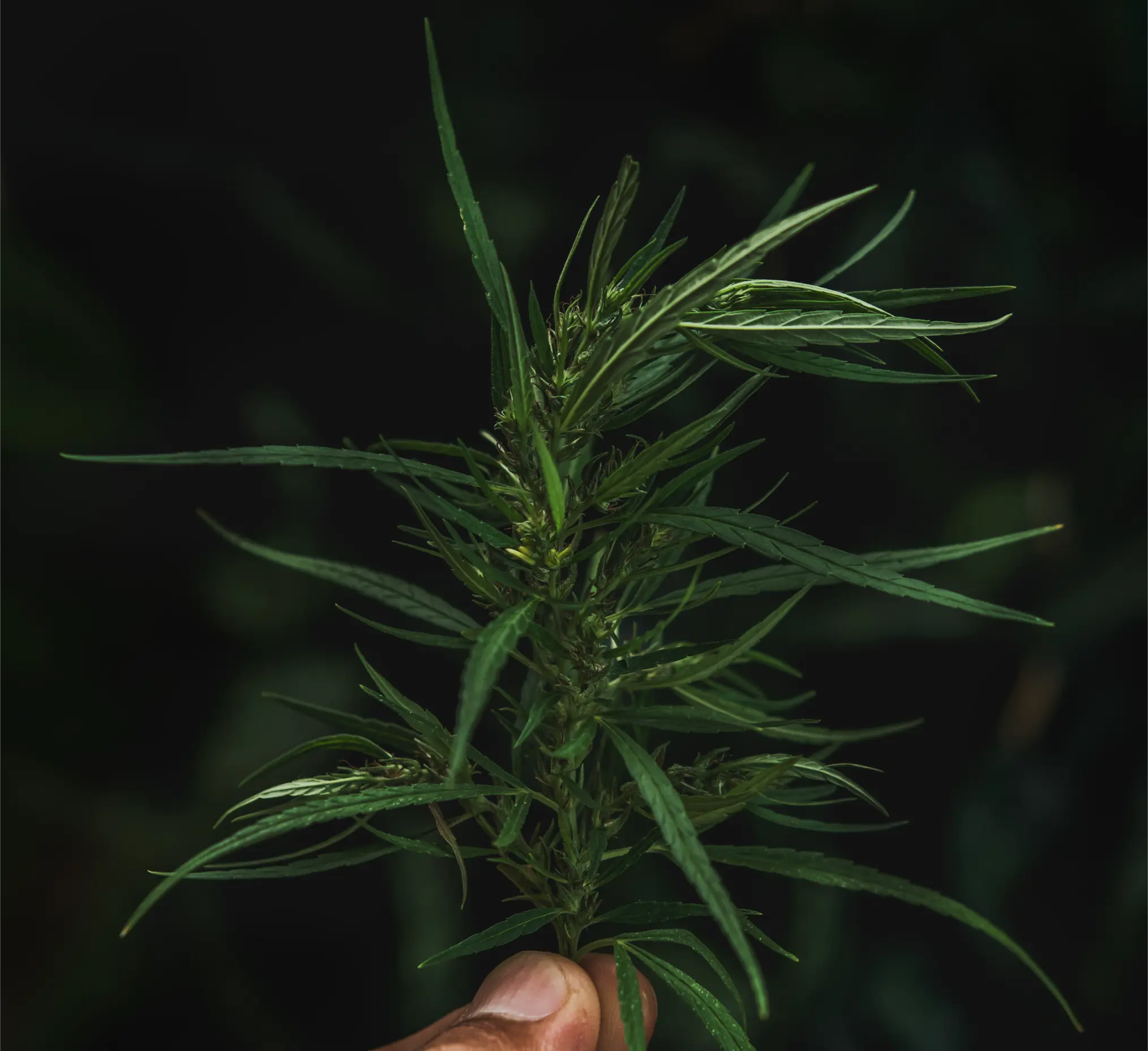
What to Measure: Input Ratios, Runoff Calcium, and Leaf Tissue Testing
Managing calcium under high photon intensity requires quantitative diagnostic monitoring across root, water, and leaf tissues.
Target Elemental Cation Ratios
In soilless hydroponics (coco, rockwool, peat), maintaining a balanced ratio between major cations prevents transport antagonism. Commercial agronomists target an elemental milliequivalent ratio of:
$$\text{Cation Ratio: } 4\text{ to } 5\text{ parts } K^+ : 3\text{ to } 4\text{ parts } Ca^{2+} : 1\text{ to } 1.5\text{ parts } Mg^{2+}$$
In elemental parts per million (PPM), a high-light peak bloom recipe should deliver approximately 220-260 PPM K, 160-190 PPM Ca, and 65-80 PPM Mg. If potassium exceeds 300 PPM while calcium is below 140 PPM, cation competitive inhibition is guaranteed.
Leaf Tissue and Plant Sap Analysis
Laboratory leaf tissue testing provides empirical verification of true calcium uptake. Fully expanded upper canopy sun leaves during peak vegetative and early flowering growth should test between 1.6% and 2.2% calcium on a dry-weight basis. If tissue calcium falls below 1.2%, structural cell wall integrity is compromised, leaving the plant highly vulnerable to botrytis (bud rot) and tip burn. Comparing sap calcium levels between upper newly expanding leaves and lower mature leaves reveals whether calcium transport is currently active or stalled by environmental deficit.
Real-Time In-House Petiole Sap Monitoring with Pocket ISE Meters
To detect calcium delivery bottlenecks before visual necrotic spotting manifests, commercial facility agronomists utilize portable ion-selective electrode (ISE) meters (such as Horiba LAQUAtwin pocket calcium meters). By extracting 0.2 mL of raw sap from freshly crushed leaf petioles during peak midday photoperiod hours, cultivators measure active xylem-stream calcium concentration directly in parts per million. In healthy, vigorously transpiring cannabis under 1,000+ PPFD, petiole sap calcium should measure between 450 and 650 PPM $Ca^{2+}$. If sap calcium drops below 300 PPM while reservoir levels are verified at 180 PPM, the operator receives definitive mathematical proof that transpirational mass flow has stalled, prompting immediate environmental adjustments to VPD and air movement days before permanent crop damage occurs.
Comparing Calcium Sources: Mineral Nitrates, Chelates, Organics, and Foliar Sprays
Choosing the correct chemical form of calcium dictates how quickly root systems can absorb ions and transport them into the vascular cylinder under high irradiance.
Calcium Nitrate ($Ca(NO_3)_2$) vs Calcium Chloride ($CaCl_2$)
Fully soluble technical-grade greenhouse calcium nitrate (typically formulated as double salts with ammonium: $5Ca(NO_3)_2 \cdot NH_4NO_3 \cdot 10H_2O$, containing 19% water-soluble calcium and 15.5% nitrogen) is the undisputed commercial gold standard. Divalent calcium paired with nitrate anions is readily absorbed by root cortical cells without leaving undesirable chemical residues.
Calcium chloride ($CaCl_2$) provides high calcium without nitrogen, making it attractive for late flowering. However, cannabis is highly sensitive to chloride toxicity. If chloride levels exceed 50 to 75 PPM in the root zone, chloride ions accumulate at leaf serrations, causing severe marginal necrosis that mimics potassium burn. Calcium chloride should only be utilized in micro-doses with Reverse Osmosis source water.
The Role of Targeted Foliar Calcium Applications
Because calcium moves through xylem mass flow, dense apical meristems and nascent bud clusters often suffer localized calcium starvation during rapid light ramps before root mass flow can adjust. Applying a gentle foliar spray of chelated calcium (calcium amino acid chelate or calcium acetate at 100 to 150 PPM Ca) during the pre-flower stretch directly bypasses the sluggish xylem vascular pathway.
Foliar calcium is absorbed directly across the leaf cuticle through stomatal and cuticular pores, reinforcing rapidly dividing calyx cell walls on contact. Discontinue all foliar spraying by week 3 of flowering to prevent moisture accumulation inside dense floral buds.
The Stagnant Canopy Burn: How 1,150 PPFD Melted Calyxes in a 78% RH Room
A licensed commercial cultivator in Michigan retrofitted an uninsulated 40-light flower room with 720W LED fixtures delivering 1,150 μmol/m²/s PPFD across 3-gallon coco coir pots. The grower ran a premium nutrient line with 190 PPM calcium. However, to save energy during winter, the grower turned off dehumidifiers during lights-on, allowing humidity to rise to 78% RH at 76°F air temperature (resulting in an air VPD of only 0.65 kPa).
The symptoms: By week 4 of bloom, upper sugar leaves developed severe copper necrosis, leaf tips curled down into sharp hooks, and developing flower clusters exhibited widespread calyx death. The grower assumed the LEDs were burning the plants or that calcium was deficient, dumping heavy doses of bottled cal-mag into the reservoir until EC hit 2.8 mS/cm.
The investigation: We audited the facility. Runoff EC had spiked to 4.8 mS/cm from the dumped cal-mag, yet tissue calcium in upper sugar leaves was an abysmal 0.9% (severely deficient). The root zone was drowning in calcium, but because the room was 78% RH, transpiration was paralyzed; zero calcium was being pulled to the tops.
The resolution: We flushed the root zones with a balanced 1.2 EC solution, brought commercial dehumidifiers online to drop humidity to 62% RH, raised daytime air temperature to 83°F (establishing a Leaf VPD of 1.35 kPa), and installed oscillating canopy fans to sweep stagnant boundary layers. Within five days, transpiration surged to 3.2 liters per plant daily, tissue calcium in new growth doubled to 1.8%, necrotic spotting ceased, and the harvest finished with dense, rock-hard floral colas.
When analyzing calcium movement through commercial crop canopies, agronomists must evaluate the hydraulic resistance of petiole and pedicel vascular bundles. In rapidly growing floral clusters, vascular xylem vessels are narrow and incompletely lignified, creating high frictional resistance to fluid movement. If daytime leaf temperature rises without a corresponding increase in relative humidity, transpirational suction pull can exceed the tensile cohesion of the water column in these narrow vessels, causing localized xylem cavitation (microscopic air bubble embolisms). Cavitation severs the fluid pipeline to terminal calyxes, preventing calcium delivery even if surrounding fan leaves are transpiring actively. Maintaining stable, moderate VPD ramps prevents catastrophic cavitation events during lighting step-ups.
Furthermore, boron ($B$) plays an indispensable synergistic role in facilitating calcium incorporation into structural cell walls. Boron acts as an essential chemical bridge, cross-linking rhamnogalacturonan-II (RG-II) pectic polysaccharides in the presence of divalent calcium ions. If boron is deficient in the nutrient feed (below 0.5 PPM B), calcium cannot properly bind into the middle lamella, resulting in brittle, fragile stems and malformed floral bracts that mimic classic calcium deficiency. Supplying bioavailable boron in a 1:200 to 1:300 elemental ratio with calcium ensures unhindered cell wall cross-linking under high photosynthetic irradiance.
Do
Drive Transpiration with 1.2 to 1.4 kPa Leaf VPD
Maintain warm 82°F to 84°F air temperatures and dialed humidity under LEDs to pull calcium steadily to growing floral tips via xylem mass flow.
Avoid
Over-Apply Potassium Bloom Boosters
Never spike potassium above 300 PPM under high light; monovalent potassium out-competes divalent calcium at root uptake portals, causing severe lockout.
Systematic Troubleshooting Sequence: Single-Variable Recovery Protocol
When upper-canopy leaves display copper necrotic lesions or curling margins under intense grow lights, follow this methodical recovery sequence.
Step 1: Check Environmental VPD and Airflow Before Changing Nutrients
Measure canopy air temperature, relative humidity, and Leaf Surface Temperature (LST) with an infrared pyrometer. Calculate true Leaf VPD. If Leaf VPD is below 1.0 kPa (too humid) or above 1.6 kPa (too dry and causing stomatal shutdown), environmental failure is the root cause. Adjust dehumidifiers and temperature to restore Leaf VPD into the 1.2 to 1.4 kPa target band, and verify that canopy air velocity measures 0.4 to 0.7 m/s.
Step 2: Audit Root-Zone Leachate EC and Cation Balance
Measure runoff EC. If runoff EC is more than 1.0 mS/cm higher than input solution, fertilizer salts are accumulating, creating osmotic suction that impedes calcium uptake. Flush root zones with a balanced 1.2 mS/cm EC nutrient solution containing 160 PPM Ca, 65 PPM Mg, and 180 PPM K with pH dialed to 5.9.
Step 3: Ease Photon Intensity Temporarily
Dim fixtures by 20% to 25% for 48 hours. Lowering photon irradiance reduces the speed of cellular division at apical meristems, aligning tissue growth rates with current calcium delivery rates and allowing the vascular system to stabilize.
Can calcium deficiency be reversed once brown necrotic spots appear on leaves?
Question sent by: Gregory Hayes, via email.
No. Once leaf tissue develops necrotic brown spots or margin collapse, that damaged cellular tissue is dead and cannot regenerate. Furthermore, because calcium is phloem-immobile, the plant cannot move calcium into previously damaged leaves. Your goal when correcting calcium delivery is to halt progression: ensuring that newly emerging leaves and expanding floral calyxes develop with pristine, rich green color and robust structural integrity.
Evidence Check, Final Decision Checklist, and Companion Weedth Resources
Separating commercial plant nutrition science from fertilizer marketing folklore is essential for mastering calcium management under high irradiance.
Evidence Check: Peer-Reviewed Calcium Science
Horticultural research consistently verifies several foundational truths regarding calcium dynamics in cannabis:
- High root calcium cannot overcome stagnant air: Studies demonstrate that even when root-zone calcium concentrations are doubled, tissue calcium in low-transpiring apical tissues remains deficient if boundary layer airflow and VPD are stagnant.
- Excessive magnesium induces calcium lockout: Applying heavy doses of Epsom salts ($MgSO_4$) or generic 2:1 cal-mag supplements can drive magnesium concentrations to levels where divalent $Mg^{2+}$ actively competes against $Ca^{2+}$ for root uptake channels. Maintain elemental calcium-to-magnesium ratios between 2.5:1 and 3:1.
- Calcium reinforces botrytis resistance: Peer-reviewed trials prove that cannabis floral tissue containing over 1.8% dry-weight calcium exhibits significantly higher resistance to Botrytis cinerea infection due to pectin wall enzyme resistance.
High-Light Calcium & Transpiration Management Checklist
- Maintain elemental calcium between 160 and 200 PPM in soilless fertigation solutions under 1,000+ PPFD.
- Hold daytime room air temperature at 82°F-84°F under LEDs to drive leaf transpirational mass flow.
- Maintain Leaf VPD between 1.2 and 1.4 kPa to sustain steady xylem suction tension without stomatal closure.
- Ensure horizontal canopy air movement measures 0.4 to 0.7 m/s to strip stagnant boundary layers across flower buds.
- Balance elemental cation ratios: keep potassium below 280 PPM and maintain a 2.5:1 to 3:1 Ca:Mg ratio.
- Separate calcium nitrate concentrates from sulfates and phosphates to prevent insoluble gypsum precipitation.
- Pre-buffer coco coir substrates thoroughly with calcium nitrate to saturate cation exchange binding sites.
- Conduct periodic dry leaf tissue testing; confirm upper canopy tissue calcium measures between 1.6% and 2.2%.
Furthermore, maintaining adequate root-zone aeration prevents anaerobic root conditions from collapsing plasma membrane potential. When roots receive continuous dissolved oxygen, ATP-driven proton pumps keep xylem loading portals energized, allowing calcium ions to be smoothly translocated into the ascending vascular transpiration stream.
Mastering the biophysical link between high light, calcium movement, and transpiration unlocks complete control over plant structural health. By aligning atmospheric transpirational pull with precision root nutrition, commercial cultivators eliminate tip burn, construct dense, mold-resistant floral colas, and capture the true yield potential of high-irradiance lighting.
Final Verdict: Calcium builds the frame; transpiration pulls it up. Keep the air moving, dial your Leaf VPD, and your canopy will transport structural strength to every calyx across the trellis.
To expand your technical cultivation foundation with our companion foundational guides, continue exploring Weedth resources below.
Share this article
A quick overview of the topics covered in this article.
Follow us
Latest articles

October 29, 2026

October 29, 2026