
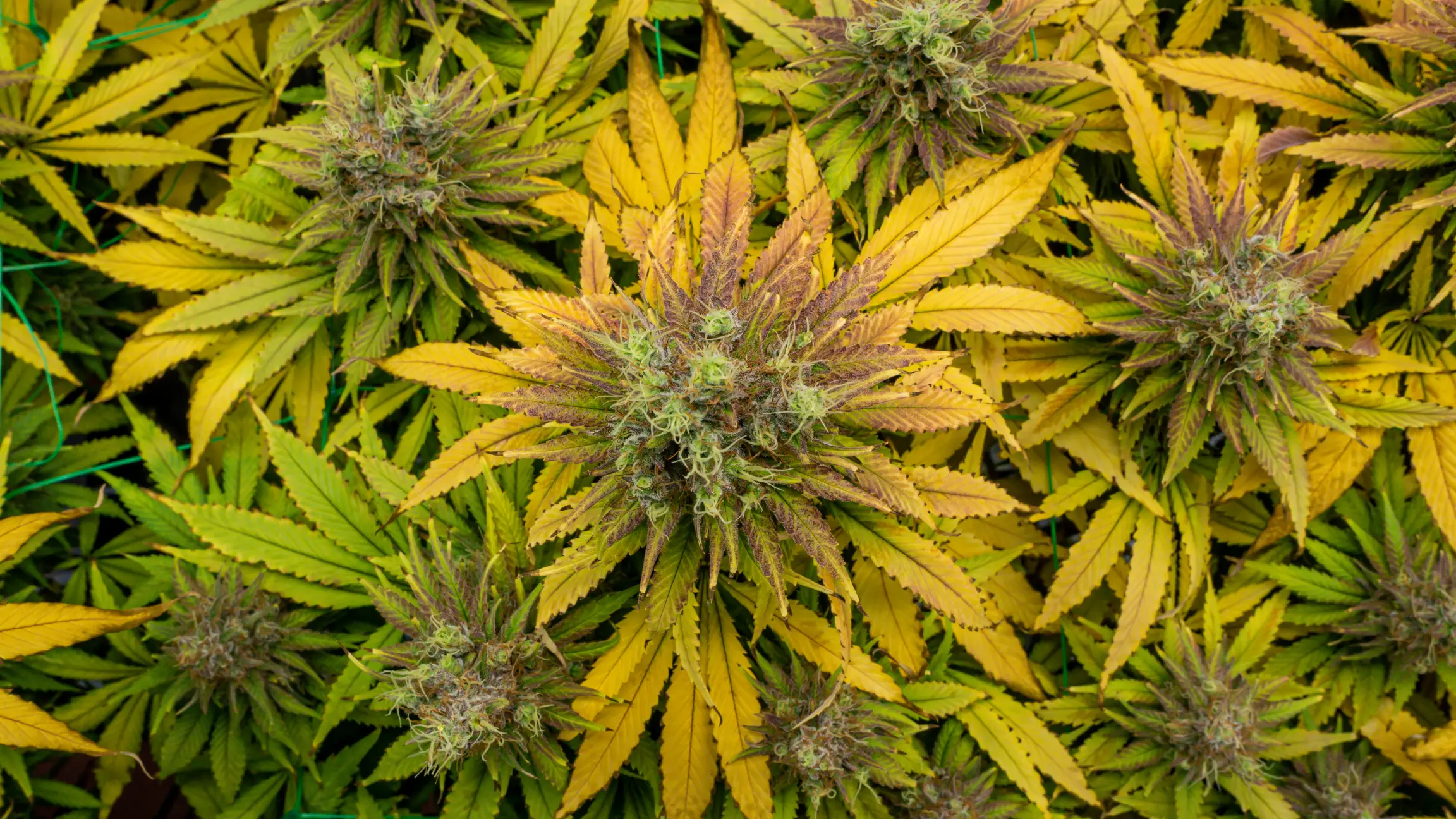
Kumaoni
Kumaoni is best understood through the way its regional genetics shape the entire grow. It is Himalayan multipurpose landrace, sativa-leaning charas population rooted in traditional northern Kumaon Himalayan population cultivated for hand-rubbed resin, seed and fibre. Its characteristic plant form is vigorous, hardy Himalayan plant with long internodes, open resinous inflorescences and a natural tendency to become extremely large. That morphology creates one central cultivation question: keeping a giant, long-node Himalayan multipurpose plant productive and resinous without crowding it, overfeeding it, or forcing the open charas-type flower structure toward modern compact density.
The target is not generic cannabis perfection. The target is clean, resinous, well-aerated flowers with intact trichomes, strong citrus-floral-charas aroma and mature euphoric effect rather than oversized leafy biomass. That difference matters because several of these traits would look unusual if compared with a modern dense hybrid. Open flowers, long internodes, lighter foliage or a long flowering cycle can be normal genetic behavior rather than problems to correct.
Reference timing and chemistry should be treated as planning ranges rather than guarantees. Indoor flowering is variable, so roughly 11-14+ weeks is a sensible planning window depending on phenotype and photoperiod response. Outdoor maturity generally falls from late September through early November, with many traditional selections finishing from mid-October into early November. THC is not standardized across the population, and moderate psychoactivity is common. Seed-grown regional populations can vary enough that phenotype notes are part of cultivation, not optional record keeping.
Strain Fingerprint: Keeping a giant, long-node himalayan multipurpose plant productive and resinous without crowding it, overfeeding it, or forcing the open charas-type flower structure toward modern compact density.
Strain Features
| Feature | Details |
|---|---|
| Type | Himalayan multipurpose landrace, sativa-leaning charas population |
| Genetic background | traditional northern Kumaon Himalayan population cultivated for hand-rubbed resin, seed and fibre |
| Sativa / Indica | Sativa-leaning Himalayan landrace rather than a standardized modern ratio |
| THC | Not standardized across the population; moderate psychoactivity is common |
| CBD | Moderate-to-high CBD expression is reported in many plants |
| CBG | Not consistently standardized |
| Indoor flowering | Indoor timing is variable; plan roughly 11-14+ weeks depending on phenotype and photoperiod response |
| Outdoor harvest | Late September through early November, with many traditional selections finishing around mid-October to early November |
| Yield | Potentially very high outdoors when roots and season length are unrestricted |
| Grow difficulty | Moderate outdoors, Advanced indoors due to scale and landrace variation |
| Plant structure | vigorous, hardy Himalayan plant with long internodes, open resinous inflorescences and a natural tendency to become extremely large |
| Typical height | Commonly 2-6 m outdoors, with many cultivated examples around 3-5 m |
| Flowering stretch | high, with long internodes and strong vertical extension rather than compact hybrid stacking |
| Feeding tendency | light-to-moderate fertility is safer than modern heavy-feed recipes; avoid pushing nitrogen simply because the plant is large |
| Watering behavior | large outdoor plants use substantial water, but mountain-adapted roots still benefit from drainage and oxygen between irrigations |
| Climate | well adapted to strong rain, humidity, cold nights and mountain weather, with notably useful mold resistance |
| Resistance | strong general hardiness and mold resistance; late-season airflow still matters around resinous flower clusters |
| Aroma | strong citrus, floral resin, lemon-spice and classic Himalayan hash or charas notes |
| Flavor | lemon peel, wild flowers, dry spice, resinous hash and occasional green or purple fruit nuances |
| Effect | soaring, euphoric and expansive Himalayan head effect that can settle into a warm, long-lasting buzz |
The table shows why Kumaoni needs a cultivar-specific method. Height and stretch dictate room geometry. Flowering duration dictates how long roots must remain healthy. Resistance defines environmental margin. Feeding tendency determines whether a modern high-EC recipe will improve flower mass or simply create excess leaf.
The most useful quality benchmark is clean, resinous, well-aerated flowers with intact trichomes, strong citrus-floral-charas aroma and mature euphoric effect rather than oversized leafy biomass. A grow that reaches that target is more successful than one that produces greater total biomass while losing aroma, resin integrity or mature flower texture.
Genetic Lineage
Kumaoni belongs to traditional northern Kumaon Himalayan population cultivated for hand-rubbed resin, seed and fibre. Regional cannabis populations are shaped by climate, farmer selection, local use and long-term open pollination. That history creates a broader genetic field than a single elite clone, which is why the same strain name can still contain meaningful plant-to-plant variation.
The recurring phenotype framework is: Green and purple expressions are both reported, with variation in height, resin, cannabinoid balance and exact harvest date. These differences should be recorded instead of immediately corrected. A purple stem, narrow leaf, long internode or unusual flower shape may be genetic expression. The first question should be whether the plant is healthy, not whether it looks like a modern hybrid.
For keeper selection, one dramatic trait is not enough. The tallest plant may be too late. The most colorful plant may have weak aroma. The heaviest plant may cure flat. A useful keeper combines practical structure, stable flowering, resin, aroma persistence and an effect that represents the population.
The lineage also explains environmental behavior. well adapted to strong rain, humidity, cold nights and mountain weather, with notably useful mold resistance. That adaptation is a starting advantage, but controlled cultivation still improves quality when roots are oxygenated, branches are supported and late flowers stay dry enough to preserve resin.
Effect Breakdown
Initial lift
The first phase is typically bright and elevating. The mind feels open rather than compressed, with a clean emotional rise that fits daytime or outdoor use.
The intensity of this stage depends on dose and tolerance. The same cultivar can feel functional at a low dose and immersive or sedating at a higher one, so effect descriptions should be treated as direction rather than certainty.
Peak phase
The cerebral effect can become expansive and slightly trippy without necessarily feeling harsh. Music, nature, movement and conversation may feel more immersive.
The intensity of this stage depends on dose and tolerance. The same cultivar can feel functional at a low dose and immersive or sedating at a higher one, so effect descriptions should be treated as direction rather than certainty.
Late phase
The high often settles into a warm, durable buzz rather than a sudden sedative drop. Plant-to-plant cannabinoid variation can change how physical this stage feels.
The intensity of this stage depends on dose and tolerance. The same cultivar can feel functional at a low dose and immersive or sedating at a higher one, so effect descriptions should be treated as direction rather than certainty.
Overall, the cultivar is associated with soaring, euphoric and expansive Himalayan head effect that can settle into a warm, long-lasting buzz. Harvest maturity can shift the balance. Cutting too early often makes the first phase sharper and shorter. Letting an already mature plant run too long can soften the brighter side and increase physical weight.
Warning
Do not redose too quickly
Kumaoni can begin with a clear, buoyant lift and continue building into a broader, more immersive state. Wait for the first dose to develop before adding more, especially with an unfamiliar phenotype or an early harvest that emphasizes the sharper mental phase.
Flavor & Aroma Profile
On the living plant, mature flowers should move toward strong citrus, floral resin, lemon-spice and classic Himalayan hash or charas notes. Fresh flower still contains water and green plant volatiles, so the final jar does not reveal itself completely until drying and curing remove that interference.
After cure, the flavor target is lemon peel, wild flowers, dry spice, resinous hash and occasional green or purple fruit nuances. The best samples show layers rather than one loud smell. Bright fruit, floral, mint, citrus or anise notes usually sit above deeper wood, resin, hash or spice. Those lighter top notes are also the first to disappear when late-flower temperatures are excessive or drying is too fast.
A practical flavor test begins before harvest. Smell the same flower site at similar times of day during the final two weeks. If the high notes disappear after a heat event, the plant is already showing the cost of the environment. That observation should influence the next run.
After drying, compare whole-bud aroma with the smell released after breaking the flower. Strong internal aroma suggests the resin and volatile chemistry survived inside the bud rather than existing only as a surface smell. That is one reason gentle handling matters.
Weedth Flavor Target: clean, resinous, well-aerated flowers with intact trichomes, strong citrus-floral-charas aroma and mature euphoric effect rather than oversized leafy biomass
Dominant Terpenes
| Terpene / Evidence | Status | Interpretation |
|---|---|---|
| Laboratory status | Not standardized | No robust, repeatable terpene panel exists for the population as a whole. |
| Citrus top notes | Sensory evidence | Strong lemon and citrus character is repeatedly reported and should be treated as phenotype expression rather than assigned to an invented percentage. |
| Floral volatiles | Sensory evidence | The floral side can be strong in well-ripened plants and is one of the first layers lost in a hot dry. |
| Hash and resin base | Sensory evidence | Deep resinous, spicy and charas-like notes become more dominant after cure. |
| Possible pinene / limonene family contribution | Inference only | Pine-citrus chemistry is plausible, but exact dominance should not be claimed without analysis. |
A precise terpene chart is not justified for this exact regional population. Sensory descriptions can be consistent without proving a laboratory percentage. The more accurate approach is to separate documented aroma from chemical inference.
Terpenes are horticulturally useful because they are volatile. A hot canopy, repeated drought stress or rapid drying can reduce aromatic quality without producing an obvious visual disaster. The grower can therefore use aroma as an additional late-flower quality signal.
For Kumaoni, the practical goal remains clean, resinous, well-aerated flowers with intact trichomes, strong citrus-floral-charas aroma and mature euphoric effect rather than oversized leafy biomass. If the final jar has lost the upper aromatic layers, the next run should examine temperature, harvest timing, dry speed and handling before changing genetics.
Indoor vs. Outdoor Growing
| Aspect | Indoor | Outdoor |
|---|---|---|
| Architecture | vigorous, hardy Himalayan plant with long internodes, open resinous inflorescences and a natural tendency to become extremely large | vigorous, hardy Himalayan plant with long internodes, open resinous inflorescences and a natural tendency to become extremely large with greater root volume and environmental expression |
| Flowering / season | Indoor timing is variable; plan roughly 11-14+ weeks depending on phenotype and photoperiod response | Late September through early November, with many traditional selections finishing around mid-October to early November |
| Main challenge | keeping a giant, long-node Himalayan multipurpose plant productive and resinous without crowding it, overfeeding it, or forcing the open charas-type flower structure toward modern compact density | weather, season length, support and site access |
| Feeding | light-to-moderate fertility is safer than modern heavy-feed recipes; avoid pushing nitrogen simply because the plant is large | light-to-moderate fertility is safer than modern heavy-feed recipes; avoid pushing nitrogen simply because the plant is large adjusted for native soil fertility and rainfall |
| Climate control | High control over light, temperature, humidity and irrigation. | well adapted to strong rain, humidity, cold nights and mountain weather, with notably useful mold resistance |
| Best advantage | Phenotype-specific timing and precise canopy control. | Sunlight, root scale and expression of regional adaptation. |
Indoors, the main cost is geometry. The grower has to fit high, with long internodes and strong vertical extension rather than compact hybrid stacking into a room while preserving enough horizontal space for air and light. That is why transition height is a cultivar-specific number rather than a universal rule.
Outdoors, the plant can use its natural scale, but the season becomes the hard limit. well adapted to strong rain, humidity, cold nights and mountain weather, with notably useful mold resistance. A site that receives morning sun and drains quickly after rain will use that adaptation better than a sheltered but stagnant corner.
Neither environment is automatically superior. Indoor gardens trade scale for control. Outdoor gardens trade control for root volume, sunlight and regional expression. The best choice is the environment in which the strain’s main limitation can be managed consistently.
Strain-Specific Grow Guidance
Kumaoni is not difficult because it is fragile. It is difficult because its scale, timing and original agricultural purpose are different from those of a compact modern indoor hybrid. This is a tall Himalayan multipurpose population selected across generations for fibre, seed and hand-rubbed resin. Its useful traits include vigorous extension growth, long internodes, flexible lateral branches and elongated, comparatively open inflorescences. Those traits help a large plant move air through its flowers, but they also punish a room that is planned around short plants and eight or nine weeks of bloom.
Begin with population selection, not a single “average” plant
Kumaoni should be approached as a regional seed population with meaningful variation. Green and purple expressions, earlier and later plants, differences in branch angle, resin feel, aroma and cannabinoid direction can all occur. Germinating one seed may produce an interesting plant, but it cannot represent the population. A serious preservation or keeper hunt needs enough individuals to reveal patterns, with every plant labeled before flowering makes the differences obvious.
Record sex, first visible floral transition, stretch, branch strength, resin onset, aroma at the same flower age and actual harvest date. Keep those records connected to the dried flower. The plant that looks most dramatic outdoors is not automatically the best keeper. A useful selection combines a finish date your climate can support with persistent aroma, mature resin, a workable flower-to-leaf ratio and the effect direction you want.
Indoor planning: flip by architecture, not by calendar
Indoors, Kumaoni can turn an ordinary vegetative period into a height emergency. Seedlings may begin with a manageable footprint and then express much stronger vertical and lateral growth as roots establish. Do not wait for the tent to look full before changing the photoperiod. For a first run, the safer trigger is a rooted plant with enough branch length to train, not a canopy that already occupies every square centimetre.
Allow generous headroom above the training plane and usable space below it. The lower space matters because long branches often need to be pulled outward and because the root container cannot be treated as an afterthought during an eleven-to-fourteen-week or longer flowering cycle. If the accession is untested in your room, flower it younger than a familiar hybrid and let the first run reveal its real stretch. Clones from a selected female can be run more precisely on the second cycle.
Training: create long illuminated lanes
The natural advantage of Kumaoni is flowering length along flexible branches, not a dense cluster of identical tops. Low-stress training and a wide screen usually make more sense than repeated hard topping. Bend the main stem while it is still supple, guide laterals into separate lanes and keep enough distance between them for leaves and flower clusters to move independently in the air.
One early topping can be useful when vertical space is especially limited, but repeated topping can create too many growing points and a congested centre. Continue gentle tucking through the early stretch, then stop major structural work once flower sites are established. Late supercropping should be an emergency height correction, not the planned method. Long, hollow-leaning stems can crease or split, and a repair made deep in flower creates support and infection problems that early planning would have avoided.
Preserve useful branch length
Spread laterals early, keep open corridors through the canopy and support the main flowering runs before resin weight accumulates.
Building a thicket of small tops
Repeated topping and late aggressive stripping can replace Kumaoni’s efficient open structure with a crowded canopy that is harder to light and slower to finish.
Pruning window and canopy depth
My preferred pruning window for Kumaoni is late vegetative growth through the end of stretch. First identify which branches actually reach the training plane. Then remove shoots trapped permanently below it, small interior forks that will never see direct light and growth pressed against the container or room wall. Do not strip the plant simply because the internodes look unfamiliar. The spaced flowers along a long branch are part of this cultivar’s yield and ventilation logic.
Once the stretch is mostly complete, make only selective corrections. A leaf that blocks an entire flowering lane or creates a wet contact point can go. Healthy leaves exposed to light should generally stay. Heavy late defoliation can interrupt a plant that already needs a long, uninterrupted ripening period, and it does not magically turn loose Himalayan flowers into compact commercial buds.
Root-zone longevity and irrigation
A long-flowering Kumaoni run is a root-management project. Outdoors, deep aerated soil gives the plant access to water during the large summer growth phase and buffers the transition into resin production. In containers, the root volume must match the intended canopy. A plant that is allowed to become enormous in a small pot will demand frequent irrigation, accumulate salts more easily and lose stability late in flower.
Use a medium that drains freely but does not force violent wet-to-dry swings. The goal is steady oxygen and predictable moisture, not repeated wilting as a resin trick. During stretch, water use may rise sharply as new leaf and branch area develops. Later, demand may slow while the root mass remains large. Irrigate according to pot weight, runoff behaviour and plant response rather than continuing a peak-stretch schedule automatically. Cold saturated media are especially risky near the finish because they slow root activity while the top of the plant still needs weeks to mature.
Feeding behavior: size does not equal appetite
There is no published Kumaoni-specific EC curve, so exact feeding numbers should not be presented as science. The dependable practical direction is light-to-moderate fertility compared with a modern heavy-feeding hybrid. A four-metre plant can still be genetically adapted to relatively lean mountain agriculture. Feeding it according to visual size alone encourages excessive leaf, softer stems, longer internodes and a later, less aromatic finish.
| Growth stage | What Kumaoni is doing | Useful feeding response | Signal to back off |
|---|---|---|---|
| Root establishment | Building the root system that will support a long cycle | Begin gently; prioritize aeration and even moisture over mineral strength | Dark new growth, stalled roots or a wet container that stays heavy |
| Active vegetative growth | Extending rapidly with long internodes and flexible laterals | Maintain balanced nutrition without chasing dark-green leaves | Clawing tips, overly soft growth or internodes lengthening faster than the room can manage |
| Photoperiod transition | Adding substantial branch and leaf area before flowers settle | Do not cut nitrogen abruptly, but avoid a strong late-veg push | A crowded leafy centre and delayed formation of distinct flower clusters |
| Early flower | Finishing stretch while resin sites begin to organize along the branch | Use steady, moderate bloom nutrition and keep calcium and magnesium available where water or medium requires them | Burnt tips, dark foliage and new leafy growth inside the flowers |
| Mid flower | Stacking elongated, airy-to-moderate clusters rather than one solid cola | Hold a stable formula; correct demonstrated deficiency instead of adding multiple boosters | Rising substrate EC, stalled drinking or aroma that becomes dull after repeated strong feeds |
| Ripening | Hardening bracts, maturing resin and reducing fresh pistil production unevenly across the canopy | Taper according to plant demand and protect root function; do not force a premature fade | Fresh soft leaf growth, delayed maturation or a plant kept unnaturally dark green to harvest |
Judge deficiencies by the whole plant and the root zone. A pale lower leaf late in a long cycle is not a reason to flood the medium with nitrogen. Conversely, deliberately starving a plant for several weeks does not improve its genetic aroma. The productive middle ground is a clean root zone, moderate tissue colour and enough nutrition to complete resin maturation without restarting vegetative growth.
Light response and vertical distribution
Kumaoni wants broad, even light across a deep branch system. The highest tips can look vigorous while the middle of the plant produces the majority of usable flower. Flattening the canopy early is therefore more valuable than driving one small top layer at extreme intensity. In a tall room, two support levels or careful side access can keep long flowering lanes inside an efficient light field.
Increase intensity only after stretch control is working and irrigation is predictable. A large thin-leaf canopy can transpire heavily, so more photons immediately increase the burden on roots and climate control. Watch leaf angle through the light period, bleaching at the highest tips and whether upper flowers remain aromatic. If the top is stressed while the interior is dim, rearrange geometry before increasing power.
Photoperiod and the long finish
A conventional 12/12 flowering schedule is the sensible baseline for an unknown seed population. Do not assume every female will transition or finish at the same rate. Some plants may settle relatively early; others can continue producing fresh pistils and new flower growth well after a compact hybrid would be done. Label first-flower dates and track each phenotype individually.
When height is tight, reducing the light period slightly can sometimes help a stubborn tropical or Himalayan expression move toward completion, but this should be a measured late-cycle adjustment, not a substitute for proper selection. The more valuable long-term solution is keeping clones or seed from plants whose flowering rhythm matches the intended environment.
Climate: monsoon resilience without the myth of immunity
Kumaoni’s elongated, open flower structure makes sense in a Himalayan multipurpose population exposed to seasonal moisture. Air can move between clusters more easily than through a rock-hard indica cola. That is a useful defence, not a promise that the plant is rot-proof. When long branches cross, leaves touch wet flowers or autumn rain persists, local humidity can still remain high enough for disease.
Indoors, aim horizontal airflow along the flowering lanes and a separate path under the canopy. Do not point a strong fan at one branch while the centre stays still. Outdoors, give each plant enough distance to dry after dew, stake branches before storms and inspect stem junctions after prolonged rain. A plant that survives wet weather may still lose aroma and resin quality if the finish remains warm, humid and stagnant.
Warning
Do not confuse open flowers with unfinished flowers
Kumaoni may never form the hard, continuous colas used as maturity references for modern hybrids. Judge swollen bracts, resin condition, declining fresh pistils and aroma stability across several branch levels. Waiting for genetically open flowers to become unnaturally dense can push a finished phenotype past its best window.
Support, storms and the outdoor footprint
Outdoor plants can exceed ordinary garden scale when they receive deep soil and a full season. Install stakes, perimeter lines or a broad trellis while branches are still easy to position. Support should hold flowering runs apart, not pull them into one humid bundle. In exposed sites, reduce leverage by tying branches at more than one height and leave enough movement for stems to flex rather than snap.
Site selection should account for the plant’s shadow, visibility and access at harvest. A mature Kumaoni can be difficult to inspect from the ground and awkward to move through a narrow gate. Plan working paths before midsummer growth closes them. That practical detail matters because disease inspection, staged harvest and careful branch handling all require physical access.
Harvest mapping and phenotype separation
Do not harvest the whole population because one plant is ready. Follow resin and bract maturity on upper, middle and lower branches, and note whether the plant is still producing a meaningful wave of fresh pistils. Colour is not a maturity test: a purple expression can colour early, while a green plant may be further advanced chemically.
Large outdoor plants often benefit from a staged harvest. Remove mature, exposed branches first and allow later interior sections to continue if weather permits. Keep each phenotype separate through drying and the early cure. Only then can structure, resin, aroma persistence and effect be compared honestly. Mixing every plant into one batch destroys the information a landrace grow is uniquely capable of providing.
Weedth Bud Flavor Tips
Kumaoni’s flavor target is not generic sweetness. The most compelling flowers combine lemon peel or sharp citrus with wild floral resin, dry mountain herbs, peppery spice and the warm, tactile depth associated with traditional charas. Some phenotypes can move toward pine, incense, green fruit or darker purple-fruit nuances, but the bright upper layer is usually the first part damaged by heat and rough post-harvest work.
Use the living plant as an aroma map
Smell labeled flowers at the same time of day during the final two or three weeks. Rub the stem lightly rather than squeezing the flower, and note whether the aroma is citrus-floral, pine-resinous, spicy, fruity or faint. Repeat after a hot day and after irrigation. A phenotype whose top notes disappear whenever the canopy overheats is telling you where its quality limit sits.
Do not select by intensity alone. A loud green smell can cure into something flat, while a quieter flower may retain a layered lemon-incense core after drying. The decisive comparison happens in the jar, not in the garden.
Harvest aroma and effect together
Very early Kumaoni can preserve a piercing high note but deliver thin flavor and an incomplete, overly sharp effect. A fully mature plant should show swollen bracts, stable resin, fewer new white pistils and an aroma that no longer feels watery or merely green. If the lemon-floral layer begins to recede while resin remains healthy, the plant may be moving beyond its brightest aromatic window.
Because branches can mature unevenly, staged harvest is also a flavor tool. It prevents exposed tops from losing their fresh citrus character while shaded branches receive the extra days they need to complete their resin.
Dry according to flower architecture
Kumaoni’s open clusters usually release moisture more evenly than a dense dessert hybrid, so blindly copying a long whole-plant dry can overshoot. Start with whole branches or large sections in a dark room around 16-20°C and 55-60% relative humidity, then adjust by actual drying speed. Thin branches and separated clusters may be ready sooner than a huge leafy plant hung intact.
Air should exchange through the room without blowing directly across resinous flowers. Direct fan pressure dries the exposed surface first and carries volatile aroma away. Handle branches by the stems, keep them from rubbing against one another and avoid compressing the live resin that made the population valuable for hand-rubbed charas in the first place.
Trim with the resin purpose in mind
A light dry trim is usually the better fit. Leaving some protective leaf during the first part of drying can slow the process, but retaining too much leaf on a large outdoor plant can trap moisture and add green odour. Remove damaged, wet or contaminated material at harvest. Save clean resinous trim separately if local law allows processing, and never mix questionable outdoor material into the premium flower batch.
Cure phenotypes separately
Place each labeled phenotype in its own container once moisture is even enough for curing. A target near 58-62% internal relative humidity is practical, but the number does not replace inspection. The flower should feel resilient rather than wet, and the aroma should become clearer after a short opening instead of releasing ammonia or a heavy grassy smell.
The first two weeks often remove the loudest green interference. Four to eight weeks reveal whether the citrus and floral layer remains attached to the deeper hash, spice and wood. Open containers briefly as needed, store them cool and dark, and use smaller jars for long-term comparison so the entire sample is not exposed every time one flower is evaluated.
Pro Tip: Keep three small reference samples from the most promising plant: one from an early exposed branch, one from the main harvest and one from a later interior branch. After a month, compare aroma, smoothness and effect blind. That test teaches more about Kumaoni’s true harvest window than colour or a single trichome photograph.
Weedth Bud Boost Tips
With Kumaoni, “bud boost” should mean converting a very large plant into a high percentage of mature, resinous flower while retaining its open Himalayan architecture. The highest-return tools are plant count, branch geometry, root stability and finish time. Bottled bloom stimulants cannot correct a canopy that was allowed to outgrow its room.
Grow fewer plants than your first instinct suggests
A single vigorous female can occupy the footprint of several compact hybrids. Indoors, leave unused floor area at the start so branches have somewhere to go during transition. Outdoors, spacing should allow sun and air to reach both sides of the plant and should leave a working path for inspection. Overplanting turns Kumaoni’s natural vigour into shaded interior biomass.
Convert height into illuminated branch length
Set a broad screen or radial tie points before the flip. Guide the longest laterals outward and keep them at a similar height without forcing every tip into an identical grid. Kumaoni can produce useful flowers along a long run when light reaches the branch. The goal is a series of separated flowering lanes, not a solid mat of leaves.
Choose root volume for the finish, not the flip
The root system must remain functional through a long bloom. A container that is adequate on the day of the flip may become a daily irrigation problem six weeks later. If space prevents a larger pot, reduce the final canopy rather than expecting supplements to compensate. Outdoors, loosen a deep planting area and protect drainage; the plant benefits more from stable access to water and oxygen than from a concentrated feeding pocket.
Thin once the useful architecture is visible
At the end of stretch, remove weak shoots that remain below the productive light field, crowded inward-facing forks and damaged growth. Preserve well-lit secondary sites along the branches. This is a cultivar where indiscriminate lollipopping can throw away productive flower length, while doing nothing creates too much interior shade. The correct cut is determined by access to light and air, not by a fixed percentage of the plant.
Support before resin weight changes the branch angle
Install the second support layer while flowers are still light. Long flexible branches can sag slowly and overlap neighbouring lanes, creating shade and humidity exactly when resin production accelerates. Early support preserves spacing without asking brittle late-flower stems to accept a major correction.
Feed the light field, not leaf colour
Before increasing fertilizer, check whether the middle of the canopy receives usable light. Kumaoni can look pale beside a broad-leaf hybrid and still be nutritionally adequate. Increasing nitrogen to darken every leaf often adds more shade and delays maturation. Improve geometry, irrigation consistency and root oxygen first; correct a documented deficiency second.
Use the long season as an advantage
A long flowering window gives the plant time to build resin across many separated clusters, but only if roots and climate remain stable. Avoid dramatic late-cycle droughts, aggressive PK spikes or repeated stress intended to force potency. The population’s traditional value comes from resin production on a living plant, not from being pushed into swollen, water-heavy colas.
Keep only the performance you can repeat
After drying, calculate the result by phenotype: premium flower, lower-grade flower, trim, losses and days required. A giant plant with an impressive wet weight may be less useful than a smaller, earlier female with better aroma retention and a cleaner ratio of finished flower. The best boost for the next cycle is selecting the plant whose quality fits your environment.
Master Advice: Kumaoni responds better to disciplined scale management than to bottle chasing. If the canopy is too large, the roots are undersized or the finish is too late for the climate, a bloom additive will not rescue the run. Fewer branches, better placement and a phenotype that actually matures will.
Medical Uses & Benefits
This section is educational and conservative. A named strain is not a medicine with standardized composition. The same seed population can produce different cannabinoid ratios, and clinical research usually evaluates cannabinoids or formulations rather than one strain name.
Stress And Mood
The euphoric direction may feel subjectively helpful for temporary stress or low mood, but the strain should not be presented as a proven treatment.
Cbd Variability
Some plants reportedly express moderate-to-high CBD, which may change the subjective balance considerably. Only testing can confirm the cannabinoid ratio of an individual plant.
Pain And Inflammation Interest
Consumers sometimes seek Himalayan resin strains for physical comfort, but evidence belongs to cannabinoids and terpenes generally, not to the strain name itself.
Anxiety Sensitivity
A soaring landrace effect can be comfortable for some users and too mentally expansive for others, especially at high doses.
The reference effect is soaring, euphoric and expansive Himalayan head effect that can settle into a warm, long-lasting buzz. Consumers should match that direction to their own tolerance, medications and goals. A stimulating cultivar can worsen anxiety or sleep problems. A heavy cultivar can impair daytime function.
Anyone using cannabis for a medical condition, taking prescription medication, pregnant or breastfeeding, or managing psychiatric, neurological or cardiovascular risk should discuss use with a qualified health professional.
Ideal User Profile
Kumaoni best suits a consumer who actually wants soaring, euphoric and expansive Himalayan head effect that can settle into a warm, long-lasting buzz. Choosing by THC percentage alone misses the character that makes a landrace or heritage strain interesting.
Experienced consumers are more likely to appreciate the full effect. Lower-tolerance users should start with a small amount because the mental phase can continue building after the first few inhalations.
Flavor-focused users should look for lemon peel, wild flowers, dry spice, resinous hash and occasional green or purple fruit nuances. A sample that no longer shows those defining notes may still be potent, but it is not expressing the cultivar at its highest quality.
The ideal grower is someone willing to label phenotypes, make structural decisions before flowering becomes crowded and protect the dry. These cultivars reward observation more than a rigid calendar.
Grower Notes and Feedback
Kumaoni reports become much more useful when the plant is treated as a population rather than a single commercial strain. One grower may describe a very late green plant with towering extension growth; another may find an earlier purple expression with a different aroma and resin feel. Those accounts are not necessarily contradictory. Open-pollinated regional material carries variation, and the environment reveals different parts of it.
The seedling does not predict the final footprint
The first important note is the date vigorous extension begins. A small plant can accelerate once the root system reaches the edge of its container or outdoor soil warms. Photograph the plant against a fixed reference at the flip and again after two and four weeks. That gives a real stretch record and prevents the second run from being planned around memory.
Flowering onset matters more than the breeder-calendar finish
Record the first consistent female flower formation, not just the date the indoor timer changed or outdoor days shortened. Two Kumaoni females flipped together can organize their flowers at different speeds. Counting from visible transition explains the harvest window better than assuming every plant has spent the same number of effective flowering days.
Open flower structure is a feature with limits
Growers accustomed to compact hybrids sometimes assume spaced calyx clusters are weak or unfinished and respond with more fertilizer. That often produces leaf rather than quality. A better note is whether the clusters continue swelling, resin becomes denser and the aroma gains separation. Kumaoni should be allowed to look like a Himalayan multipurpose plant.
Large plants reveal irrigation mistakes slowly
A deep canopy can stay visually upright while the container cycles between too wet and too dry. Track irrigation volume, interval and runoff trend during stretch, mid flower and ripening. A sudden reduction in drinking can signal cooler root conditions, accumulated salts, restricted roots or natural maturation. Continuing the old schedule without investigation is where late root problems begin.
Colour and chemistry must be logged separately
Purple pigmentation can be a useful identification trait, especially when cooler nights intensify it, but it does not prove ripeness, potency or superior aroma. Label green and purple plants, dry them separately and compare them after a meaningful cure. The keeper may be the less colourful plant if it finishes earlier, holds the lemon-floral layer longer or delivers the clearer euphoric effect.
The most revealing notes come after drying
Record dry duration, final flower texture, whole-bud aroma, broken-bud aroma and how the jar changes over four weeks. Also note which branches dried too quickly. On a large Kumaoni plant, upper thin branches, inner leafy sections and heavier lower forks may not behave alike in the dry room. Separating them teaches the grower how to divide the next harvest.
A concise but useful Kumaoni diary includes phenotype code, sex, first flower, stretch, branch angle, support date, feeding ceiling, peak aroma, weather or room humidity during the finish, harvest date, dry duration and cured effect. Those records turn a rare landrace run into knowledge instead of a collection of impressions.
Weedth Experience
What draws me to Kumaoni is that the plant refuses to be reduced to the usual modern checklist. It is not trying to be short, uniform, instantly photogenic or finished on a commercial deadline. Its story is visible in the architecture: long fibre-capable stems, broad reach, spaced resinous flowers and enough variation to remind me that a landrace population is living agricultural history, not a branded flavour formula.
If I were choosing a first indoor plant, I would not select the fastest seedling or the darkest leaves. I would look for a female that begins flowering decisively, accepts horizontal guidance without becoming brittle and keeps distinct flower clusters instead of burying itself in leaf. The most beautiful decision in this run would happen early, when an almost empty screen feels wasteful. Leaving that space is an act of trust. Kumaoni is likely to claim it later.
I would resist the urge to reward every burst of growth with more feed. A plant this large can make restraint feel like neglect, especially when it stands beside compact hybrids with glossy foliage. But the finished jar does not care how impressive the nutrient colour looked in week three. It cares whether the roots stayed alive through a long cycle, whether the branches remained separate and whether the citrus-floral resin survived the finish.
The moment I would anticipate most is not the first sight of frost. It is the point late in flower when the green plant smell begins to separate into lemon peel, mountain herbs, dry flowers and warm resin. That change would tell me more than a breeder calendar. I would walk the canopy branch by branch, because a plant of this scale rarely reaches that moment everywhere at once.
Kumaoni also changes what I consider an attractive bud. With many modern strains, density is treated as proof of quality. Here I would rather see clean, elongated flowers with intact gland heads and enough internal space to finish safely. Trying to force those flowers into hard cones would erase the reason I chose the cultivar. Its elegance is in the relationship between structure and place: a plant built to become tall, to carry seed and fibre, and still to offer resin that can be worked by hand.
My keeper would not necessarily be the biggest or the purple one. I would wait through the cure and choose the plant whose aroma still opens in layers, whose effect feels expansive without becoming thin or chaotic, and whose finish fits the environment closely enough to repeat. That last point matters. A spectacular female that cannot mature before the weather closes is a fascinating specimen, but not always a practical garden partner.
As finished flower, the best Kumaoni should feel alive rather than engineered. I expect lift and breadth first, then a warmer resinous body as the session develops. I would use it when there is room for attention to wander: a long walk, music, unhurried conversation or a day outside. This is not the cultivar I would choose to disappear into the background. Its value is the opposite. It makes origin, cultivation and effect feel connected.
Weedth Score
Growing Experience 8.6/10 Reward relative to the cultivar-specific work required.
Bud Structure & Visual Appeal 8.5/10 How well mature flowers express the natural structure and resin.
Aroma Complexity 9.3/10 Depth, separation and distinctiveness of the aromatic profile.
Flavor & Smoothness 9.1/10 How clearly flavor survives a controlled dry and cure.
Effects & High Experience 9.2/10 How completely the experience reflects the cultivar’s identity.
Overall Satisfaction & Recommendation 9.0/10 Overall value for growers and consumers who understand its niche.
Overall average: 9.0/10. This is not a universal ranking. The score reflects how completely Kumaoni delivers its own identity when grown and finished well.
Personal Closer: Kumaoni is worth growing when the goal is to preserve its character, not to make it resemble a different plant.
FAQ
Grower Question
Is Kumaoni beginner-friendly?
The main challenge is keeping a giant, long-node Himalayan multipurpose plant productive and resinous without crowding it, overfeeding it, or forcing the open charas-type flower structure toward modern compact density. A careful beginner can learn from it, but growers with experience in canopy and irrigation management will reach consistency faster.
How long does Kumaoni flower?
Indoor flowering is variable, so plan roughly 11-14+ weeks depending on phenotype and photoperiod response. Outdoors, maturity generally falls from late September through early November, with many traditional selections finishing from mid-October into early November. Phenotype and latitude can shift the exact date.
How much does Kumaoni stretch?
The reference pattern is high, with long internodes and strong vertical extension rather than compact hybrid stacking. Flip height should be planned from the final room, not from vegetative plant size.
How heavily should Kumaoni be fed?
Light-to-moderate fertility is safer than a modern heavy-feed recipe. Avoid pushing nitrogen simply because the plant is large, and increase nutrient strength only when roots, light and plant demand support it.
Is Kumaoni good outdoors?
Its climate profile is well adapted to strong rain, humidity, cold nights and mountain weather, with notably useful mold resistance. Outdoor success still depends on drainage, morning sun and enough season length.
What is the biggest grow mistake?
Keeping a giant, long-node himalayan multipurpose plant productive and resinous without crowding it, overfeeding it, or forcing the open charas-type flower structure toward modern compact density.
When should Kumaoni be harvested?
Follow bract maturity, resin condition and declining fresh-pistil production across several branch levels; color and raw plant size are not maturity signals.
What should good flower smell like?
Expect strong citrus, floral resin, lemon-spice and classic Himalayan hash or charas notes. After cure, the target flavor is lemon peel, wild flowers, dry spice, resinous hash and occasional green or purple fruit nuances.
Does phenotype selection matter?
Green and purple expressions are both reported, with variation in height, resin, cannabinoid balance and exact harvest date.
Who is Kumaoni best for?
Consumers seeking soaring, euphoric and expansive Himalayan head effect that can settle into a warm, long-lasting buzz and growers willing to manage the cultivar on its own terms.
Similar Strains
Nepal Annapurna
shares Himalayan charas-type resin, open flower architecture and mountain resilience
Nepal Jam
offers Himalayan influence with faster, more hybridized flowering
Nepal Kush
shares mountain adaptation but finishes with more indica influence
ErdPurt
shares cold-weather usefulness and traditional regional character
Lebanese
another regional resin plant with a very different cannabinoid and flower structure
Mazar-I-Sharif
a Central Asian hash-plant contrast with larger broadleaf architecture
Similar strains are most useful when the reader knows what is being compared. Flowering speed, climate adaptation, aroma, genetics and psychoactive direction are separate dimensions. No alternative is a complete replacement.
Share this article
A quick overview of the topics covered in this article.
Follow us
Latest articles
October 24, 2026
October 24, 2026
October 24, 2026
October 24, 2026