
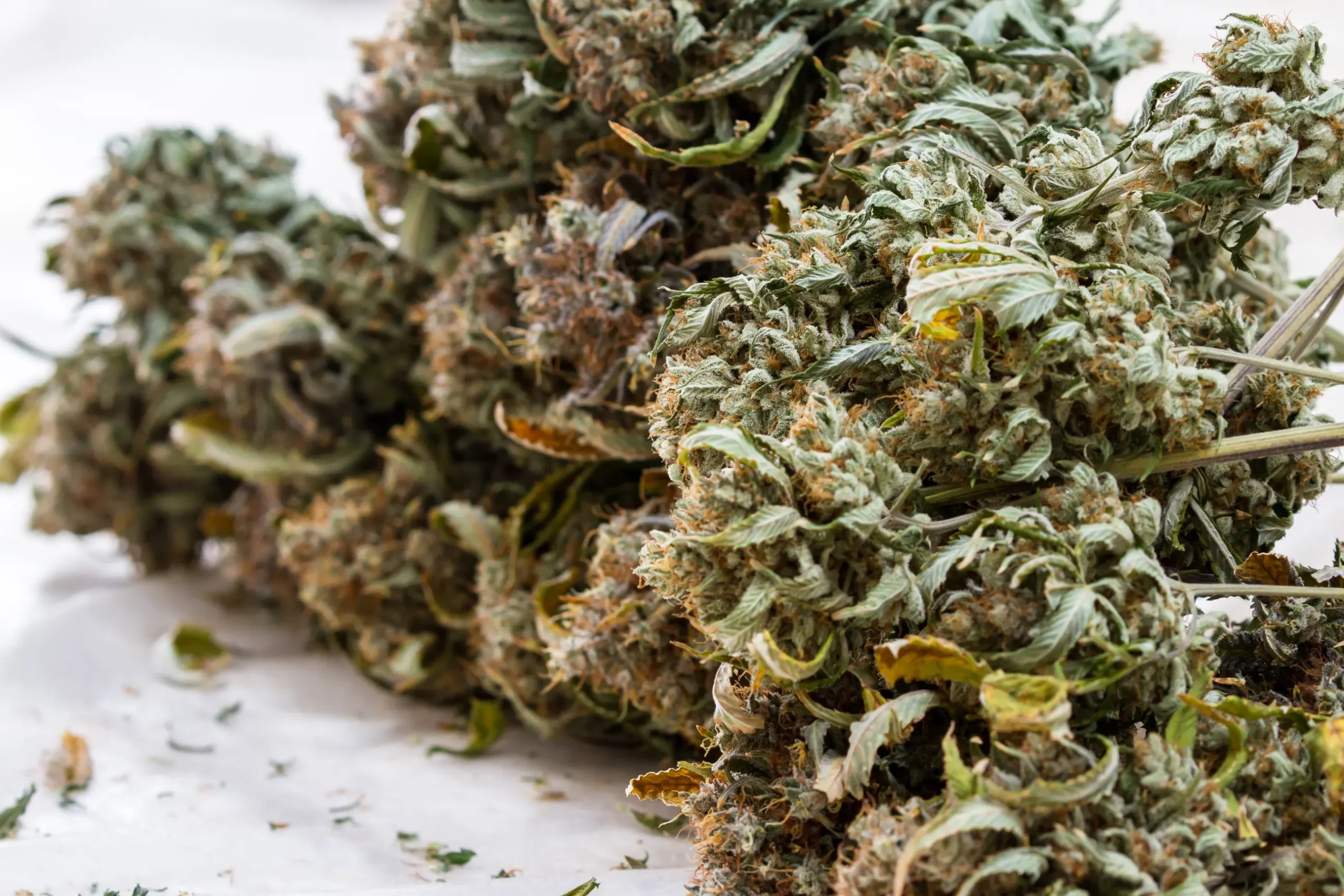
Shiva Skunk
For cultivation, the most useful question is what percentage of the final harvest becomes well-ripened, clean, flavorful flower. Total dry weight can rise while premium bud percentage falls if the plant is over-vegetated, poorly supported, underlit below the canopy, held too wet or dried too quickly. The grow guidance below is built around that quality-yield idea. Light, root oxygen, irrigation, canopy architecture and postharvest handling are considered together because they interact. A technique that increases biomass but creates shaded lower flower or humid colas is not automatically an improvement.
Strain Features
| Feature | Details |
|---|---|
| Type | Indica-dominant hybrid, commonly described around 85% indica / 15% sativa |
| Genetics | Northern Lights #5 × Skunk #1 |
| THC | THC-dominant. Modern samples vary, and no single percentage is reliable across surviving lines and production environments. |
| CBD | Usually minor to low in THC-focused material; sample-specific testing is the only reliable way to know. |
| Flowering Time | About 45-55 days is common for compact indica-leaning expressions. Less-common sativa-leaning plants can run longer. |
| Stretch | Usually modest to moderate in the common compact phenotype; rare taller expressions can stretch much more. |
| Plant Structure | Compact, broad-leaved, short-internode plants with strong lateral branching. Better expressions stack dense, resinous buds with relatively little leaf buried inside the flower. |
| Yield Identity | Heavy potential for the short flowering window, especially when the canopy is filled without allowing the interior to become shaded and humid. |
| Climate Fit | Very strong indoor fit. Outdoors it suits temperate to continental conditions with enough sun and a reasonably dry finish. |
| Grow Difficulty | Beginner-friendly to intermediate. The plant is vigorous, but dense structure makes airflow and late-flower humidity management more important than height control. |
| Flavor / Aroma | Musky skunk, dry spice, sweet citrus, creamy resin, light earth and occasional peppery or herbal notes. |
| Effect Character | Fast mood lift followed by a warm, calming body phase. Stronger sessions can become physically heavy without always erasing the initial mental brightness. |
| Primary Grow Risks | hidden humidity inside short-node flower clusters; over-vegetating a small room; excessive nitrogen late in bloom; assuming every seed plant will remain short; drying dense flowers too quickly on the outside while the core remains wet |
| Best Training Fit | Early LST, one selective top when needed, branch spreading, selective lower cleanup and modest defoliation. It can also suit compact SOG-style runs when plants are kept narrow. |
Genetic Lineage
Shiva Skunk combines Northern Lights #5 with Skunk #1, joining a compact resin-focused indica selection to one of the foundational vigorous Skunk lines. Earlier material circulated under a literal parent-cross name before Shiva Skunk became established.
Northern Lights #5 contributes short internodes, broad leaves, dense resin, rapid flowering, and the warm body phase. Skunk #1 adds lateral branching, musky odor, sweet citrus, spice, vigor, and the brighter mood lift.
The common phenotype remains compact and can finish in roughly 45-55 days, but rarer taller expressions exist and may run longer. Seed plants should therefore be measured before a fixed SOG layout is repeated.
Better selections keep relatively little leaf buried inside the flower, yet short-node clusters can still hide humidity beside the stem. The lineage creates speed and density, not immunity to stagnant air.
A keeper should combine restrained stretch, openable branching, clean fast flowers, and a cured profile of musky skunk, dry spice, sweet citrus, creamy resin, earth, and occasional pepper or herbs.
Effect Breakdown
Initial onset
Shiva Skunk commonly opens with a fast mood lift that feels brighter than its indica percentage suggests. Sweet-citrus phenotypes may feel especially warm and sociable at first.
The onset is usually straightforward rather than psychedelic, but high-potency batches can still overwhelm a new user before the body calm develops.
Peak effects
At the peak, mental brightness remains while Northern Lights-style physical relaxation spreads. A moderate serving can suit food, conversation, or familiar entertainment.
Strong sessions reduce movement and sharpen the musky-spiced heaviness of the experience. The user may remain mentally awake while becoming physically settled.
Phenotype and harvest maturity decide how long the brighter phase lasts. Taller Skunk-leaning plants often preserve it longer than compact resin-heavy selections.
Late phase
The ending is warm, calm, and potentially heavy without always forcing sleep. Larger doses make couch-lock and appetite more likely.
Best use and caution
Evening is the safest general window, though experienced users may find a small amount usable earlier. Driving and precision tasks should be avoided.
Start low with an unfamiliar batch and allow the body effect to arrive before adding more. Dry mouth, dizziness, appetite, and next-day sluggishness are possible.
Flavor & Aroma Profile
Shiva Skunk’s best sensory expression is Musky skunk, dry spice, sweet citrus, creamy resin, light earth and occasional peppery or herbal notes.. Those notes should be read as layers rather than ingredients. Cannabis aroma comes from a complex mixture of volatile terpenes and other compounds, and two phenotypes can share the same broad identity while emphasizing different details.
Top notes are the first compounds that escape when a flower is broken open. In Shiva Skunk, the grower should listen for the brightest part of the profile: citrus, fresh resin, sweet fruit, mint or another volatile edge depending on phenotype. Top notes are usually the easiest to lose through excessive heat, direct fan exposure and long open-air storage.
Middle notes give the cultivar its recognizable body. These can include sweet resin, spice, hash, herbs or ripe fruit. They often become clearer after several weeks of cure because grassy postharvest odors have faded and moisture has equalized through the flower.
Base notes are the heavier earth, wood, musk and resin components that remain after the brighter volatiles lift away. A successful cure does not eliminate these heavier notes. It separates them. Poorly handled flower often collapses into one flat generic smell because the fragile top layer was lost and the remaining base dominates everything.
Aroma should also be evaluated before and after grinding. A jar can smell modest until trichome-rich surfaces are broken and fresh interior tissue is exposed. Conversely, extremely loud live flowers can cure into something disappointing if they were harvested immature or dried too warm. For this reason, the sensory goal is not maximum smell on the living plant. It is retention from late flower through dry, cure and storage.
Dominant Terpenes
Old cultivar names rarely have a single fixed terpene hierarchy across every sample. The table below therefore lists plausible recurring aromatic contributors that fit Shiva Skunk’s documented sensory identity. A current laboratory certificate for the actual harvested batch is the only way to state dominance with confidence.
| Terpene / Aromatic Candidate | Flavor / Aroma Role | How to Read It |
|---|---|---|
| Myrcene | earthy, musky, resinous depth | Likely contributor to the heavy earthy base; exact dominance varies by sample. |
| β-Caryophyllene | pepper, dry spice, wood | Supports the spicy and peppery middle notes common in old-school Skunk expressions. |
| Limonene | sweet citrus peel | Helps explain the bright citrus lift that appears above the musky base in selected plants. |
| Pinene | pine, fresh resin, herbal | Can add cleaner resin and herbal edges, especially in less-sweet expressions. |
Terpenes should not be used as simple medical labels. Myrcene is not a guarantee of sedation, limonene is not a guarantee of happiness, and pinene does not automatically cancel memory effects. The whole chemical profile, dose and user matter. For cultivation, terpene names are most useful as a preservation reminder: the compounds responsible for bright citrus, pine, mint and floral notes are volatile, and heat plus open-air exposure accelerate sensory loss.
The grower can use smell as a checkpoint without pretending it is a laboratory instrument. Record stem-rub aroma in veg, flower aroma in mid-bloom, the profile one week before harvest, the smell after drying and the smell after four weeks of cure. If the bright character disappears between harvest and cure, the next run should change postharvest handling rather than feeding the plant a random flavor additive.
Indoor vs. Outdoor Growing
Shiva Skunk can be evaluated indoors and outdoors through the same five questions: how much space it uses, how evenly the flowers receive light, how quickly the root zone dries, how safely the flowers handle humidity, and whether the local season is long enough for full maturity.
| Aspect | Indoor Growing | Outdoor Growing |
|---|---|---|
| Structure | Keep veg purposeful. A plant that is only 30-40 cm tall can already occupy a surprising amount of horizontal space because the branch framework is dense. Build an open, even canopy before flowering rather than waiting to defoliate a tangled plant later. | Give branches space and keep the center open. Early finishing is useful in many temperate regions, but the same compact floral density that makes the cultivar productive can trap moisture after cool nights or rain. |
| Flowering / Season | About 45-55 days is common for compact indica-leaning expressions. Less-common sativa-leaning plants can run longer. Artificial photoperiod gives the grower control over when the flowering clock starts. | Very strong indoor fit. Outdoors it suits temperate to continental conditions with enough sun and a reasonably dry finish. Outdoor finish changes with latitude, planting date, phenotype and autumn weather. |
| Main Risk | hidden humidity inside short-node flower clusters; over-vegetating a small room; excessive nitrogen late in bloom; assuming every seed plant will remain short; drying dense flowers too quickly on the outside while the core remains wet | Weather magnifies the same structural risks through dew, rain, cold nights or excessive heat. |
| Training | Early LST, one selective top when needed, branch spreading, selective lower cleanup and modest defoliation. It can also suit compact SOG-style runs when plants are kept narrow. | Use support and airflow-friendly branch spacing; avoid high-stress work close to the seasonal finish. |
| Quality Goal | Even canopy, high premium-bud percentage and repeatable dry conditions. | Full maturity before damaging weather while protecting aroma and flower health. |
Indoor strategy. Keep veg purposeful. A plant that is only 30-40 cm tall can already occupy a surprising amount of horizontal space because the branch framework is dense. Build an open, even canopy before flowering rather than waiting to defoliate a tangled plant later. The room should be planned around the mature flowering footprint, not the small vegetative plant. Usually modest to moderate in the common compact phenotype; rare taller expressions can stretch much more. That estimate determines when to flip, how high to place a screen and whether branch support should be installed before flowers make access difficult.
Modern controlled cannabis studies reinforce a useful principle: more usable light can raise floral yield when temperature, root health, water, nutrition and gas exchange are all able to support the added photosynthesis. That does not make an extreme PPFD number a universal target. Genotype changes the response, and light that the rest of the system cannot use becomes stress and heat rather than free yield. For this cultivar, the practical objective is even photon distribution across productive tops, not a contest for the highest meter reading. A well-leveled canopy at a sustainable intensity generally produces a better premium-flower percentage than a peaked canopy with a few overlit tops and a shaded lower half.
The same caution applies to spectrum add-ons and ultraviolet marketing. Controlled work has not shown a universal cannabinoid or yield benefit from simply adding UV to every cannabis crop. Spectrum can change morphology and secondary metabolites, but the response is genotype- and intensity-dependent. Growers should first solve canopy coverage, air movement, root-zone oxygen and irrigation consistency before treating specialty spectrum as a flavor or potency shortcut.
Outdoor strategy. Give branches space and keep the center open. Early finishing is useful in many temperate regions, but the same compact floral density that makes the cultivar productive can trap moisture after cool nights or rain. Root space changes the cultivar dramatically. A plant that looks compact in a container can become a broad shrub in open soil, while a long-flowering sativa can become far larger than an indoor description suggests. Site choice should therefore combine direct sun with moving air, fast drainage and access for inspection.
Outdoor growers should separate climate tolerance from flower immunity. A plant can tolerate cool nights or wind and still develop bud rot if dense flowers remain wet. Morning sun, branch spacing, rain protection where lawful and practical, and routine inspection after wet weather are more dependable than relying on a reputation for resistance.
Strain-Specific Grow Guidance
Morphology and canopy logic
Compact, broad-leaved, short-internode plants with strong lateral branching. Better expressions stack dense, resinous buds with relatively little leaf buried inside the flower. That architecture is the starting point for every training decision. The objective is not to force Shiva Skunk into a fashionable method. It is to shape the plant so the productive flower sites occupy the best light and air zone.
Plant-density research also explains why lower-canopy cleanup matters. As canopies become denser, yield per square meter may rise while chemical and maturity uniformity across the plant falls. Lower inflorescences receive less light and often lag behind the top. Selective removal of branches and flower sites that cannot reach the productive light zone can therefore improve the share of uniform, marketable flower even when it slightly reduces the theoretical number of bud sites. The right amount of cleanup depends on the cultivar’s natural architecture: compact broad-leaf plants need interior ventilation, while tall sativas need the stretch redirected horizontally.
Vegetative stage
During veg, measure growth instead of guessing. Record plant height immediately after the last major training event and again at the flip. Usually modest to moderate in the common compact phenotype; rare taller expressions can stretch much more. Keep the root system proportional to the container: an oversized wet pot can slow growth more than a slightly smaller well-aerated pot, while a root-bound plant can lose vigor just as the flower stretch begins.
Training fit: Early LST, one selective top when needed, branch spreading, selective lower cleanup and modest defoliation. It can also suit compact SOG-style runs when plants are kept narrow. Do major structural work early. Late repeated topping creates recovery time that may be pointless in fast cultivars and chaotic in stretch-prone sativas. Low-stress branch positioning is easier to correct and gives the grower a clear view of which sites will actually reach the canopy.
Feeding behavior
Moderate rather than extreme feeding. The compact canopy can look hungry simply because lower leaves are shaded, so diagnose position and root-zone conditions before increasing nutrients. Nutrient concentration should respond to plant demand, water quality and medium rather than an internet chart written for a different cultivar. Monitor new growth, leaf posture, tip condition, runoff or root-zone EC where appropriate, and how quickly the medium dries. If uptake slows while the root zone remains wet, adding more fertilizer usually compounds the problem.
Late flower is a poor time to keep leaves artificially dark with excess nitrogen. Healthy functional leaves are valuable, but soft high-nitrogen growth increases shade and can delay the visual fade that many growers use as a maturity clue. Maturity must come from the flowers themselves: calyx swell, trichomes, aroma and the plant’s declining rate of new floral growth.
Irrigation and roots
Let the root zone exchange air between irrigations. Broad leaves and dense canopies can hide a slow, wet medium; pot weight and dry-back trend are more useful than watering by calendar. A repeated wet-dry rhythm should be defined by the medium rather than by “every two days.” Soil, peat, coco and hydro systems have different oxygen and irrigation behavior. The universal principle is that roots need both water and oxygen. Chronic saturation reduces oxygen diffusion and creates conditions where pathogens and nutrient imbalance become more likely.
Flowering transition
The first two to three weeks after the photoperiod change are an architecture stage as much as a flowering stage. Continue tucking or supporting while stretch is active, but stop severe high-stress work once floral clusters are established. This is also the time to remove weak interior shoots that are clearly not going to reach productive light.
The cultivar’s common flower window is About 45-55 days is common for compact indica-leaning expressions. Less-common sativa-leaning plants can run longer.. Use that to schedule inspection, not to schedule the chop. Begin close trichome and flower-health checks before the earliest plausible finish, then follow the individual plant.
Humidity, flower density and disease prevention
Warning
Dense flowers change the airflow plan
Primary strain-specific risks are hidden humidity inside short-node flower clusters; over-vegetating a small room; excessive nitrogen late in bloom; assuming every seed plant will remain short; drying dense flowers too quickly on the outside while the core remains wet. Relative humidity measured at the wall does not always describe the air inside a dense canopy. Leaves transpire and flowers create sheltered boundary layers. Place at least one sensor near canopy level, maintain movement above and below the flowers, and avoid aiming a powerful fan directly at one cola.
In late bloom, the risk calculation changes. Large flowers gain value and vulnerability at the same time. Remove dead leaf material promptly because a dead petiole buried inside a wet cola can become a starting point for decay. After a humidity spike or outdoor rain, inspect the thickest tops first rather than admiring only the driest exposed flowers.
Harvest timing
Judge multiple tops and inner flower sites. The common fast phenotype can finish quickly, but the rare taller phenotype should not be forced into the same 45-55 day calendar. Trichome checks should focus on gland heads on calyx tissue, not only sugar leaves. Sugar-leaf trichomes often age earlier and can make a plant look riper than the flower itself. Check multiple tops because light intensity and flower position can create maturity gradients.
A “quality yield” harvest also considers aroma. Waiting far beyond peak maturity can trade bright volatile notes for a heavier, flatter profile even if raw dry weight increases slightly. The correct window is the point where flower maturity, desired effect and sensory expression overlap.
Weedth Bud Flavor Tips
Shiva Skunk’s flavor is protected in three phases: on the living plant, during harvest/drying, and during cure/storage. Flavor cannot be repaired at the end if the plant was repeatedly overheated or the crop was dried like firewood.
Indoor flavor strategy
Keep late-flower leaf and flower temperatures under control, especially during the final aromatic weeks. Strong light is useful only when the canopy can dissipate heat and the roots can keep up. If the room becomes hot at the top of the cycle, reducing unnecessary heat load is usually more flavor-friendly than pushing intensity for a small weight gain.
Avoid the idea that a sweet additive automatically makes the flower taste sweeter. Plant flavor is governed by genetics, metabolism, environment and postharvest retention. Carbon inputs can change soil biology or nutrition, but pouring fruit juice, excessive molasses or flavored products into the root zone is not a reliable terpene program and can create microbial, pest or salinity problems.
Outdoor flavor strategy
Outdoor aroma quality depends heavily on the final two weeks. Protect flowers from repeated wetting, allow morning dew to evaporate, and avoid harvesting immediately after rain if the flowers can safely dry on the plant first. In hot climates, afternoon heat can accelerate volatile loss; shade cloth or site-level heat management may be more useful than feeding changes.
Harvest and drying
Dense flowers need a slow, cool, dark dry with gentle room air exchange rather than air blown directly at buds. Large colas should be inspected for uneven internal moisture before long-term curing. Do not judge dryness only by whether a small stem “snaps.” Stem size, branch thickness and room conditions change that cue. The more useful goal is even moisture through the flower and a gradual reduction that does not leave the outside crispy while the center stays wet.
Postharvest research is equally clear that drying and storage are not neutral waiting periods. Volatile compounds change rapidly after harvest, and storage container, temperature, oxygen exposure and drying method all alter the final aroma. No single folklore rule is perfect for every cultivar. The safest quality principle is a controlled, dark, cool dry with gentle room-level air exchange, followed by airtight storage only after internal flower moisture is genuinely safe and even. Glass storage has preserved volatile profiles well in controlled comparisons, but the container cannot fix buds that entered it too wet or already lost their top notes in a hot dry.
Cure and storage
Once internal moisture is safe, use airtight, inert containers with minimal headspace and store them cool and dark. Open the container only as needed to manage remaining moisture; repeated unnecessary exposure exchanges the aromatic air in the jar for fresh air. If flowers feel soft or clump together, they are not ready for long sealed storage. If they become brittle and odor drops rapidly, the dry likely went too far.
For Shiva Skunk, the sensory checkpoint after several weeks should still resemble Musky skunk, dry spice, sweet citrus, creamy resin, light earth and occasional peppery or herbal notes.. If only generic earth remains, the next run should review harvest maturity, dry temperature and air speed before changing the nutrient program.
Weedth Bud Boost Tips
“Boosting” Shiva Skunk should mean increasing usable premium flower, not simply increasing wet biomass. The highest-value yield gain comes from raising the percentage of well-lit, well-aerated tops, not from keeping every branch. A moderate plant count with even tops often outperforms an overcrowded jungle of small shaded flower sites in usable premium bud.
Build a productive canopy
The highest return comes from placing the right number of tops inside the effective light zone. Early LST, one selective top when needed, branch spreading, selective lower cleanup and modest defoliation. It can also suit compact SOG-style runs when plants are kept narrow. Count strong tops at the flip, not total branches. If a branch cannot realistically reach light before stretch ends, removing it early can improve airflow and reduce low-grade flower.
Modern controlled cannabis studies reinforce a useful principle: more usable light can raise floral yield when temperature, root health, water, nutrition and gas exchange are all able to support the added photosynthesis. That does not make an extreme PPFD number a universal target. Genotype changes the response, and light that the rest of the system cannot use becomes stress and heat rather than free yield. For this cultivar, the practical objective is even photon distribution across productive tops, not a contest for the highest meter reading. A well-leveled canopy at a sustainable intensity generally produces a better premium-flower percentage than a peaked canopy with a few overlit tops and a shaded lower half.
The same caution applies to spectrum add-ons and ultraviolet marketing. Controlled work has not shown a universal cannabinoid or yield benefit from simply adding UV to every cannabis crop. Spectrum can change morphology and secondary metabolites, but the response is genotype- and intensity-dependent. Growers should first solve canopy coverage, air movement, root-zone oxygen and irrigation consistency before treating specialty spectrum as a flavor or potency shortcut.
Root-zone efficiency
High yield requires roots that can supply the canopy. Use a medium with enough air-filled porosity for the chosen irrigation style, maintain appropriate pH for the medium, and prevent salt accumulation when using mineral nutrients. A plant that is repeatedly wilted from drought or held saturated for days cannot convert added light into premium flower efficiently.
CO2 and environmental intensity
Supplemental CO2 can increase the amount of light a healthy crop can use, but it belongs to a sealed, instrumented high-intensity system. It is not a first-line fix for a home grow with unstable temperature, poor air exchange, uneven irrigation or light leaks. In a normal ventilated room, spending effort on canopy uniformity and climate stability usually gives a better return.
Branch support and flower protection
Heavy yield is useful only if stems remain intact and flowers stay separated. Install trellis, stakes or ties before the crop becomes too dense to enter. Support should hold branches without squeezing stems. As flowers swell, reassess fan paths: a support net that solves lodging can also create a stagnant layer if the lower canopy is never cleaned.
Do not confuse stress with enhancement
Cold nights, drought, nutrient starvation and extreme light can all change color or aroma, but deliberate stress is not automatically a quality technique. Stress can also reduce photosynthesis, damage roots, trigger intersex expression in sensitive genetics or slow maturation. Use environmental steering only within a healthy range and let genetics express color rather than sacrificing plant function to chase purple leaves.
The best performance metric for Shiva Skunk is the ratio of fragrant, mature, clean flower to total dry mass. Keep notes on premium tops, secondary flower and larf separately. That number will reveal whether a training change actually improved the crop.
Medical Uses & Benefits
Users commonly seek this type of effect for evening relaxation, stress decompression, appetite support and temporary relief from everyday aches. These are reported use patterns, not evidence that the cultivar treats a medical condition. Cannabis effects are dose-dependent and highly individual. A person can find the same cultivar relaxing at one dose and uncomfortable at a higher dose.
Potential areas of interest are best described as symptom-oriented use patterns rather than disease treatment. Relaxing cultivars may be chosen for winding down, appetite or temporary perception of less tension. Cerebral cultivars may be chosen for mood, social engagement or fatigue. None of those choices prove that the strain treats anxiety, depression, insomnia, pain or another diagnosis.
THC can impair reaction time, coordination and judgment. It can also increase heart rate, trigger dizziness or provoke anxiety in some users. Anyone using cannabis alongside prescription medication, during pregnancy, or for a medical condition should discuss it with a qualified clinician where legal. Product potency should be confirmed by regulated testing when dose matters.
Ideal User Profile
Best for people who enjoy old-school skunk and resin flavors, want a comparatively short flower, and prefer an effect that begins upbeat but can become physically relaxing. High-dose THC-sensitive users should approach carefully. The ideal user is someone who values the cultivar’s actual identity rather than choosing it only because of a reported potency number.
Grower fit matters too. A short, broad-leaf cultivar can be excellent for a low room but frustrating in a humid basement if the grower refuses to thin the interior. A tall sativa can be highly productive for someone comfortable with screens and early flipping but unsuitable in a small untrained tent. The right strain is therefore partly a question of environment and working style.
New users should start with a small inhaled dose and wait. Experienced users should still treat a new batch as new material because cannabinoid and terpene content can change dramatically between producers and harvests. Flavor-focused users may prefer lower-temperature vaporization or smaller inhalations that preserve sensory detail rather than consuming a large dose immediately.
Grower Notes and Feedback
Grower observations around Shiva Skunk become most useful when they are translated into repeatable decisions rather than folklore.
Observation 1: morphology predicts risk. Compact, broad-leaved, short-internode plants with strong lateral branching. Better expressions stack dense, resinous buds with relatively little leaf buried inside the flower. This means the grower should expect the main challenge to come from the way the plant occupies space. The correct response is structural: Early LST, one selective top when needed, branch spreading, selective lower cleanup and modest defoliation. It can also suit compact SOG-style runs when plants are kept narrow.
Observation 2: flowering calendars vary. A common window is About 45-55 days is common for compact indica-leaning expressions. Less-common sativa-leaning plants can run longer., but seed-grown plants can finish on different days. Record the earliest and latest plant separately. If one phenotype repeatedly takes longer but produces better aroma or structure, the extra time may be worthwhile; if it merely stretches and lowers premium-bud percentage, it may not be a keeper.
Observation 3: feeding errors can be confused with shade. Moderate rather than extreme feeding. The compact canopy can look hungry simply because lower leaves are shaded, so diagnose position and root-zone conditions before increasing nutrients. Lower yellowing in a dense canopy should be checked against light exposure before fertilizer is increased. Conversely, a genuinely hungry plant will show a pattern across actively lit tissue, not only buried leaves.
Observation 4: postharvest can erase good cultivation. Dense flowers need a slow, cool, dark dry with gentle room air exchange rather than air blown directly at buds. Large colas should be inspected for uneven internal moisture before long-term curing. A grower who records live-plant aroma and then finds the cured result flat has valuable evidence: the loss happened after the plant already expressed the desired chemistry. That points to dry temperature, speed, air movement or storage rather than a genetic failure.
Observation 5: phenotype selection is the real strain upgrade. Keep the plant that combines the grow behavior with the sensory result wanted in the final jar. The tallest plant, fastest plant or highest-yielding plant is not automatically the best. For Weedth’s quality-first approach, the keeper is the plant that produces a high share of clean mature flower and retains its characteristic aroma after cure.
Weedth Experience
Short is not the same as open
Shiva Skunk looks easy because the common phenotype stays compact, but broad leaves and short internodes can turn that convenience into a sealed center. I spread the laterals early enough to create air channels before flower set.
One selective topping can help a wide plant; narrow SOG plants need less interference. I avoid over-vegetating a small room because this cultivar creates yield through dense short-cycle flower, not through excessive branch mass.
Late nitrogen is kept controlled. A very green compact canopy adds leaf and humidity exactly where the clusters need breathing room, while doing little for the citrus-creamy part of the profile.
I inspect the junction between flower and stem rather than judging airflow above the canopy. The best-looking resinous top can still hold moisture internally during the final weeks.
The 45-55-day range tells me when to begin close observation. Taller exceptions and slower plants remain separate; I want swollen bracts, mature calyx trichomes, declining pistil production, and a clean skunk-citrus aroma.
Dense branches dry from the outside inward, so I use cool darkness and gentle exchange rather than a direct fan. A rushed surface dry leaves generic spice while the core remains unsafe.
The jar I keep opens with musky skunk, then offers sweet citrus, creamy resin, dry spice, earth, and pepper. That layered result proves the fast compact plant was finished patiently rather than merely harvested quickly.
Weedth Score
Growing Experience 8.8/10 Vigorous and quick, with humidity management as the main catch.
Bud Structure & Visual Appeal 9.0/10 Dense, resinous flowers with an efficient calyx-to-leaf feel in good expressions.
Aroma Complexity 8.7/10 Musky skunk and spice gain depth from citrus and creamy resin notes.
Flavor & Smoothness 8.8/10 Excellent when dried slowly; harshness rises quickly when dense flowers are overdried.
Effects & High Experience 8.8/10 Upbeat opening with a convincing physical finish.
Overall Satisfaction & Recommendation 8.9/10 A strong old-school indoor choice when compact structure is managed rather than ignored.
Weedth overall score: 8.8/10. The score is an editorial balance of cultivation experience, flower quality, aroma, flavor and effect rather than a laboratory ranking. Different phenotypes can move individual categories substantially.
I would keep this one for growers who want its specific structure and sensory identity, not because a database says it is the strongest plant in the room.
FAQ
Grower Question
Is Shiva Skunk easy to grow?
Beginner-friendly to intermediate. The plant is vigorous, but dense structure makes airflow and late-flower humidity management more important than height control. The real difficulty is not basic survival; it is managing hidden humidity inside short-node flower clusters; over-vegetating a small room; excessive nitrogen late in bloom; assuming every seed plant will remain short; drying dense flowers too quickly on the outside while the core remains wet. A first-time grower who keeps irrigation, airflow and canopy density under control can do well.
How long does Shiva Skunk flower?
A practical working range is About 45-55 days is common for compact indica-leaning expressions. Less-common sativa-leaning plants can run longer. Treat that as an inspection window. Harvest the individual plant when calyxes, trichomes, aroma and overall flower maturity agree.
How much does Shiva Skunk stretch?
Usually modest to moderate in the common compact phenotype; rare taller expressions can stretch much more. Measure actual stretch in the first run and use that number to decide future flip height. Seed plants can vary.
What training works best for Shiva Skunk?
Early LST, one selective top when needed, branch spreading, selective lower cleanup and modest defoliation. It can also suit compact SOG-style runs when plants are kept narrow. Choose the lightest method that creates an even canopy. High-stress work should be completed before established flowering clusters need to ripen.
What is the biggest grow mistake with Shiva Skunk?
The most costly mistake is usually hidden humidity inside short-node flower clusters; over-vegetating a small room; excessive nitrogen late in bloom; assuming every seed plant will remain short; drying dense flowers too quickly on the outside while the core remains wet. The exact symptom varies, but the common result is a lower percentage of fully mature, clean premium flower.
When should Shiva Skunk be harvested for the best flavor?
Judge multiple tops and inner flower sites. The common fast phenotype can finish quickly, but the rare taller phenotype should not be forced into the same 45-55 day calendar. Flavor is often brightest before a plant becomes heavily amber, but effect preference matters. Compare aroma and trichomes across multiple tops rather than using pistils alone.
How should Shiva Skunk be dried?
Dense flowers need a slow, cool, dark dry with gentle room air exchange rather than air blown directly at buds. Large colas should be inspected for uneven internal moisture before long-term curing. Use cool darkness, gentle room exchange and enough spacing for even moisture loss. Seal only when the flower is internally safe and stable.
Why does my cured Shiva Skunk smell weaker than it did alive?
The most common explanations are harvest before full aroma development, excessive heat, direct fan exposure, too-fast drying, too much open-air handling or warm storage. Compare notes from late flower, day three of dry, the end of dry and week four of cure to locate the loss.
Can Shiva Skunk be grown outdoors?
Very strong indoor fit. Outdoors it suits temperate to continental conditions with enough sun and a reasonably dry finish. Outdoor success depends on latitude, finish weather, sun exposure and root-zone drainage more than a generic ‘indoor/outdoor’ label.
Similar Strains
Northern Lights: Direct genetic connection and a similarly compact, resin-heavy indoor profile, though usually less skunky.
Skunk #1: The other direct parent and the clearest reference for the pungent, sweet-skunk side.
Super Skunk: Related skunk family character with strong vigor, dense flower and a heavier physical finish.
Sensi Star: A similarly compact, resin-focused old-school indica-leaner with strong indoor efficiency.
Hash Plant: Comparable dense resin production and evening-leaning physical calm, with more hash and earth than citrus.
Share this article
A quick overview of the topics covered in this article.
Follow us
Latest articles
October 24, 2026
October 24, 2026
October 24, 2026
October 24, 2026