
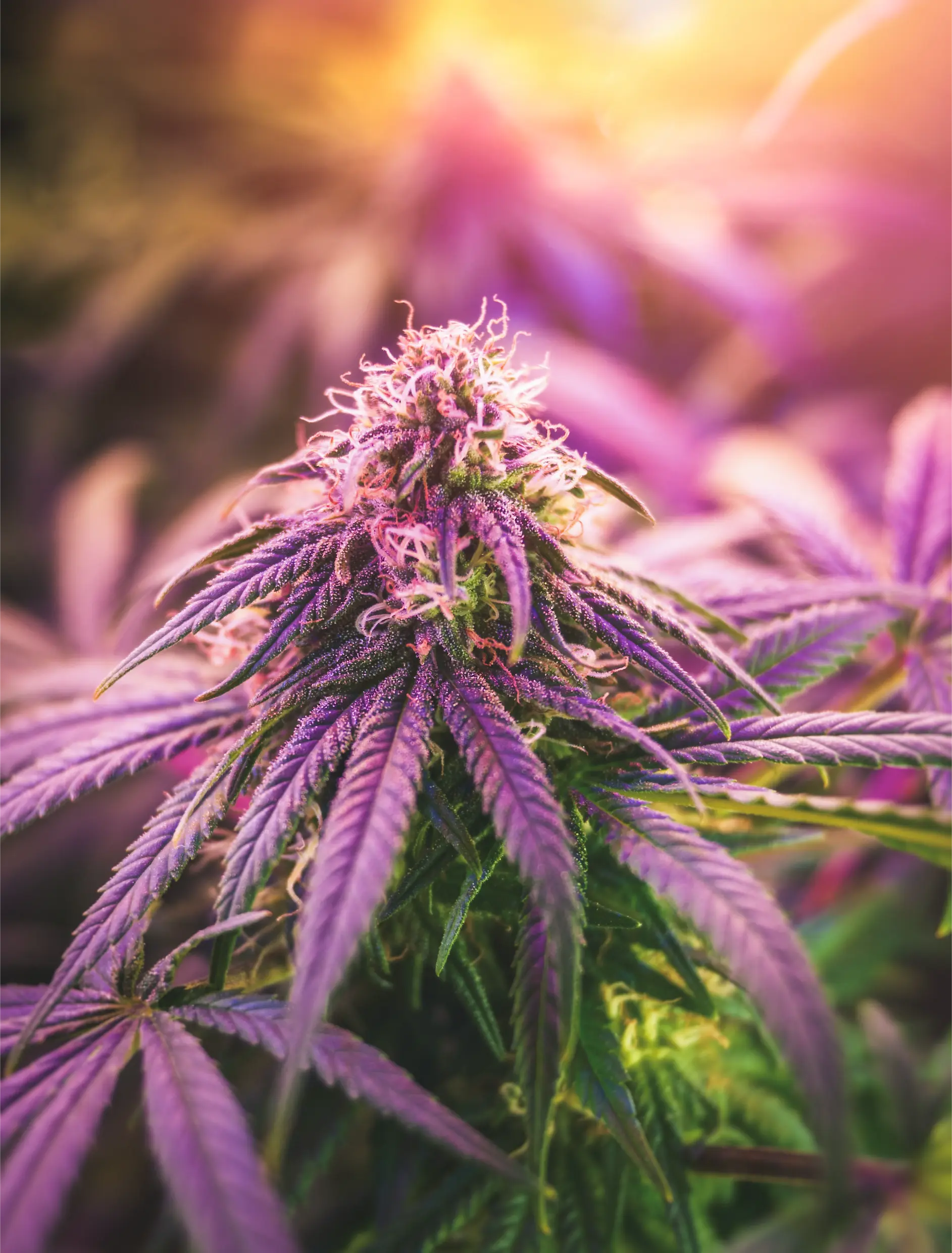
Strawberry Diesel
Weedth Strain Library
Strawberry Diesel is best understood through its cultivation behavior, not just a potency number. Its defining grow question is containing extreme vertical growth while preserving the strawberry-diesel balance and preventing lower-canopy waste. The profile below treats the cultivar as a living plant with a particular architecture, flowering rhythm, aroma hierarchy and post-harvest sensitivity. Where published strain records disagree, ranges are presented as ranges rather than false precision.
Strain Features
| Feature | Details |
|---|---|
| Type | Balanced to sativa-leaning hybrid |
| Lineage | NYC Diesel x Strawberry Cough |
| THC | Commonly around 18-20%, with stronger examples reported |
| CBD | Low |
| Flowering Time | About 9-10 weeks indoors |
| Outdoor Finish | Late-finishing in many northern locations, making warm and relatively dry autumns preferable |
| Typical Height | Tall and potentially vine-like if untrained |
| Yield Potential | High when height is controlled and lateral branches are fully illuminated |
| Grow Difficulty | Moderate; vigorous growth is easy to create but harder to shape well |
| Aroma and Flavor | Fresh strawberry, sweet fruit, sharp diesel, citrus peel and a lingering fuel edge |
| Dominant Terpenes | Caryophyllene commonly leads, with limonene and myrcene frequently prominent |
| Effect Direction | Fast, uplifting and mentally clear with simultaneous muscle relaxation; intensity can surprise inexperienced users |
| Primary Grow Risk | uncontrolled stretch that creates a bright top layer, shaded lower growth and a yield that looks large in biomass but disappoints in finished flower quality |
The figures above describe the commonly documented expression of Strawberry Diesel, not a guarantee for every seed, clone or environment. Cannabis is phenotypically plastic, and older cultivars in particular may circulate as multiple closely related selections. For practical growing, the more useful constants are the plant's architecture, flowering rhythm, flower density and the way its aroma changes as maturity approaches.
Genetic Lineage
The commonly accepted lineage for Strawberry Diesel is NYC Diesel x Strawberry Cough. That cross matters because the plant shows a recognizable combination of parental tendencies rather than an abstract indica-versus-sativa label. The lineage helps explain long internodes, vigorous apical extension and flexible lateral branches that can become vine-like when the plant has abundant root space.
Lineage records should still be read cautiously. A cultivar name can survive while the cut behind that name changes, and modern commercial samples can differ from older reference material. For Strawberry Diesel, the safest editorial approach is to separate well-supported parentage from phenotype-specific claims. That is why potency, terpene ranking and yield are treated as ranges in this guide rather than universal numbers.
NYC Diesel supplies fuel, citrus, vigor and a long-limbed growth habit. Strawberry Cough contributes bright fruit, social uplift and an equally strong tendency toward sativa-leaning extension. Together they explain why Strawberry Diesel can be easy to make large but much harder to make efficient. The plant will happily build stems; the grower has to decide which stems deserve light.
This lineage also explains the two-part aroma. Strawberry is the first impression, but the diesel base usually survives drying more easily. That imbalance is useful information: if the finished jar smells only of fuel, post-harvest handling may have preserved the durable base while losing the more volatile fruit top note.
Effect Breakdown
Fast Cerebral Launch
Strawberry Diesel commonly begins in a way that fits its reputation: Fast, uplifting and mentally clear with simultaneous muscle relaxation; intensity can surprise inexperienced users. The early phase is the best time to understand its mental identity because body heaviness has not yet blurred the contrast. At moderate intake, users often describe a noticeable change in mood and sensory attention before the deeper physical effects become dominant.
Clear Energy with Muscle Release
During the middle of the experience, the strain's hybrid balance becomes clearer. The mental effect remains present, but muscle tone and physical urgency tend to soften. This is where dose and tolerance matter most. A light session can remain functional, while a larger session can turn the same chemistry into a slower, more inward experience.
The Line Between Versatile and Too Intense
Late in the experience, Strawberry Diesel generally moves toward the calmer side of its profile. Consumers who are sensitive to THC should remember that strain labels do not override dose. Even a cultivar usually described as relaxing can create anxiety, dizziness or mental intensity when consumed too quickly. The most reliable approach is to start below the expected dose and judge the first 15 to 30 minutes before adding more.
The practical takeaway is that Strawberry Diesel should be matched to the user's goal rather than chosen from the indica-sativa label alone. Its reported direction is fast, uplifting and mentally clear with simultaneous muscle relaxation; intensity can surprise inexperienced users. Fresh, terpene-rich flower may also feel more dimensional than old dry flower with a similar THC percentage, because aroma chemistry, dose rate and inhalation pattern change the experience even when the cannabinoid number looks similar.
Flavor & Aroma Profile
Whole-Flower Aroma
A well-finished sample of Strawberry Diesel should present fresh strawberry, sweet fruit, sharp diesel, citrus peel and a lingering fuel edge. The most useful way to smell it is in layers. First note the volatile top note when the jar opens, then break a flower and smell again. The broken-flower aroma reveals heavier compounds and resin-associated notes that are less obvious from the untouched surface.
Inhale, Exhale and Aftertaste
The first aroma should be unmistakably fruit-fuel: strawberry syrup, fresh red fruit or candy sweetness colliding with diesel, citrus and sharp fuel. The broken flower usually becomes louder and more pungent than the closed jar. On the exhale, fuel tends to linger longer than the strawberry note.
That asymmetry matters in cultivation. Strawberry-like top notes are easy to lose under excessive canopy heat and fast drying, while the diesel base is much more persistent. A mediocre post-harvest process can therefore produce a flower that is still loud but no longer balanced.
What Quality Smells Like
For Weedth's quality standard, the goal is not simply maximum odor. A good Strawberry Diesel sample should smell specific. The aroma should change when the flower is broken, the exhale should reflect the jar and the aftertaste should remain recognizable. Loud but vague flower is less impressive than a slightly quieter sample that preserves the cultivar's actual identity.
Dominant Terpenes
Published terpene data for Strawberry Diesel is best treated as a pattern rather than a fixed recipe. Caryophyllene commonly leads, with limonene and myrcene frequently prominent. Terpene percentages change with phenotype, light, nutrition, harvest timing, drying and storage, so a single laboratory result should not be treated as the permanent chemistry of the strain.
| Terpene | Aroma Role | Practical Interpretation |
|---|---|---|
| Caryophyllene | pepper and dry fuel spice | commonly the most abundant terpene in modern datasets |
| Limonene | citrus peel and brightness | helps lift the strawberry-diesel aroma and energetic impression |
| Myrcene | earthy fruit and herbal depth | rounds the body effect and anchors the sweeter top notes |
Terpenes should not be used as deterministic medical prescriptions. Human effects come from dose, cannabinoid chemistry, individual sensitivity and the full volatile profile. Their strongest value in a grow guide is practical: they help explain which aroma notes are worth protecting from excessive heat, oxidation and poor storage.
Indoor vs. Outdoor Growing
| Aspect | Indoor | Outdoor |
|---|---|---|
| Structure | long internodes, vigorous apical extension and flexible lateral branches that can become vine-like when the plant has abundant root space. Indoor training can keep the productive layer even. | More root space can magnify the same tendencies, so early shape matters before branches become rigid. |
| Flowering / Finish | About 9-10 weeks indoors | Late-finishing in many northern locations, making warm and relatively dry autumns preferable |
| Main Advantage | Precise control of humidity, light distribution and harvest timing. | Free sunlight and larger root volume can increase plant size and aroma expression in a suitable climate. |
| Main Risk | uncontrolled stretch that creates a bright top layer, shaded lower growth and a yield that looks large in biomass but disappoints in finished flower quality | Weather becomes the limiting factor. likes warmth and light; outdoor success depends heavily on whether the local season can carry it through a late finish without cold rain |
| Best Training | top early, spread branches horizontally and use a net before flowering; supercropping during early stretch can rescue height but should not be the primary plan | Early branch spacing, support and selective pruning before the plant becomes too large to manage easily. |
| Quality Focus | protect the strawberry top note with moderate canopy temperature and a slow dry; excessive heat leaves the diesel base but strips the fresh-fruit lift | Protect mature flowers from rain, heat spikes and rough handling during harvest. |
For Strawberry Diesel, the indoor-versus-outdoor decision is less about which environment is theoretically superior and more about which environment lets the grower solve the cultivar's main weakness. Indoors, environmental control can directly address uncontrolled stretch that creates a bright top layer, shaded lower growth and a yield that looks large in biomass but disappoints in finished flower quality. Outdoors, the same plant can become larger and highly expressive, but only if the local finish matches its flowering schedule.
Strain-Specific Grow Guidance
Plant Architecture and Canopy Plan
Strawberry Diesel should be shaped around its natural architecture: long internodes, vigorous apical extension and flexible lateral branches that can become vine-like when the plant has abundant root space. The mistake is to use a favorite technique automatically. Training should solve the plant's actual geometry. top early, spread branches horizontally and use a net before flowering; supercropping during early stretch can rescue height but should not be the primary plan
Vegetative Timing
Vegetative timing matters because the final canopy depends on branch maturity, not just calendar age. Before flowering, look for a root system that is using the container efficiently, strong branch tips and enough horizontal coverage to justify the flip. A plant that is merely tall is not necessarily ready. This is especially important when the cultivar's defining issue is containing extreme vertical growth while preserving the strawberry-diesel balance and preventing lower-canopy waste.
Flowering Stretch
Do not let the stretch make the decisions
Expect high; growers should assume a strong flowering stretch and build the training plan before the flip. Stretch management starts before the photoperiod change. Leave vertical headroom, place support early and avoid a late nitrogen surge that creates extra stem and leaf exactly when the canopy is becoming harder to access. If height correction is necessary during the first part of stretch, controlled bending is usually preferable to repeated severe pruning.
Defoliation and Airflow
Defoliation should be selective. Remove leaves that create overlapping wet pockets or completely block important flower sites, but do not confuse airflow with stripping. The plant still needs healthy leaf area to power flower growth. With Strawberry Diesel, the key target is the interior zone most likely to amplify uncontrolled stretch that creates a bright top layer, shaded lower growth and a yield that looks large in biomass but disappoints in finished flower quality.
Root Zone, Watering and Feeding
Root-zone management is simple in principle: drinks strongly once established, especially in warm high-light rooms, but should still be allowed enough root-zone oxygen between irrigations. Nutrition should follow the same restrained logic. healthy vigorous plants can use solid nutrition, but excess nitrogen during stretch creates even more leaf and stem to manage. Research in controlled cannabis production shows that excess nitrogen can reduce concentrations of several cannabinoids and terpenoids even while the plant remains visually green, so late-flower feeding should support function rather than chase leaf color.
Light Strategy
Light is a yield tool only when the rest of the plant can support it. Controlled-environment studies show that cannabis can convert higher PPFD into more inflorescence mass, but cultivar response and room conditions still matter. For Strawberry Diesel, build intensity gradually after the canopy is healthy and even. A bright top canopy over shaded lower branches is not an efficient use of light. The aim is uniform useful photons, not the highest meter reading in one spot.
Late Flower and Support
As flowers gain weight, support becomes a quality tool rather than cosmetic housekeeping. A leaning branch changes its relationship to light and airflow, and late ties can damage resinous flowers. Install support before it is obviously necessary. Elongated flower stacks that can become dense along trained tops, with strong resin and a pungent fruit-fuel nose deserve enough space that air can pass around each main rather than only above the canopy.
Harvest Decision
Harvest should be decided by maturity, not date alone. do not harvest on strawberry aroma alone. The plant can smell finished before the diesel base, calyx swelling and resin maturity are complete. Use magnification to inspect trichomes on calyx tissue rather than sugar-leaf tips, which often amber earlier. Also watch the plant's broader signals: reduced new pistil production, swollen bracts, slower drinking and a clear shift from building flower to ripening existing flower.
What I Would Change on Run Two
On a second run, I would focus on one improvement rather than ten new tricks: flip earlier, install the net earlier, strip weak lower shoots before they become a drain and leave more horizontal room for the first three weeks of stretch. That is the Weedth approach to dialing a cultivar in. The first run teaches the plant's rhythm; the second run should remove the single biggest source of lost light, lost aroma or lost clean flower.
Control Stretch Before It Exists
Strawberry Diesel can convert a comfortable vegetative room into a crowded flowering room very quickly. The most efficient strategy is to use horizontal area early. Spread the leading branches, top before they become woody and flip while empty net squares still remain. The stretch should fill the final gaps. If the screen is already full at the flip, the next three weeks become a fight for vertical space.
Larf Prevention
Long sativa-leaning branches produce many potential flower sites, but not all deserve to stay. Weak shoots below the productive plane can consume pruning time and create small airy buds. Removing them before heavy flower formation improves airflow and makes harvest more uniform. The goal is not fewer flowers; it is a higher percentage of flowers that receive enough light to finish properly.
Advanced Cultivation Notes
Strawberry Diesel should be planned backward from final ceiling height. Measure the distance from container top to the safe lighting zone, subtract the space needed for mature colas and support, then decide how tall the plant may be at the flip. That calculation is more useful than copying a generic four-week vegetative schedule. A tall cultivar can be easy in a short room when the flip happens early, and difficult in a tall room when it happens late.
The training sequence works best when each step has a purpose. Top once early enough for two or more strong leaders to form, then use LST to spread them away from the center. Add the net before the flip, not after. During the first two flowering weeks, guide new extension laterally. Once stems become rigid and flower sites are set, stop trying to redesign the plant. Late structural corrections cost more tissue and create more uneven light than early planning.
Stretch also changes irrigation. A plant that suddenly adds leaf area may begin drinking much faster than it did in late veg. Monitor container weight and substrate moisture closely through weeks one to three rather than assuming the old schedule still fits. At the same time, resist the urge to match increased water use with excessive nitrogen. The plant needs support for expansion, but too much nitrogen creates even more leaf and longer internodes during the very phase you are trying to control.
After stretch, the canopy should be simplified. Remove weak shoots below the productive plane and any branch tip that remains permanently shaded. This is one of the most important yield-quality decisions with Strawberry Diesel. Leaving every site can inflate wet harvest volume while reducing average bud quality. A cleaner lower structure also makes airflow easier and allows the grower to inspect stems and undersides for pests without crawling through a jungle of small flowers.
Outdoor Strawberry Diesel is mainly a calendar problem. The plant can grow vigorously in summer, but a late finish means the final weeks may collide with shorter days, cool nights and rain in northern climates. If the region regularly becomes wet before late October, the genetics are fighting the season. A greenhouse can help with rain, but only if ventilation prevents it from becoming a humid enclosure. Warm continental or Mediterranean-style autumns are a far better match.
Aroma selection should consider balance. Some plants lean strongly diesel and only faintly strawberry; others push sweet fruit while the fuel side becomes softer. For Weedth's flavor goal, the most interesting keeper is usually the one where both remain distinct after cure. A harvest-day strawberry bomb that cures into generic fuel is less valuable than a slightly quieter plant whose red-fruit note survives six weeks in storage.
Late-flower temperature management can make or break that balance. The strawberry fraction of the aroma is more fragile than the diesel base, so a hot canopy often leaves the plant smelling pungent but incomplete. Keep strong light, but make sure flower-surface temperature and room air exchange remain controlled. If the room must choose between maximum late intensity and preserving the top notes, the quality-focused grower should not be afraid to back off slightly.
Harvest in sections when necessary. The tops of a well-trained screen often finish before the last lower branches. Taking mature tops can improve light to the remaining flowers and reduce drying-room load. The important point is to avoid using a staged harvest as an excuse to keep obviously weak larf for weeks. Only continue branches that have enough structure and light access to gain meaningful quality.
Flowering Timeline and Quality Checkpoints
| Flower Phase | What the Plant Is Doing | Grower Priority | Quality Risk |
|---|---|---|---|
| Transition, days 1-10 | Vertical growth accelerates and water demand can change quickly. | Tuck through the net, measure height and monitor substrate use. | The canopy is allowed to fill vertically instead of horizontally. |
| Stretch, days 10-21 | Long laterals extend and final top count is established. | Finish training and moderate transition nitrogen. | Late supercropping becomes the only way to save headroom. |
| Set, weeks 3-4 | Bud sites stack along the elongated branches. | Remove shaded lower shoots and stabilize airflow. | A large amount of future larf is left in the dark zone. |
| Bulk, weeks 5-7 | Resin and fruit-fuel aroma intensify while branches become heavier. | Support tops and keep light strong without overheating flowers. | Strawberry top notes fade under excessive canopy heat. |
| Ripening, weeks 8-10 | Calyxes finish swelling and diesel becomes deeper beneath the fruit. | Use trichome maturity and full floral development to schedule harvest. | Late outdoor weather or an impatient indoor cut prevents full flavor. |
Phenotype and Keeper Selection
Strawberry Diesel phenotypes can lean toward either side of the cross. Diesel-leaning plants may stretch harder and carry sharper fuel or citrus, while strawberry-leaning plants can show sweeter red-fruit aroma and a softer profile. The ideal keeper depends on the room. A short ceiling favors the more controllable plant; a large trellised room can make excellent use of a vigorous long-limbed phenotype.
For flavor, compare the cured ratio of fruit to fuel rather than harvest-day sweetness. I would keep the plant whose strawberry character remains distinct after several weeks in storage and whose branches can be spread without constant breakage. Yield is a secondary filter after that. A huge plant that turns into generic diesel does not meet the same quality goal as a slightly smaller plant that keeps both halves of the name alive.
Harvest, Drying and Cure Decision Rules
The final quality decision for Strawberry Diesel should be based on several signals that agree. Trichomes on calyx tissue should be mostly cloudy for a balanced peak, with amber percentage adjusted to the desired effect. Calyxes should look fully swollen, new white pistil production should have slowed substantially and the plant should no longer be adding obvious new flower mass each day. When those signals conflict, wait and recheck rather than choosing the calendar because it is convenient.
At harvest, separate obviously different flower sizes instead of assuming they will dry at the same rate. Elongated flower stacks that can become dense along trained tops, with strong resin and a pungent fruit-fuel nose. Large dense tops may need smaller branches and more spacing, while smaller or naturally open flowers may need more plant material left attached to avoid drying too quickly. The drying room should be adjusted to the harvested material, not the other way around.
During the first weeks of cure, the quality test is specificity. Fresh strawberry, sweet fruit, sharp diesel, citrus peel and a lingering fuel edge should become cleaner, not disappear. If the profile collapses toward hay, generic earth or only the heaviest base note, review drying speed, temperature and storage exposure before blaming genetics. A good second run should preserve more of the aroma hierarchy that was present on the living plant.
Failure Modes and Corrective Priorities
| Symptom / Situation | Likely Grower-Level Cause | Priority Response |
|---|---|---|
| Tops too close to lights | flip happened too late for stretch | bend early in stretch and flip earlier next run |
| Huge plant, low premium yield | too many shaded sites | remove lower weak shoots and flatten canopy |
| Leafy stretch | too much nitrogen during transition | moderate N and keep light distribution even |
| Diesel only after cure | fruit top notes lost to heat or fast dry | cool late flower and slow post-harvest drying |
| Outdoor flowers unfinished before rain | season too short | use protected long-season environment or choose earlier cultivar |
Second-Run Optimization Protocol
Before the next cycle, turn the first run into measurements. Record how many days Strawberry Diesel needed to fill its intended footprint, how much vertical space it used after the flip, which irrigation interval matched peak stretch and where the weakest finished flowers were located. Those observations convert a generic grow plan into a cultivar-specific one. The most valuable number is not advertised yield; it is the amount of premium flower produced from the area that received good light and airflow.
Use those notes to change canopy timing first. The known structural pattern is long internodes, vigorous apical extension and flexible lateral branches that can become vine-like when the plant has abundant root space. If the first run ended crowded, reduce vegetative size or increase horizontal spacing before changing nutrients. If it ended sparse, extend vegetative time or improve branch distribution. Plant count, container size and veg duration are linked decisions. Changing all three at once makes it difficult to learn which adjustment actually improved the crop.
Next, change the late-flower environment around the strain's specific weakness: uncontrolled stretch that creates a bright top layer, shaded lower growth and a yield that looks large in biomass but disappoints in finished flower quality. Review humidity peaks rather than daily averages, confirm canopy temperature at the top flowers and watch how quickly the substrate dries after stretch has ended. A plant that drinks aggressively in week four can slow substantially near harvest. Keeping the same irrigation volume despite that slowdown is a common way to create root-zone saturation and excess room humidity exactly when flowers are least tolerant of it.
Finally, evaluate the second run only after cure. The quality target is protect the strawberry top note with moderate canopy temperature and a slow dry; excessive heat leaves the diesel base but strips the fresh-fruit lift. Compare aroma immediately after drying, after two weeks and after six weeks. Also compare smoke smoothness, resin texture, trim ratio and storage stability. A run that gains ten percent more dry weight but loses the cultivar's recognizable flavor is not automatically an improvement. For Weedth, optimization means more usable high-quality flower with more of the strain still intact in the jar.
Weedth Bud Flavor Tips
Protect Aroma Before Harvest
Flavor preservation begins while the plant is still alive. protect the strawberry top note with moderate canopy temperature and a slow dry; excessive heat leaves the diesel base but strips the fresh-fruit lift. Keep late-flower canopy temperatures controlled and avoid unnecessary stress that causes the plant to shut down early. Strong light can support yield, but overheated flowers lose volatile aroma faster than a meter can show.
Drying Strategy
A slow dark dry remains the most reliable starting point. Aim for a cool room with controlled relative humidity and enough air exchange to prevent stagnant pockets, but do not blow fans directly across flowers. Whole-plant versus branch drying should be chosen based on room humidity and flower density. Dense material may need smaller branches; airy material can tolerate a slower whole-plant approach. The target is even moisture loss, not a fixed number of days.
For Strawberry Diesel, the drying decision should reflect the flower itself. Elongated flower stacks that can become dense along trained tops, with strong resin and a pungent fruit-fuel nose. Check the thickest pieces rather than the smallest leaves. If outer tissue becomes crisp while stems and flower cores still hold substantial moisture, reduce drying speed rather than sealing early. If the smallest flowers are turning brittle in only a few days, the room is moving too fast for good terpene retention.
Cure for Clarity, Not Perfume Tricks
Once moisture is stable enough for sealed curing, use clean airtight containers kept cool and dark. Early curing is about equalizing moisture and releasing residual gases, not adding fruit peel, flavoring agents or other organic material. Those additions can introduce microbes and create a false aroma that hides the cultivar. A clean cure lets the existing terpene profile become clearer as green plant character fades.
Storage
Long-term flavor is lost through heat, oxygen, light and repeated handling. Store finished flower in smaller containers so the entire harvest is not exposed every time a jar is opened. Keep containers out of warm rooms and direct light. Handle resinous buds gently because broken trichome heads are not just visual loss; they contain much of the chemistry responsible for aroma and potency.
Indoor and Outdoor Flavor Difference
Indoor Strawberry Diesel is easier to finish with precise environmental control. Outdoor flower can be exceptional when sunlight, root space and a dry finish align, but harvest-day heat, rain and rough transport can erase that advantage quickly. Outdoor growers should move cut material into a protected cool drying environment as soon as practical and inspect for insects or damaged tissue before flowers are hung closely together.
Weedth Bud Boost Tips
Build Yield from Canopy Efficiency
The highest-value yield technique for Strawberry Diesel is not a bottled booster. It is canopy efficiency. top early, spread branches horizontally and use a net before flowering; supercropping during early stretch can rescue height but should not be the primary plan Every main branch should have a reason to exist: access to light, room for airflow and enough support to carry mature flower. A crowded plant can have more bud sites and still produce less high-quality flower.
Root Volume and Irrigation
Container size should match the planned vegetative period. Oversized containers are not automatically better because a small root system can leave large wet zones unused. Under-sized containers, on the other hand, force frequent irrigation and can destabilize EC late in flower. Choose enough root volume to support the final canopy, then water to actual plant use rather than a fixed schedule.
Light Without Heat Penalty
Modern cannabis research consistently shows that higher useful light can increase flower yield when the plant is otherwise healthy. The practical limit is environmental, not just electrical. Increase intensity only when leaf posture, irrigation demand and canopy temperature remain stable. If the top flowers bleach, taco or lose aroma, the plant is no longer converting extra light into the quality you want.
Nutrition: More Is Not the Same as Better
Avoid the common assumption that high-yield genetics require maximum nutrient concentration. Research has shown that increasing nitrogen can suppress several cannabinoids and terpenoids, and very high phosphorus or EC does not automatically improve flower yield. For a quality-focused grow, the correct feed is the lowest concentration that sustains healthy growth and flower building without deficiency or chronic salt stress.
Strategic Lower-Pruning
Remove lower growth that will never reach useful light before the plant invests heavily in it. This is especially valuable on cultivars that create either dense interiors or long shaded laterals. The objective is not to make the plant photogenic. It is to concentrate labor and plant resources on flowers that can actually mature into the desired density, resin and flavor.
CO2 and Advanced Rooms
CO2 supplementation belongs in a balanced high-light closed-room strategy, not as an isolated trick. If light intensity, temperature, irrigation and air mixing are not already optimized, extra CO2 adds complexity without guaranteeing better flower. For most home-scale growers, improving canopy uniformity and climate stability delivers a more reliable quality gain than adding another environmental variable.
Medical Uses & Benefits
Reported by consumers for stress, anxiety, low mood and physical tension; its fast psychoactive onset can be uncomfortable for thc-sensitive users. Cannabis effects are highly individual, and a strain name is not a standardized medical product. Anyone using cannabis for a health condition should discuss it with a qualified clinician, especially when other medications, pregnancy, cardiovascular risk or psychiatric vulnerability are involved.
The reported effect pattern of Strawberry Diesel helps explain why certain users seek it. Fast, uplifting and mentally clear with simultaneous muscle relaxation; intensity can surprise inexperienced users. That profile may be useful to some people for mood, tension, appetite or sleep goals, but the same psychoactivity can impair coordination, reaction time and judgment. Medical usefulness therefore depends on dose, timing, route of administration and the individual rather than the strain label alone.
Possible Downsides
Common THC-related adverse effects include dry mouth, dry eyes, dizziness, anxiety, rapid heart rate and short-term memory impairment. Potent flower should not be combined with driving or hazardous work. People who know that high-THC cannabis can provoke panic or paranoia should approach slowly and may prefer a lower-THC or higher-CBD option.
Ideal User Profile
Strawberry Diesel best suits a consumer who understands the direction of the experience and chooses the timing accordingly. Fast, uplifting and mentally clear with simultaneous muscle relaxation; intensity can surprise inexperienced users. The ideal user is not necessarily an expert, but should be willing to dose conservatively and wait for the effect to develop before consuming more.
Daytime or early evening can work well for experienced users because the mental effect is commonly bright and active. The caution is speed: the onset can feel intense before the body relaxation catches up, so inexperienced users should avoid stacking doses too quickly.
Grower Notes and Feedback
The recurring grower lesson with Strawberry Diesel is that the plant's weakness is also the key to its quality. Containing extreme vertical growth while preserving the strawberry-diesel balance and preventing lower-canopy waste. Growers who solve that one issue usually report a much easier second half of flowering, while growers who focus only on feed strength or advertised yield often discover the structural problem too late.
Morphology reports are broadly consistent with long internodes, vigorous apical extension and flexible lateral branches that can become vine-like when the plant has abundant root space. That matters because morphology decides labor. A plant with long flexible branches needs early horizontal space; a dense plant needs interior access; a slow clone needs schedule patience. Good cultivation is largely the art of noticing those differences before they become emergencies.
Feeding reports should be interpreted conservatively. healthy vigorous plants can use solid nutrition, but excess nitrogen during stretch creates even more leaf and stem to manage. Growers often mistake a dark green canopy for health and a pale late-flower canopy for failure, but color alone is not enough. Watch growth rate, leaf posture, tip condition, runoff behavior where relevant and the pace of flower development.
Watering is another source of unnecessary complexity. drinks strongly once established, especially in warm high-light rooms, but should still be allowed enough root-zone oxygen between irrigations. The plant's drinking rate changes as roots fill the container, stretch ends and flowers mature. A fixed every-two-days schedule is less informative than pot weight, substrate moisture and actual transpiration.
The most useful second-run note is simple: flip earlier, install the net earlier, strip weak lower shoots before they become a drain and leave more horizontal room for the first three weeks of stretch. That single adjustment is more likely to improve the next harvest than adding several untested products at once, because it directly targets a behavior the cultivar has already shown in your room.
Weedth Editor's Note
What matters after the headline numbers
Strawberry Diesel is one of the plants that punishes late planning. If the net goes in after stretch has already started, the room becomes an exercise in damage control. I prefer to decide the final canopy shape while the branches are still soft, then flip before the tent looks full. The plant will finish the job. The other lesson is temperature. A warm room can still produce strong flower, but the jar loses the strawberry lift first. When I grow for flavor, I would rather give up a little speed in late flower than finish with a loud diesel profile that forgot half of its name.
What keeps Strawberry Diesel interesting to me is that the best result is not produced by treating it like every other cultivar. Its identity becomes clearer when I respect containing extreme vertical growth while preserving the strawberry-diesel balance and preventing lower-canopy waste. I pay more attention to the way the plant occupies space, the smell at the end of the light cycle and the texture of the flowers during drying than to a single advertised THC or yield number.
If I were advising a grower on one priority, it would be this: flip earlier, install the net earlier, strip weak lower shoots before they become a drain and leave more horizontal room for the first three weeks of stretch. The first run can still be excellent, but that adjustment is where I would expect the biggest improvement in clean bud quality, aroma retention and trimming efficiency. The finished flower should taste specific enough that the strain name makes sense without seeing the label.
Weedth Score
Growing Experience 8.0/10 Vigorous and productive, but stretch makes canopy planning essential.
Bud Structure & Visual Appeal 8.5/10 Long resinous stacks can look excellent when fully lit.
Aroma Complexity 9.4/10 Strawberry and diesel create a sharp two-part identity.
Flavor & Smoothness 9.2/10 Outstanding when the fruit survives drying and cure.
Effects & High Experience 9.0/10 Fast, clear and energetic with useful body relaxation.
Overall Satisfaction & Recommendation 8.9/10 High reward for growers who can control vertical growth.
Personal closer: Control the stretch and protect the strawberry note, and the finished flower explains the hype.
FAQ
How much can Strawberry Diesel stretch?
A lot. Exact numbers depend on environment and cut, but it should be treated as a tall cultivar. Planning for roughly doubling or more is safer than assuming moderate stretch.
Is SCROG a good choice for Strawberry Diesel?
Yes, especially with a small plant count. The long flexible branches are easy to spread and a net converts vertical momentum into an even productive plane.
When should Strawberry Diesel be flipped indoors?
Earlier than a compact Kush. Flip when the horizontal footprint is mostly established, not when the plant has already reached the desired final height.
Why are my lower buds airy?
Usually because the plant was allowed to stretch vertically without enough lateral light distribution. Thin weak interior shoots and keep the main branches spread before the canopy becomes fixed.
Does Strawberry Diesel need branch support?
Often yes. Long branches can carry heavy flower stacks late in bloom. A net or soft ties installed early are easier than trying to rescue leaning tops at harvest.
How can I keep the strawberry flavor strong?
Avoid excessive heat and do not rush the dry. Strawberry-like top notes disappear faster than the diesel base, so a hot room often turns the finished flower into generic fuel.
Is Strawberry Diesel suitable outdoors?
Yes in a warm region with a long autumn. In cool northern climates, the late finish creates a conflict between full maturity and worsening weather.
Is Strawberry Diesel beginner-friendly?
It is vigorous enough to survive normal mistakes, but canopy management is not beginner-simple. A first-time grower should use early LST and avoid letting the plant become tall before flowering.
What is the best harvest window for a balanced effect?
A mostly-cloudy trichome field with early amber and fully swollen calyxes usually preserves the lively mental character while allowing the body effect to develop. Waiting far into amber shifts the experience heavier.
Similar Strains
The strains below are similar to Strawberry Diesel for a specific reason. They are not presented as substitutes. Genetics, effect, flavor and grow behavior can overlap in one dimension while remaining very different in another.
NYC Diesel: shares the fuel-citrus side and much of the energetic personality, but is less strawberry-forward.
Strawberry Cough: shares the fruit and social uplift while generally feeling lighter and less fuel-heavy.
Sour Diesel: pushes the diesel and cerebral energy further with less berry sweetness.
Tangie: offers a similarly bright daytime profile but turns toward orange and citrus rather than strawberry.
Super Silver Haze: a comparison for vigorous stretch and energetic effects, though its aroma is more haze-citrus-spice.
For a grower choosing among these options, compare the trait you actually care about. If the goal is flavor, use Strawberry Diesel's aroma identity as the benchmark. If the goal is cultivation, compare stretch, flower density, finishing climate and how much canopy labor each plant requires. Similar does not mean interchangeable.
Educational content. Always follow local laws and regulations.
Share this article
A quick overview of the topics covered in this article.
Follow us
Latest articles

October 24, 2026
October 24, 2026
October 24, 2026

October 24, 2026