
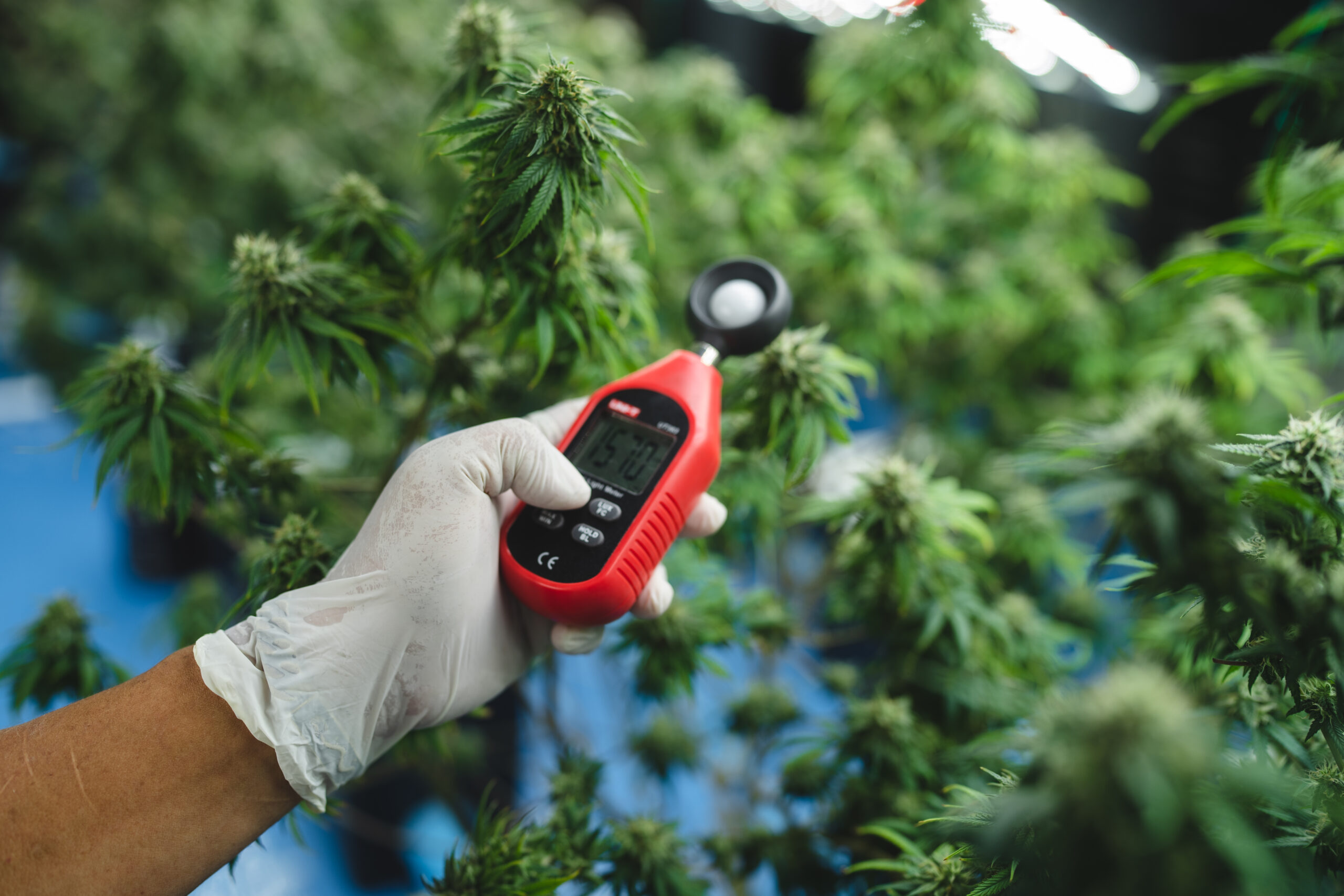
Heavy Metals and Contaminated Garden Soil
Heavy metals and other potentially toxic elements in garden soil cannot be judged by color, smell, plant vigor, or how fertile the soil appears. If site history gives you a credible reason to suspect contamination, the practical answer is to test before you plant a consumable cannabis crop. A cannabis plant can remain vigorous while taking up unwanted elements, and a clean-looking harvest does not prove that the root zone was chemically safe.
The decision is also more complicated than finding one concentration on a laboratory report. Total concentration, chemical form, soil pH, organic matter, clay content, redox conditions, irrigation water, amendment history, and cultivar all influence how a metal behaves. Some elements are held tightly in soil. Others are more mobile under acidic or changing conditions. The amount in the soil therefore does not translate directly into the amount that reaches roots, leaves, or flowers.
For a cannabis grower, the safe workflow is: reconstruct the site history, define the suspected contamination zone, order a contaminant-specific laboratory test, interpret the result using the method and local regulatory context, separate soil contamination from crop contamination, and decide whether the site should be used, isolated, capped, remediated, or removed from cannabis production. Do not try to dilute, compost, lime, biochar, or phytoremediate an unknown contamination problem before you know what is present.
In This Resource
Treat Contamination as a Site Decision, Not a Plant Symptom
- What Heavy-Metal Contamination Actually Means
- Where Garden-Soil Contamination Comes From
- Why Cannabis Changes the Risk Assessment
- How Soil Chemistry Changes Metal Mobility
- How to Test Suspected Contaminated Garden Soil
- How to Interpret Results Without Inventing Cannabis Thresholds
- Decide Whether to Grow, Isolate, or Retire the Soil
- Correct the Site and Verify the Result
What Heavy-Metal Contamination Actually Means
Garden soil naturally contains many elements, including metals. The problem begins when an element is present at a concentration, chemical form, or exposure pathway that creates unacceptable risk for people, plants, animals, or the environment. This can happen because of naturally mineralized parent material, but urban, industrial, mining, agricultural, demolition, waste-disposal, fire, and imported-fill histories are common reasons for concern.
The phrase heavy metals is convenient but chemically imperfect. Lead, cadmium, mercury, nickel, chromium, copper, and zinc are metals. Arsenic is a metalloid, yet it is commonly grouped with heavy metals in soil-contamination testing because the practical risk-management questions are similar. A laboratory may use terms such as trace elements, potentially toxic elements, or metals and metalloids.
Total concentration and bioavailable concentration are not the same thing
Total concentration estimates how much of an element is present in the tested soil after a defined digestion or extraction. Bioavailability describes the fraction that is accessible for biological uptake under specific conditions. A soil can contain a substantial total amount while only a fraction is readily soluble at one moment, but that does not make the total contamination disappear.
Total concentration answers a different question from plant availability
A total-metal test is often the starting point for contaminated-site assessment because it tells you how much of the target element is present in a defined mass of dry soil. Results are commonly reported as milligrams per kilogram, or mg/kg, which is numerically equivalent to parts per million by mass for soil.
Plant uptake depends more strongly on the fraction that becomes soluble or otherwise available near roots. pH, organic matter, mineral surfaces, competing ions, redox conditions, root exudates, microorganisms, and moisture all influence that fraction. A lower bioavailable fraction can reduce immediate uptake, but immobilization is not removal. The total metal remains in the site unless it is physically removed, extracted, or exported in some other controlled way.
Important: Do not use an “available metals” soil test to interpret a regulatory table that was developed for total metals unless the laboratory or regulator explicitly says the methods are comparable.
Contamination risk is more than root uptake
For garden soil, exposure can also occur through dust, soil tracked indoors, hand-to-mouth contact, soil splash on plant surfaces, and direct contact with contaminated material. This matters because a grower can focus so heavily on root uptake that the more immediate exposure route is overlooked.
Lead is a good example. In many garden contexts, contaminated soil and dust on plant surfaces can be a major exposure concern even when root uptake into some crops is limited. Cannabis creates an additional problem because the harvested flowers are not normally peeled or washed like garden produce, and inhaled or orally consumed products may face separate contaminant standards depending on jurisdiction.
A healthy plant is not a contamination test
Heavy-metal exposure can occur without dramatic leaf symptoms. Do not approve soil for consumable cannabis because the plant stayed green, grew quickly, or produced dense flowers. Site history and laboratory testing answer a different safety question than plant appearance.
Some metals are nutrients until the concentration becomes excessive
Copper, zinc, nickel, and several other trace elements have biological functions at low concentrations. Lead, cadmium, and mercury have no normal nutritional role for cannabis. This distinction does not mean nutrient metals are harmless. Copper or zinc can become phytotoxic at sufficiently high concentrations, and the safe range depends on chemistry and biological exposure.
Do not therefore divide a laboratory report into “good metals” and “bad metals.” Ask whether the measured amount and chemical context are appropriate for the intended crop and use.
Where Garden-Soil Contamination Comes From
Contamination investigations should start with history because the history determines what you need to test. Ordering a generic “heavy metals panel” without asking why the site is suspicious can miss the relevant contaminant or spend money on elements that are not plausible sources.
Older painted buildings can create a lead hotspot
Soil near older structures can contain lead from historical lead-based paint. Paint chips and dust tend to accumulate close to foundations and drip lines, so the concentration may change quickly over a short distance. A composite sample collected across the whole yard can dilute that hotspot and make the average look more reassuring than the planting strip beside the building actually is.
If a garden is planned close to an older painted structure, keep that perimeter zone separate during sampling. Do not scrape paint, pressure-wash peeling surfaces, or disturb contaminated dust toward the garden while you are investigating the soil.
Roads and historical traffic can leave a legacy
Older high-traffic corridors can have elevated lead from the era of leaded gasoline, while modern roads can contribute other particles from brakes, tires, road dust, vehicle wear, and transported material. Road salt is a separate salinity problem, but roadside sites may experience both salt and metal contamination.
The pattern is often spatial rather than uniform. Soil nearest the road edge, drainage ditch, or runoff path may differ from soil deeper inside the property. Sample according to the pattern you are trying to understand rather than blending the whole site into one number.
Former industrial, mining, dumping, and fill sites deserve a broader investigation
Smelters, mines, metal workshops, battery handling, ash disposal, demolition debris, rail corridors, machine shops, landfills, illegal dumping, and unknown urban fill can introduce several contaminants at once. In these cases, a metal-only analysis may still be incomplete because petroleum hydrocarbons, PAHs, solvents, asbestos-containing fragments, pesticides, or other chemicals may also be plausible.
If the site history points to industrial contamination, involve an environmental laboratory, local environmental authority, or qualified site professional rather than treating the area as an ordinary garden fertility problem.
Old orchards and some agricultural histories can matter
Historical orchard soils may contain lead and arsenic from older lead-arsenate pesticide use. Agricultural land can also receive trace elements through fertilizers, pesticides, manure, biosolids, irrigation water, and amendments. Modern inputs are not automatically contaminated, but provenance becomes more important when materials are waste-derived or come from an uncertain source.
The Weedth resource on manure in cannabis soil separates nutrient value from salt, pathogen, and contamination risk. The compost quality and maturity guide explains why maturity testing alone does not prove that compost is free from metals or other chemical contaminants.
Treated wood can change the local risk profile
Older pressure-treated lumber and some industrial wood products can contain metals or preservatives that are not appropriate for direct soil contact in a consumable garden. The relevant chemical depends on the product, age, treatment process, and jurisdiction.
If an unknown raised bed was built from treated, painted, stained, or reclaimed industrial timber, identify the material before assuming the bed is clean. Replacing the boards does not automatically remove any contaminants already deposited into the adjacent soil.
Fire and ash should be treated according to what burned
Clean wood ash and ash from a burned structure are not the same material. A wildfire that affects buildings, vehicles, treated lumber, plastics, electronics, batteries, or industrial materials can create a much broader contaminant mixture than vegetation-only ash.
After a severe fire or uncontrolled ash deposition, map where ash accumulated and discuss targeted soil testing with the laboratory. Lead, cadmium, arsenic, nickel, and mercury are among the elements that may be considered when the source history justifies them. Do not use a leaf blower or dry sweeping method that redistributes suspect dust through the garden.
Water can repeatedly re-contaminate a clean root zone
A clean raised bed is not a complete solution if the irrigation source contains arsenic, lead, cadmium, or another relevant contaminant. Groundwater contamination can be naturally geologic or connected to human activity. Floodwater is another uncontrolled source because it may move soil, sewage, petroleum residues, mine drainage, industrial material, or urban sediment across a site.
If water is part of the suspected pathway, test it separately. A soil test and water test answer different questions, and one cannot clear the other.
| Site Clue | What the Clue Changes About the Investigation |
|---|---|
| Older painted building | Keep foundation and drip-line soil separate. Lead is an obvious target, but the age and history of the structure may justify a broader panel. |
| Old orchard | Ask about lead and arsenic, historical pesticide use, and whether the lab has a sampling protocol for former agricultural land. |
| Mine, smelter, industrial site | Do not limit the investigation to garden fertility. Metals, petroleum-related contaminants, industrial chemicals, and contaminated fill may require professional site assessment. |
| Busy road or rail corridor | Sample by distance and runoff pattern. Historical lead and modern traffic-derived particulates may create gradients rather than uniform contamination. |
| Unknown imported fill | Treat each visibly or historically different fill zone separately. Test before blending it with clean soil. |
| Burned structure or mixed debris ash | Map ash deposition, avoid dust generation, and ask the laboratory which metals and other contaminants fit the materials that burned. |
| Biosolids, industrial compost, questionable manure | Request supplier records and targeted contaminant testing. Nutrient analysis or maturity testing does not substitute for trace-element analysis. |
| Private well or contaminated groundwater concern | Test the irrigation water separately because repeated applications can become a continuing input even after soil is replaced. |
“The soil beside my garage looks rich and grows weeds well. Is that enough to trust it for cannabis?”
Question sent by: Avery Collins, via contact form.
No. Weed growth tells you that the soil can support plants, not that it is free from lead, arsenic, cadmium, petroleum residues, or other contaminants. If the garage is old, the site received fill, vehicles were repaired there, paint is peeling, or chemicals were stored nearby, test the defined planting zone before using it for a consumable crop.
Why Cannabis Changes the Risk Assessment
Cannabis is not a passive crop in contaminated soil. Research on industrial hemp and drug-type cannabis shows that the plant can take up and partition metals into roots and aboveground tissues. The pattern depends on the element, cultivar, concentration, growing conditions, and study system.
Industrial hemp research confirms real uptake from polluted field soil
A 2023 field study grew two industrial hemp varieties on agricultural sites with different Pb, Zn, and Cd contamination. Plants from the more polluted sites generally accumulated more of the tested metals. Importantly for cannabis growers, the study detected Pb, Zn, and Cd in inflorescences as well as in seeds, roots, bark, and woody stem tissue.
The same study also found that hemp was not efficient enough at removing Pb, Zn, and Cd from the contaminated field sites to be considered a strong phytomanagement solution there. That matters because the internet often describes hemp as though it automatically cleans contaminated land. Tolerance, uptake, and meaningful site remediation are three different things.
Drug-type cannabis research shows that flowers can become contaminated
A 2026 controlled study exposed four drug-type medical cannabis cultivars to Cd, Pb, Ni, and Co. Roots accumulated the highest concentrations overall, but metals were also translocated to shoot tissues. The study reported that at its tested moderate-low exposure level, Cd and Ni in inflorescences exceeded the health-related threshold the authors used for medicinal plant consumption.
That experiment does not create a universal cannabis-soil threshold. It used a defined controlled exposure system, not an outdoor garden with natural mineral soil. What it does establish is the mechanism that matters here: flowers can contain unwanted metals even when roots retain a larger share of the total plant burden.
Do not combine phytoremediation and consumable-flower production
If cannabis or hemp is intentionally grown to extract or stabilize contaminants, treat that crop as remediation biomass under the applicable environmental rules. Do not assume the harvested flowers, seeds, leaves, stems, roots, compost, or ash are safe for consumption, animal feed, garden reuse, or uncontrolled disposal.
Plant tolerance can make contamination harder to notice
Hemp has been studied on mine land partly because it can tolerate difficult conditions. A 2019 study on abandoned mine land found that several industrial hemp varieties grew without dramatic differences in seed germination or plant height while the researchers still measured metal uptake.
For a grower, that is exactly why visual diagnosis fails. A plant may not show a distinctive “heavy metal symptom.” Stunting, chlorosis, root injury, reduced photosynthesis, oxidative stress, or nutrient imbalance can occur, but none of those signs identifies lead, cadmium, arsenic, nickel, or another contaminant by itself.
Remember: Plant-health diagnosis and product-safety assessment are separate jobs. A nutrient correction can make a plant look better without changing the total contaminant burden in the soil.
Flower use creates a different consequence than fiber production
Industrial hemp grown for fiber, seed, phytoremediation research, or energy biomass is not equivalent to cannabis grown for inhaled or orally consumed flowers. End use matters. A tissue concentration that a research project considers manageable for one industrial pathway may be unacceptable for another product or jurisdiction.
This page therefore takes a conservative position for garden cannabis: if contamination is credible and unresolved, do not use the crop itself as the experiment that decides whether the site was safe.
How Soil Chemistry Changes Metal Mobility
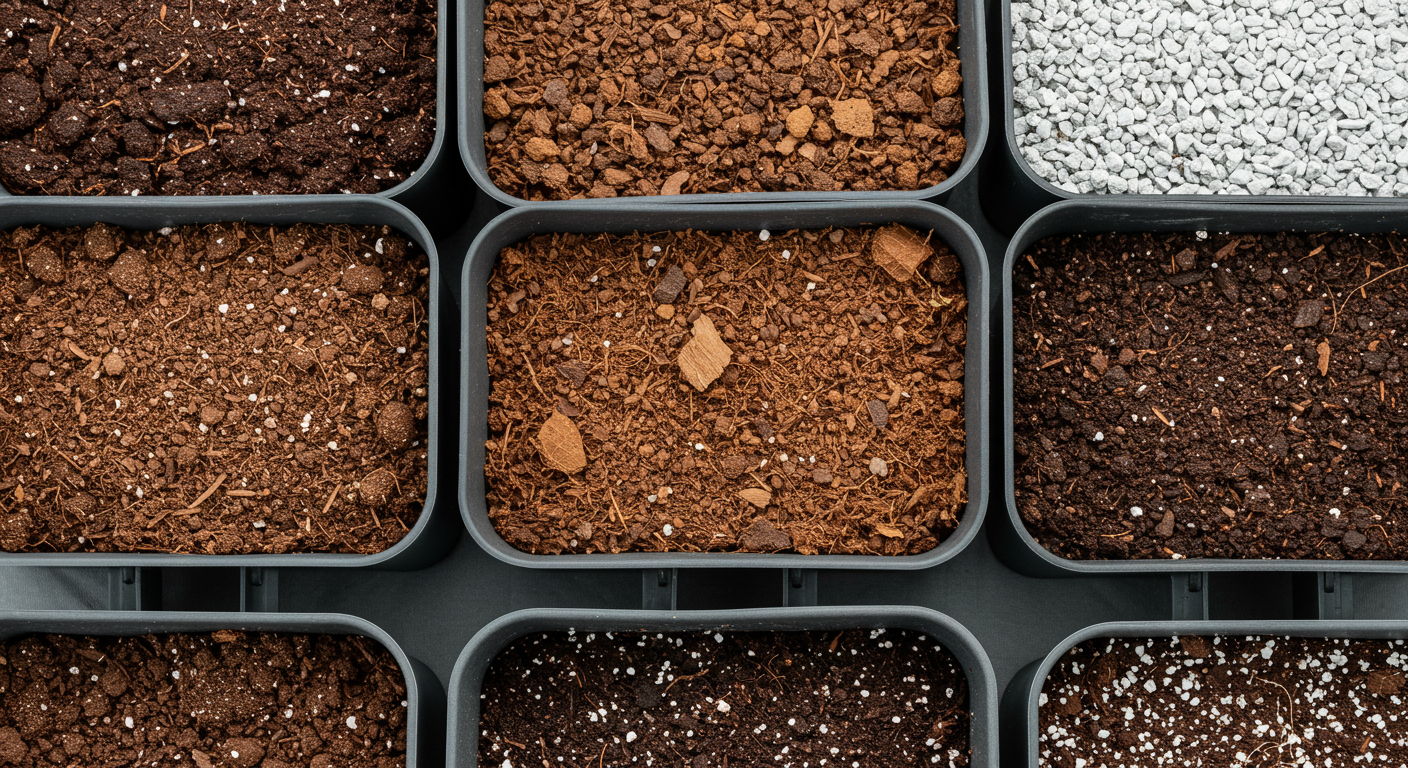
Total concentration is only one part of exposure. Soil chemistry controls whether an element is dissolved, adsorbed to mineral surfaces, associated with organic matter, precipitated as a mineral, or present in another form. Those states can change over time.
pH is one of the strongest controls, but the direction is element-specific
For many cationic metals such as cadmium, zinc, nickel, copper, and lead, lower soil pH can increase solubility and plant availability. Raising pH in an acidic soil can therefore reduce the soluble fraction of some metals. However, this is not a universal rule for every contaminant. Arsenic chemistry, for example, behaves differently because its dominant species and adsorption reactions are not the same as those of simple metal cations.
That is why a grower should not apply lime to a contaminated bed simply because “lime locks up heavy metals.” First determine the contaminant, current pH, lime requirement, and whether the proposed pH change is agronomically appropriate. Use Soil pH, Buffering, and Lime Requirement for the pH decision rather than adding lime by guesswork.
Organic matter can bind metals but does not erase them
Organic matter provides functional groups that can bind metal ions and alter their mobility. Compost can also cover bare contaminated soil and reduce dust exposure. Those are useful functions, but adding compost does not reduce the total mass of lead, cadmium, or arsenic already present. It may also introduce new contaminants if the compost source is poor.
The same caution applies to manure, biosolids, biochar, and mineral amendments. A material should not be added to a contaminated site until its own contaminant profile and the chemistry of the target metal are understood.
Clay, oxides, and CEC influence retention
Fine-textured soils and soils rich in reactive mineral surfaces can retain many metal cations more strongly than coarse sandy soils. Cation exchange capacity, iron and manganese oxides, carbonates, and clay mineralogy all contribute to the reactions.
High retention can reduce immediate mobility, but it can also keep the contaminant in the topsoil for a long time. A strongly bound metal is not necessarily gone. The Weedth CEC resource explains why cation exchange capacity describes chemical holding capacity rather than general soil safety.
Redox conditions can change metal and metalloid behavior
Flooding, prolonged saturation, and poor drainage can change soil redox chemistry. Iron and manganese minerals may dissolve or reform, sulfur chemistry can change, and arsenic or other elements may become more or less mobile depending on the system.
This is one reason a contaminated wetland edge, flood-prone garden, mine-affected soil, or seasonally saturated bed should not be interpreted with a simple dry-soil rule. The water regime is part of the contaminant behavior.
Roots and microorganisms modify the rhizosphere
Roots release organic acids, protons, sugars, and other compounds that can change pH and metal chemistry in the narrow zone surrounding the root. Microorganisms can also transform oxidation states or influence binding. This means a laboratory’s total concentration does not predict every moment of root exposure.
It also means that a home “bioavailability” shortcut cannot replace a proper contaminant assessment. Soil chemistry is dynamic, and extraction methods are operational definitions rather than perfect simulations of a cannabis root.
Use chemistry to explain the result
Consider pH, organic matter, texture, CEC, drainage, water source, and the identity of the contaminant when you interpret mobility and uptake.
Treating immobilization as cleanup
Binding a metal more strongly can reduce mobility, but the contaminant remains in the soil. Future acidification, erosion, excavation, flooding, or land-use change can alter exposure again.
How to Test Suspected Contaminated Garden Soil
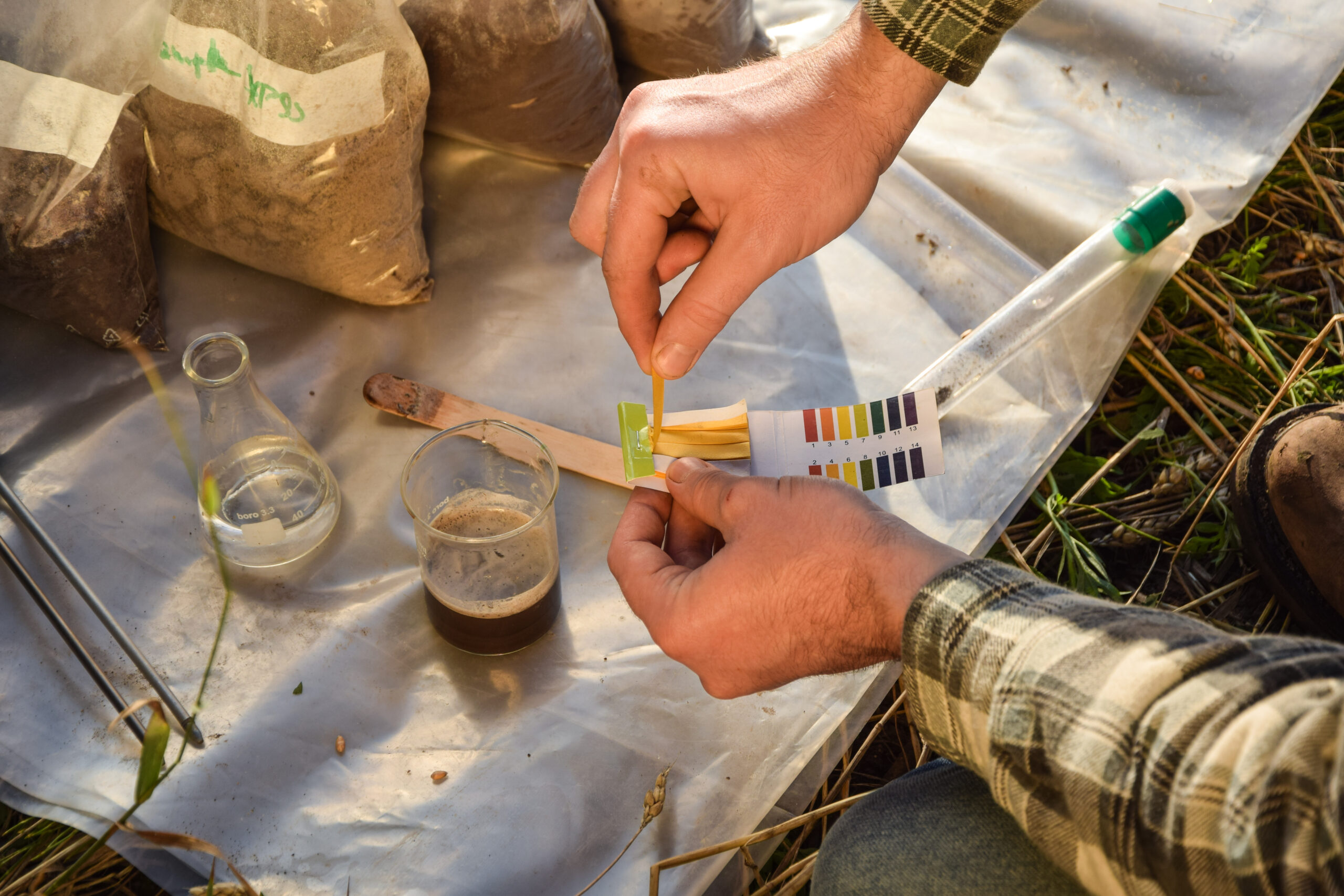
A routine fertility test may measure pH, phosphorus, potassium, organic matter, CEC, and soluble salts while never measuring lead, arsenic, cadmium, mercury, or nickel. Contaminant testing must be ordered intentionally.
Before collecting anything, contact the laboratory and describe the site history. Ask which analytes fit that history, what digestion or extraction method the lab uses, which container and tool materials are acceptable, how much soil is needed, what depth is appropriate, and which interpretation framework applies.
Build the sampling plan around the suspected source
A contamination sample is not automatically the same as a fertility sample. A composite of many subsamples is useful when you want the average concentration in one genuinely uniform area. It can be misleading when the concern is a localized hotspot.
For example, soil beside peeling paint should not automatically be mixed with soil 15 m (50 ft) away. The edge of an old burn pile should not be mixed with an untouched garden. Imported fill should not be blended with native soil before you know whether the fill is the problem.
The Weedth guide on taking a soil sample for laboratory testing covers composite sampling, depth consistency, clean tools, labeling, and zone separation. For contamination work, follow the laboratory’s contaminant-specific instructions even when they differ from a routine nutrient protocol.
Keep hotspots and background samples separate
A useful investigation often includes a suspected hotspot plus a comparison area with similar soil but no known contamination source. This can show whether the suspicious zone is actually different from the site’s background.
Do not use the comparison area to “average down” the hotspot. Its purpose is comparison, not dilution.
Field Advice: Draw a simple site map before sampling. Mark old structures, roads, burn areas, fill boundaries, drains, treated timber, former sheds, low spots, irrigation sources, and every sample ID. A map turns a laboratory number into a location you can manage.
Use tools that will not contaminate a trace-element sample
Trace-metal work is sensitive to tool contamination. Galvanized metal can contribute zinc. Brass or bronze can contribute copper and zinc. A bucket that once held fertilizer, lime, paint chips, pesticide, ash, or metal-working debris can distort a small analytical sample.
Use the tool material and cleaning protocol the laboratory recommends. Stainless steel and clean plastic are often used, but the laboratory’s instructions take priority because the target analytes and detection limits matter.
Order the metals that fit the site, not just the cheapest panel
Lead, cadmium, arsenic, mercury, nickel, chromium, copper, and zinc are commonly discussed, but the correct list depends on the site. A battery-recycling history, tannery, chromated wood, mine, orchard, industrial ash, or municipal waste site can imply different analytes.
If chromium is relevant, ask whether total chromium is enough or whether chromium speciation is needed for the question. If arsenic is relevant, remember that total arsenic and arsenic species are different analyses. Do not assume every laboratory’s standard panel answers every toxicological question.
Test water and amendments when they remain active sources
If the soil result is elevated but the contamination source is still entering the garden, correcting the soil alone will fail. Test suspicious irrigation water. Request certificates or laboratory data for imported compost, topsoil, manure, biochar, mineral amendments, or biosolids when their source is relevant.
Do not blend a questionable material into a clean bed and then test the mixture. Test the input before distribution whenever possible.
“My standard soil test came back normal. Does that mean heavy metals are not a problem?”
Question sent by: Ethan Brooks, via email.
Not unless the report actually lists the relevant metals and the laboratory method. A normal pH, nutrient, organic-matter, or EC report can coexist with elevated lead, arsenic, cadmium, or another contaminant because those analytes may never have been measured. Ask the laboratory for a targeted contaminant panel based on the site history.
| Test or Record | What It Can and Cannot Tell You |
|---|---|
| Total soil metals | Useful for comparing total concentration with background or a regulatory framework that uses the same type of result. It does not directly predict flower concentration or current bioavailability. |
| Extractable or available metals | Can help characterize mobility under the chosen extraction method. It is method-specific and should not be substituted for a total-metal standard without validation. |
| Soil pH | Helps explain mobility and amendment decisions. A favorable pH does not prove that total contamination is low. |
| Organic matter and CEC | Help explain retention and buffering. They do not convert contaminated soil into clean soil. |
| Irrigation-water metals | Identifies an ongoing water-borne source. A clean water result does not clear historical soil contamination. |
| Plant-tissue analysis | Shows what accumulated in the sampled tissue under that grow. It does not replace soil investigation or automatically predict concentrations in unsampled flowers. |
| Site map and history | Identifies likely sources and hotspots. It cannot quantify contamination without analytical testing. |
How to Interpret Results Without Inventing Cannabis Thresholds
There is no single international “safe heavy-metals soil table” for outdoor cannabis. Soil screening values vary by country, state, province, land use, exposure scenario, analytical method, and contaminant. Cannabis product limits are a separate regulatory system and can also vary by jurisdiction and product type.
This makes context mandatory. A lead number from a U.S. residential-soil rule, an agricultural-food guideline from another country, a mine-reclamation target, and a finished-cannabis product limit do not answer the same question.
First confirm the unit, method, and sample basis
For soil, mg/kg dry weight is common. Some reports may use ppm, which is often numerically equivalent to mg/kg for soil mass concentration, but confirm the laboratory basis. Check whether the result is total, pseudo-total, extractable, or another operational fraction.
Never compare a water concentration reported in micrograms per liter with a soil concentration reported in mg/kg as though they are the same scale.
Use local background and local risk guidance
Some soils naturally contain more arsenic, nickel, chromium, or other elements because of geology. Background data can help distinguish natural enrichment from human contamination, but “natural” does not automatically mean harmless. Risk depends on concentration, chemical form, exposure pathway, and intended land use.
Ask the laboratory or local environmental/public-health authority which guidance applies to a garden producing a consumable crop. If no cannabis-specific soil guidance exists, do not invent one by reverse-engineering a finished-product limit.
A soil result cannot guarantee a flower result
Metal transfer from soil to cannabis depends on cultivar, element, soil chemistry, root behavior, irrigation, growth stage, and other variables. The 2023 hemp field study found tissue-specific differences, and the 2026 drug-type cannabis study found genotype- and metal-specific behavior. These data support the need for caution, not a simple soil-to-flower conversion factor.
If finished-flower safety must be demonstrated, use the testing regime required by the applicable cannabis regulation or a qualified analytical program. Do not assume that a “passing” garden-soil result automatically means every harvested batch will pass a product standard.
Do not hide an elevated result behind an average
Suppose one foundation sample contains much more lead than the middle of the garden. Combining them mathematically may reduce the average, but the foundation hotspot remains where it was. The correct management decision may be to exclude that strip, cap it, excavate it, or keep the garden away from it.
Spatial information is part of the result. Keep individual sample IDs and maps instead of reporting only one site-wide average.
Interpret the exact analytical result you received
Match units, digestion or extraction method, sampling depth, land use, local background, and the regulator or laboratory’s interpretation framework.
Creating a universal cannabis-soil threshold
Do not borrow a vegetable-garden value, industrial-soil standard, medical-herb limit, or finished-flower rule and relabel it as a universal outdoor cannabis soil target.
Unexpectedly high results deserve confirmation
A major land-use decision should not depend on a sample that may have been mislabeled, contaminated by a dirty tool, collected from the wrong depth, or unrepresentative of the area. When a result is surprising, review the chain of sampling and consider a confirmation sample before you excavate or abandon a large area.
Confirmation is not an excuse to keep re-testing until a lower number appears. If repeated, properly collected samples confirm the elevated concentration, manage the confirmed condition.
Decide Whether to Grow, Isolate, or Retire the Soil
Once you know what is present, the next decision is not automatically “fix the soil.” Sometimes the simplest and safest choice is to move the cannabis root zone away from the contaminated soil.
Low-concern, well-characterized soil can stay in production
If site history is low-risk, targeted testing is consistent with local background and applicable guidance, the irrigation source is clean, and there is no unresolved contaminant pathway, the soil can be managed according to its normal fertility, pH, structure, and drainage needs.
Keep the baseline laboratory report. Future construction, imported soil, flooding, ash deposition, new amendments, or a change in water source can justify re-testing.
Uncertain soil should remain out of consumable production until the uncertainty is resolved
When the site has a strong contamination history but testing is incomplete, do not plant first and investigate later. Hold the area, collect the correct samples, identify the source, and decide whether the risk is localized or site-wide.
A temporary container grow using a documented clean substrate can separate the crop from the questionable soil, but think about irrigation splash, dust, runoff, roots escaping through drainage holes, tools, footwear, and the placement of containers. Isolation is a system, not just a pot.
Raised beds can reduce exposure, but they do not make the underlying soil clean
Raised beds filled with tested uncontaminated soil can be useful when local public-health guidance supports that approach. A physical separator or geotextile may reduce mixing, and mulch or ground cover can suppress dust and soil splash around the bed.
However, a raised bed does not remove the contamination. If roots can reach the underlying soil, if contaminated dust blows onto flowers, or if floodwater crosses the site, exposure pathways can remain. The design must match the actual contaminant and site conditions.
Contaminated soil should not be redistributed casually
Do not spread contaminated soil through the yard, mix it into compost, give it away, fill low spots with it, or move it to another garden. Relocation can convert one contained problem into several exposure areas.
Excavated contaminated soil may be regulated waste depending on the contaminant and concentration. Follow local environmental and waste-disposal requirements.
Dust and contact control can matter even when plants are moved
Cover bare soil with an appropriate clean mulch, vegetation, paving, or another approved barrier where exposure control is needed. Reduce unnecessary tillage. Use gloves and dedicated footwear in suspect areas, wash hands, and prevent contaminated soil from being tracked into living spaces.
These measures manage exposure. They do not reduce the total contaminant mass.
Do not use another corner of the same unknown fill as your “clean” replacement
If the site contains imported fill of unknown origin, moving the grow 5 m (16 ft) may simply place it in another portion of the same material. Confirm the source of replacement soil, compost, and raised-bed media before importing large volumes.
“If I put 30 cm of clean soil over contaminated ground, can I grow cannabis safely?”
Question sent by: NorthRoomNotes, via Facebook page.
Not as a universal rule. Clean soil can reduce direct contact and create a separate rooting layer, but the required design depends on the contaminant, root depth, barrier, drainage, dust, flood risk, and local guidance. Do not treat a fixed soil depth as a cannabis safety threshold. A properly designed raised bed or container system should be based on the actual site assessment.
What Amendments Can and Cannot Do
Amendments can change contaminant mobility, soil pH, adsorption, erosion, and dust exposure. They usually do not remove the contaminant. That distinction should determine how you describe the result.
Lime can reduce availability of some cationic metals in acidic soil
When acidic soil is limed appropriately, higher pH can reduce the solubility of several metals, including lead and cadmium. This can be a useful exposure-management strategy in some garden and remediation contexts. It does not lower the total lead or cadmium concentration reported by a total-metal analysis.
Lime should still be based on pH and lime requirement, not added by guesswork. Excessive liming can create nutrient imbalances and can change the behavior of contaminants that do not follow the same chemistry.
Phosphorus can immobilize lead under some conditions
Phosphate can react with lead and reduce its solubility in some systems. Extension guidance sometimes includes phosphorus as one component of lead-risk management. This should not be turned into “add bone meal until lead is safe.” Phosphorus itself can become excessive, and amendment rate, chemistry, runoff risk, and local remediation guidance matter.
If lead contamination is significant enough to require an engineered immobilization treatment, use a qualified remediation plan rather than a home fertilizer recipe.
Compost and organic matter can reduce dust and change binding
Clean organic matter can improve surface cover, reduce dust, and provide adsorption sites. It can also improve plant growth, which may reduce the proportion of soil splash on weak sparse plants. These are useful exposure-management functions.
But compost does not destroy metals. Adding 50% clean compost to contaminated soil may reduce the concentration per kilogram by dilution, yet the original metal mass remains on site. Future mixing, decomposition, erosion, or excavation can change the distribution again.
Biochar is not a universal heavy-metal detoxifier
Some biochars can adsorb or immobilize specific metals, and biochar is widely studied in contaminated-soil remediation. Performance varies with feedstock, pyrolysis conditions, ash content, pH, surface chemistry, particle size, contaminant, and soil.
Biochar for Cannabis Soil explains these limitations in detail. Do not select a random horticultural biochar, add a percentage by volume, and declare the soil safe without contaminant-specific evidence and follow-up testing.
Do not use acids or chelators to “pull metals into the plant” in a consumable garden
Chelating agents and aggressive acidification can increase metal mobility in some remediation systems. That may increase leaching, groundwater risk, plant uptake, and contaminated biomass. These are remediation tools, not normal cannabis soil amendments. Use them only within a qualified environmental plan.
Gypsum is not a general heavy-metal treatment
Gypsum supplies calcium and sulfate and can be useful in diagnosed sodic-soil reclamation. It is not a general remedy for lead, cadmium, arsenic, or contaminated clay. Adding gypsum without a specific chemical reason also adds more soluble ions to the system.
Dilution is not remediation
Mixing contaminated soil with clean soil may reduce the measured concentration in the blended material, but it spreads the contaminant through a larger volume. In many regulated contexts, intentional dilution is not an acceptable substitute for remediation.
For a home garden, the practical rule is simple: keep contaminated material contained instead of making a larger amount of slightly less contaminated material.
Remediation and Cannabis Production Are Different Projects
When contamination is confirmed, remediation may involve excavation, capping, containment, soil replacement, stabilization, washing, phytoremediation, or other site-specific methods. The correct option depends on contaminant concentration, depth, area, groundwater, exposure pathways, cost, future land use, and regulation.
Excavation removes mass but creates a disposal problem
Removing contaminated soil can reduce the contaminant mass at the garden site, but the soil still exists and must be transported and disposed of appropriately. Excavation can also generate dust and expose deeper material. Small residential hotspots and large industrial sites therefore require different controls.
Capping and containment manage exposure without removing the contaminant
A clean soil cap, hard surface, geotextile system, or vegetative cover can limit contact and dust. This can be practical where excavation is unnecessary or disproportionate. The cap must remain intact and future owners or gardeners need to know the contaminated soil is still beneath it.
Phytoremediation is slower and less predictable than the marketing version
Plants can extract, stabilize, transform, or influence contaminants, which makes phytoremediation attractive. But performance is limited by root depth, bioavailable fraction, plant tolerance, biomass, contaminant concentration, season length, and how contaminated biomass is handled.
The 2023 on-site hemp study is useful here because it tested real polluted agricultural soils rather than only a greenhouse pot. Its calculated removal of Pb and Cd was too low for the authors to consider hemp an efficient phytomanagement crop for those contaminated sites. This does not mean hemp has no remediation value anywhere. It means you cannot assume one season of hemp will clean a garden.
Master Advice: If the crop is part of a remediation plan, measure contaminant mass removed and re-test the soil. Plant biomass alone is not evidence that the site has been cleaned.
Contaminated biomass needs its own end-of-life plan
A phytoremediation crop can concentrate contaminants in roots, leaves, flowers, or stems. Composting that biomass back onto the site can return much of the captured metal. Burning it can concentrate nonvolatile metals in ash and create additional handling risks.
Use the waste-management route required by the remediation plan and local law. Do not feed the biomass to animals, make extracts, smoke the flowers, compost the roots, or distribute the material unless a competent authority and appropriate analytical data support that use.
| Management Option | What It Actually Accomplishes and What Still Needs Verification |
|---|---|
| Clean container or raised-bed system | Separates the crop from questionable soil when designed correctly. Underlying contamination, dust, runoff, root escape, and irrigation-water quality still need control. |
| Surface cover or cap | Reduces contact, dust, and soil splash. It does not remove the contaminant and requires long-term maintenance. |
| Excavation and replacement | Removes contaminated soil mass from the site. Disposal, dust control, confirmation sampling, and clean replacement soil are required. |
| pH or chemical immobilization | May reduce mobility or bioavailability for specific contaminants. Total contaminant remains and chemistry must be monitored over time. |
| Phytoremediation | May extract or stabilize part of the contaminant. Requires plant-tissue analysis, biomass accounting, safe disposal, repeated soil testing, and realistic multi-season expectations. |
| Dilution with clean soil | Spreads the contaminant into more material and is not equivalent to removal. Do not use dilution as the default cleanup strategy. |
Common Failure Modes and Misleading Shortcuts
“The plant looks fine”
Plant vigor does not prove the absence of metals. Cannabis and hemp can tolerate and accumulate contaminants under conditions that do not produce a unique visual syndrome.
“My pH is perfect, so metals cannot enter the plant”
pH can strongly influence mobility but does not make uptake impossible. Metal identity, concentration, organic matter, roots, water, redox conditions, and cultivar still matter.
“I added compost and biochar, so the soil is detoxified”
Those amendments may change binding and exposure pathways. They do not prove removal, and poor-quality amendments can add new contaminants.
“Hemp is a phytoremediator, so it will clean the site”
Phytoremediation effectiveness must be measured as contaminant mass removed or stabilized over time. Field research shows that hemp can take up metals while still removing too little to clean a site efficiently.
“One clean sample clears the whole property”
Contamination can be patchy. One composite from the center of the yard does not clear a foundation strip, burn pit, former workshop, road edge, or imported-fill pocket.
“A normal fertility report means the soil is safe”
Only the analytes listed on the report were tested. Routine nutrient testing is not a contaminant screen unless the laboratory explicitly included those contaminants.
“A raised bed solves everything”
A raised bed can be an excellent exposure-control tool, but it must use clean inputs and account for dust, floodwater, root penetration, contaminated pathways, and irrigation water.
Pro Tip: Keep contamination records with the property, not only with the grow log. Site maps, laboratory reports, remediation invoices, imported-soil certificates, and confirmation samples may matter long after one crop is harvested.
Correct the Site and Verify the Result
Role R/A ends with verification. The goal is not to perform an amendment and hope the problem improved. The goal is to show, with the same mapped sampling logic and appropriate analytical method, that the exposure pathway has been controlled or the contaminant has been reduced to the required level.
Stop the source before correcting the soil
Repair peeling lead paint safely, redirect contaminated runoff, stop using suspect irrigation water, remove contaminated amendments from the supply chain, isolate ash or industrial debris, and prevent new fill from entering the garden. Otherwise the root zone can be re-contaminated after every correction.
Re-test the same zones after remediation
Use confirmation samples from the original hotspot, boundaries, and any excavated or treated zones. Keep the method and sample depth comparable unless the remediation plan requires a different design. If contaminated soil was removed, confirm both the bottom and edges where appropriate rather than testing only the new topsoil.
Verify imported replacement soil before large-scale use
Ask the supplier about source, testing, and batch identity. “Topsoil” is a product description, not a contaminant certificate. Imported material can create a new problem if it comes from demolition, dredging, industrial fill, or an unknown source.
Re-test water when water was part of the source
A repaired well, new treatment system, changed municipal connection, or seasonal surface-water source should be confirmed analytically if metals were part of the original concern. Soil replacement is temporary if the same contaminant arrives with every irrigation.
Use plant testing only for the question it can answer
Plant-tissue analysis can help determine whether a remediation crop accumulated metals or whether a research grow transferred contaminants into a defined tissue. It does not prove that every part of the site is clean. For consumable cannabis, follow the applicable finished-product testing requirements rather than improvising a tissue sample.
Monitor capped and isolated areas
Check barriers for erosion, animal digging, root penetration, settlement, flood damage, construction disturbance, or mixing. A cap that worked for three years can fail after trenching or landscaping exposes the original soil.
Before You Put Cannabis Roots Into Formerly Questionable Soil
- The site’s historical contamination sources have been identified as far as reasonably possible.
- Suspected hotspots were sampled separately instead of diluted into a property-wide average.
- The laboratory test actually included the relevant metals or metalloids.
- Units, digestion or extraction method, sampling depth, and dry-weight basis are recorded.
- Results were interpreted using local guidance appropriate to the land use and analytical method.
- Irrigation water and imported amendments were tested when they were plausible ongoing sources.
- A raised bed, container, cap, excavation, or immobilization strategy was selected because it fits the actual contaminant pathway.
- No amendment was described as removing metals unless contaminant mass was actually removed from the site.
- Confirmation samples were collected after remediation or isolation work.
- Contaminated soil and plant biomass have a lawful, controlled disposal or management route.
- The final decision separates soil suitability from finished-cannabis product testing requirements.
Choose a Clean Root Zone Before Trying to Rescue a Contaminated One
For a home cannabis grow, contaminated soil is usually a site-management problem before it is a soil-building problem. The most useful first action is not to add lime, compost, phosphorus, biochar, gypsum, microbes, or fertilizer. It is to identify the contamination source and measure the contaminant with the correct laboratory method.
If the concern is localized, a clean container or well-designed raised-bed system may be simpler than trying to remediate the original soil for a consumable crop. If contamination is widespread or linked to industry, mining, floodwater, ash, or unknown fill, professional environmental guidance may be the right next step. The soil should earn its way back into cannabis production through evidence, not through plant vigor or an amendment recipe.
Once the site is cleared or the crop is physically isolated from it, return to the broader Cannabis Soil and Growing Media Guide for normal root-zone design, structure, pH, water behavior, and fertility decisions.
Frequently Asked Questions
Can I tell whether garden soil contains lead or cadmium from plant symptoms?
No. Heavy-metal exposure can produce nonspecific stress, and cannabis or hemp can accumulate metals without a diagnostic visual pattern. Use targeted soil testing when site history creates a credible concern.
Does a high total-metal result mean all of that metal is available to roots?
No. Total concentration and bioavailable fraction are different. pH, organic matter, mineral surfaces, moisture, redox conditions, and root activity influence availability. However, low current availability does not remove the total contaminant from the site.
Can I make contaminated soil safe by raising the pH?
Appropriate liming can reduce the solubility of some metals in acidic soil, but it does not reduce total metal concentration and it does not affect every contaminant in the same way. Base the pH change on laboratory data and contaminant-specific guidance.
Can biochar remove heavy metals from cannabis soil?
Some biochars can immobilize specific metals under specific conditions, but the effect is material- and contaminant-specific. Immobilization is not the same as removal. Verify the result analytically and do not use a universal biochar percentage as a cleanup recipe.
Is industrial hemp safe to use for phytoremediation and then harvest?
Do not assume so. Hemp can accumulate metals in several tissues, including inflorescences, and field research shows that uptake does not necessarily remove enough contaminant to clean the site efficiently. A remediation crop needs a controlled biomass-management and disposal plan.
Are raised beds safe over contaminated soil?
They can reduce exposure when designed correctly with clean soil and an appropriate separation system, but the underlying contamination remains. Dust, runoff, flooding, roots, barrier integrity, and irrigation water must still be considered.
Should I test the harvested cannabis flowers as well as the soil?
If product safety must be demonstrated, follow the finished-product testing requirements that apply in your jurisdiction. Soil results cannot be converted directly into flower concentrations. Do not use a home soil result as a substitute for regulated cannabis product testing.
Share this article
A quick overview of the topics covered in this article.
Follow us
Latest articles
September 5, 2026

September 5, 2026
September 5, 2026
September 5, 2026