
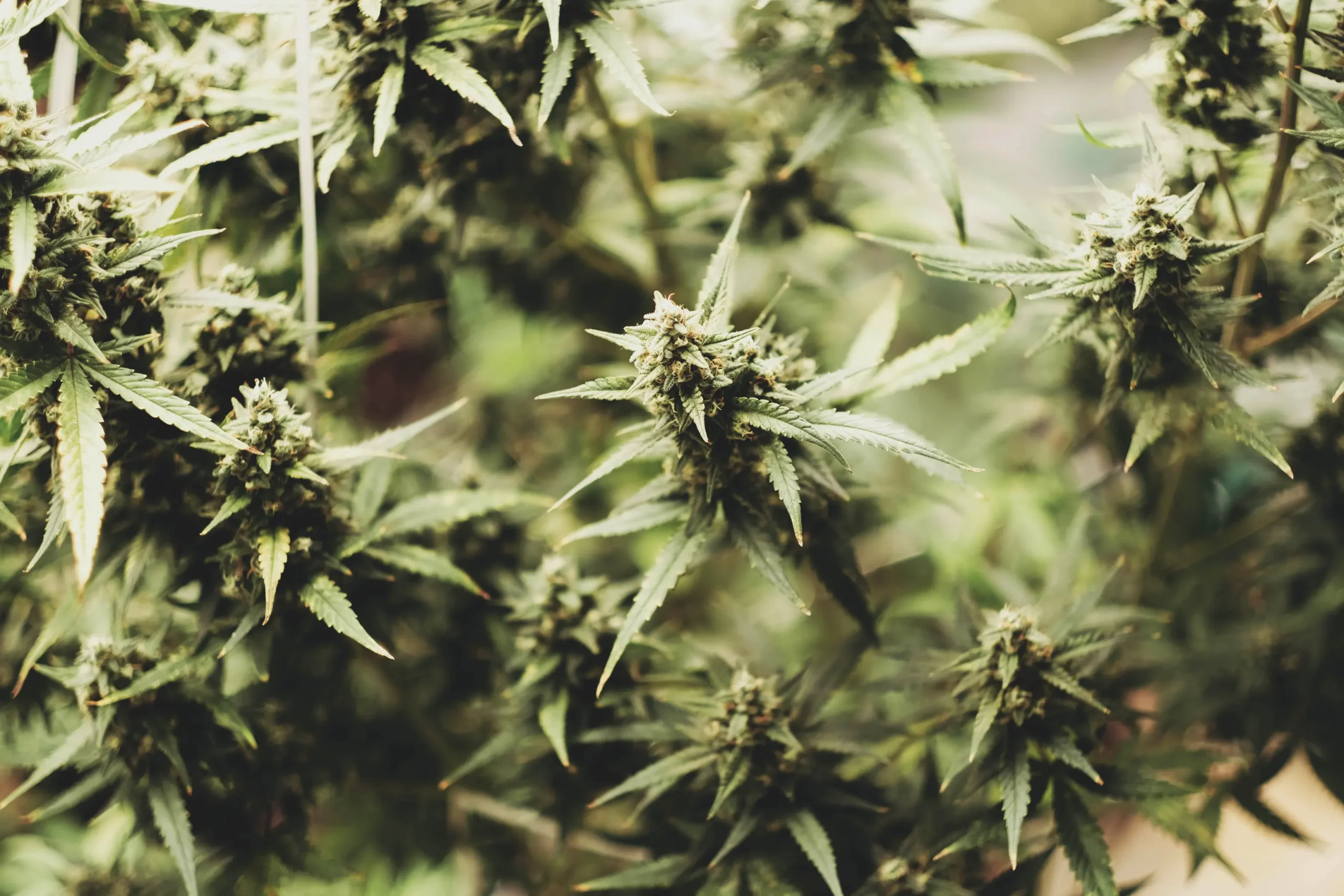
Pot Weight and Deep Moisture Checks Outdoors
The surface of an outdoor cannabis container can look dry while the middle and lower root zone still hold plenty of water. The opposite can also happen after light rain: the surface looks dark and wet while the deeper root ball remains dry. Pot weight and deep moisture checks are useful because they move the watering decision away from surface appearance and toward the amount and location of water that is actually left around the roots.
Pot weight is a whole-container signal. When the same pot becomes lighter between irrigations, most of that short-term mass loss is water leaving through plant transpiration, surface evaporation, and drainage. A deep moisture check answers a different question: where is that remaining water? Used together, the two methods can reveal whether a container is drying evenly, staying wet at the bottom, channeling water around a dry core, or simply responding to a hot and windy outdoor day.
Neither method produces a universal cannabis trigger. A 50-liter fabric pot filled with a coarse mix, a 50-liter plastic pot filled with a fine peat-rich mix, and a root-filled 50-liter pot late in the season can all have different useful weight ranges. Likewise, a soil sample that feels “moist” means something different in sand, loam, clay, peat, or a bark-heavy container mix. The goal is to build a repeatable local baseline for one container, medium, plant stage, and weather pattern, then verify it with a second signal.
This resource stays tightly focused on the measurement method. For broader decisions about watering amount and irrigation design, use Cannabis Watering Basics, How Often Should I Water Cannabis?, and Complete Outdoor Cannabis Growing Guide.
In This Resource
Outdoor Moisture-Check Decision Path
- What Pot Weight and Deep Moisture Actually Measure
- Build a Pot-Weight Baseline
- Check Moisture Below the Surface
- Read Different Outdoor Containers and Root Zones
- Weather, Rain, and Container Geometry
- Failure Modes and Look-Alikes
- A Repeatable Outdoor Moisture Workflow
- Build a Local Ready-to-Water Range
What Pot Weight and Deep Moisture Actually Measure
Pot weight and deep moisture are related, but they are not interchangeable. A scale tells you how the mass of the whole container system has changed. A probe, soil sample, or carefully placed sensor tells you what is happening in a small part of the root zone. Each method becomes much stronger when the other method checks its blind spots.
Pot Weight Is a Gravimetric Signal
Gravimetric simply means measuring by mass. In controlled horticultural research, container weight is commonly used to track water loss because water makes up most of the short-term change in pot mass between irrigations. Container studies can weigh pots after drainage, monitor the decline as water is used, and then replace a measured amount. The same principle is practical outdoors when the pot can be lifted, tilted, or placed on a suitable scale.
Gravimetric moisture tracking
A method that uses changes in mass to infer changes in water content. In a stable container system, a lighter pot usually means water has left the pot through transpiration, evaporation, and drainage. The method is strongest when the same pot is compared with its own previous weights.
Recent cannabis research has used the same principle. In a 2026 indoor drought experiment, researchers weighed cannabis pots twice daily to follow substrate drying curves. That supports pot weighing as a legitimate measurement technique. It does not establish a universal percentage of container capacity at which outdoor cannabis should be irrigated. Their cultivar, substrate, container, environment, and experimental drought treatment were specific to that study.
Important: Treat pot weight as a trend for the same container, not as a number that can be transferred from another grower’s pot. The empty container, dry medium, roots, plant biomass, stakes, mulch, and retained water all contribute to the reading.
Deep Moisture Checks Measure Location
A deep moisture check asks whether water is still present where active roots are expected to be using it. In native soil, extension irrigation programs recommend evaluating moisture at multiple depths through the active root zone rather than judging only the surface. The same logic applies to outdoor cannabis containers. A dry top few centimeters can coexist with a moist center or wet lower zone.
The method can be simple. A narrow soil probe, hand trowel, clean skewer in a suitable container mix, inspection through a drainage opening, or a correctly installed moisture sensor can all provide information. The key is to sample more than one location and interpret the result according to the medium.
Why Surface Dryness Is Such a Weak Trigger Outdoors
The surface is exposed to sunlight, wind, radiant heat, and direct evaporation. It can dry long before the center of a large pot. Mulch can create the opposite problem by keeping the surface visually moist even when deeper zones are becoming dry. Light rain can wet the top layer without providing meaningful recharge to the full root ball. A dense canopy can intercept rainfall and shed much of it outside the container.
That is why the surface should be treated as one observation, not the decision. A useful irrigation trigger describes the active root zone, not the color of the top inch.
“The top of my fabric pot is dusty dry by noon, but the pot still feels heavy. Should I water?”
Probably not based on the surface alone. Check moisture deeper and compare the current weight with the same pot after a successful irrigation and drainage. Outdoor fabric pots can lose surface moisture quickly while the center remains wet. If the pot is still heavy and deeper checks confirm moisture, let the root zone continue to use that stored water.
Question sent by: Ethan Brooks, via email.
Weight Tells You How Much Changed, Not Whether Distribution Is Good
A pot can gain a large amount of weight during irrigation while still wetting unevenly. Water may travel down the sidewall, fill a wetter lower layer, or follow established channels through a hydrophobic mix. The scale reports mass. It cannot tell you whether the center of the root ball was actually rewetted.
This is why a strong outdoor check combines whole-pot weight with deep moisture at more than one position. If both signals move in the expected direction, confidence increases. If they disagree, investigate the distribution before changing the schedule.
Build a Pot-Weight Baseline
The most useful pot-weight system begins with two reference conditions: a thoroughly irrigated and drained condition, and a later condition that you have verified is ready for another irrigation without severe stress. The exact numbers are local. You create them by observing the same plant through several successful cycles.
Step 1: Choose a Representative Reference Pot
Do not start with the smallest or largest plant in the garden. Choose a healthy plant that represents the common container size, medium, stage, and canopy size in that irrigation zone. Label it. If the garden contains several very different container sizes or cultivars, use more than one reference pot rather than forcing one trigger across all plants.
A reference pot should also be mechanically stable. If it is tied to a fixed trellis, support wire, wall, or irrigation manifold, a scale reading may include force from those structures. A freely movable container gives a cleaner measurement.
Step 2: Irrigate Thoroughly and Let Free Drainage Finish
Apply water slowly enough to wet the intended root ball. If the medium has become very dry and water initially channels, use staged applications rather than counting early runoff as proof of saturation. Then allow free gravitational drainage to finish. The goal is not a dripping, freshly flooded weight. It is a repeatable post-drainage reference.
Container capacity is the amount of water a medium retains after excess gravitational water has drained. Horticultural substrate research uses this concept because saturation and useful post-drainage water content are not the same state. Roots need both retained water and renewed air space.
Do not create the wet baseline while the pot is sitting in runoff
Standing drainage water changes the effective water status at the container base and can also add mass if the tray is weighed with the pot. Empty the tray or use the same tray condition every time. A baseline is only useful when the setup is repeatable.
Step 3: Record the Post-Drainage Weight
For a small pot, lifting by hand may be enough to learn the difference between freshly drained and meaningfully lighter. For better repeatability, use a platform scale that can safely support the container. Record the date, time, pot weight, recent weather, whether the plant was fertigated or given plain water, and whether rain occurred.
Large outdoor containers may be too heavy to lift safely. Do not risk injury to get a perfect number. A permanent low-profile platform scale, load-cell platform, or deep-moisture method may be more appropriate. For fixed raised beds and native soil, skip the weight method entirely and use profile moisture checks.
Step 4: Watch the Drying Curve
Weigh or compare the pot at consistent times as it dries. Outdoors, morning readings are often easier to compare because afternoon heat and wind can create large same-day changes. You do not need to weigh every hour. The goal is to learn how the container behaves under a few common weather patterns.
As the plant grows, its water use can accelerate. As roots fill the pot, the amount and distribution of pore space also change. Therefore, the drying curve you learn early in vegetative growth should not be treated as permanent.
| Reference point | What to record | What it tells you |
|---|---|---|
| Immediately after irrigation | Amount applied, runoff behavior, wetting uniformity | Whether the irrigation event was delivered as intended |
| After free drainage | Pot weight and deep moisture | Your wet reference condition for that container |
| Next morning | Pot weight, weather, plant posture | Early water-use trend under those conditions |
| Before the next successful irrigation | Pot weight plus deep moisture at two or more points | A candidate ready-to-water reference |
| After the next irrigation | Recovery, wetting depth, new post-drainage weight | Whether the candidate trigger produced a useful cycle |
Step 5: Define a Range, Not One Magic Weight
Outdoor conditions vary too much for one exact number to remain perfect. A cooler cloudy day and a hot windy day may produce different within-day behavior even if the same total amount of water is left. Instead of a single trigger weight, build a ready-to-water range supported by deep moisture and plant response.
The range should keep the root zone from staying chronically saturated while also avoiding repeated severe wilt. The correct interval inside that range depends on your medium and management style. Soil-based containers are usually allowed more dry-back than high-frequency coco systems. This resource is focused on soil and soil-like outdoor containers, not on translating hydroponic dry-back percentages into soil.
Pro Tip: Write the wet and ready weights on the plant tag or irrigation log. Memory is surprisingly poor at distinguishing a pot that is 10% lighter from one that simply feels different because you grabbed it at another angle.
Why the Pot Gets Heavier Over the Season Even When Watering Is Correct
The plant itself gains mass. Roots increase. Stakes, ties, support cages, mulch, topdress, and replacement media may be added. A container that weighed one value after drainage in early summer can weigh more at the same water status later in the season. That does not mean the medium suddenly holds more plant-available water.
Rebuild the baseline after major growth, transplanting, heavy topdressing, a support-system change, or any modification that changes the mass carried by the scale. The strongest comparison is recent weight against recent weight.
Check Moisture Below the Surface
Deep moisture checks prevent the most common error in outdoor container watering: assuming the top layer represents the whole pot. They also make the pot-weight method diagnostic rather than merely numerical.
Where to Check in a Container
Do not repeatedly stab the same point beside the stem. Check near the outer half of the root ball where active feeder roots are likely to be present, and compare more than one depth when practical. In a large pot, one shallow point and one deeper point can reveal a vertical moisture gradient. Two opposite sides can reveal an irrigation-distribution problem.
A drip emitter creates a local wetting bulb. If you sample directly under one emitter every time, you may overestimate how wet the rest of the container is. Likewise, checking only at the sidewall can misrepresent the center, especially when water channels down the edge.
Use the Feel and Appearance Method Correctly
University extension irrigation guides still use soil feel and appearance as a practical field method. The method works by collecting soil from the root zone, squeezing it, and interpreting how it balls, ribbons, crumbles, stains the hand, or feels according to texture. Sandy soil, loam, and clay behave differently at the same relative water status.
For a cannabis grower, the useful lesson is not to memorize a universal texture chart for every potting mix. It is to compare the same medium across known wet, intermediate, and ready-to-water conditions. With repeated use, you learn what that specific mix feels like when the pot weight says it has reached a useful dry-back.
Root-zone moisture profile
The pattern of water content from the surface through the active rooting depth and across different positions. A profile can be evenly moist, surface-dry but deep-moist, wet at the bottom, dry in the center, or divided into wetter and drier zones.
Finger Tests Have a Depth Limit
A finger test is quick, but the first knuckle does not describe a deep outdoor container. It can help confirm that the surface is dry, yet that is often the least important fact in a 40- or 80-liter pot. Use it as a shallow check, not as the final trigger.
For deeper pots, a narrow trowel, probe, or inspection through accessible side or drainage openings provides more information. Avoid turning the root zone into a series of large holes. The method should be minimally destructive.
Wooden Skewers Can Show Relative Moisture, but Not a Water Percentage
A clean wooden skewer can be useful in some peat- or soil-based container mixes. Insert it carefully away from the main stem, leave it long enough to contact the medium, then examine whether it returns cool, darkened, or with moist particles attached. The result is qualitative. Dense roots, bark pieces, coarse perlite, or a channel around the skewer can make interpretation inconsistent.
Use a skewer to answer a simple question such as “is the lower zone still obviously damp?” Do not convert the color of the wood into a volumetric water-content percentage.
“My moisture probe says dry, but the pot is still heavy. Which one should I trust?”
First ask where the probe is reading. A cheap probe samples a small local volume and may be affected by contact, salts, substrate composition, and temperature. Check a second location and inspect deeper moisture manually. If the whole pot remains heavy while only one point reads dry, the disagreement may be a distribution or sensor-placement issue rather than a signal to irrigate the entire container.
Question sent by: Julia Schneider, via contact form.
Deep Checks Are Essential in Native Soil and Raised Beds
Pot weight is not available when cannabis grows in the ground. The replacement is a soil profile check. Extension irrigation guidance recommends sampling at several depths through the active root zone because moisture at the surface cannot tell you how much water remains below.
In a raised bed, also check the interface with native soil when water movement is uncertain. A light bed mix can feel dry near the surface while water accumulates at a denser layer below. For the physical difference between entry, downward movement, and root-zone drainage, use Infiltration vs Drainage vs Percolation.
Read Different Outdoor Containers and Root Zones
The same moisture signal changes meaning with container material, shape, height, medium, and root mass. A useful baseline therefore describes the entire system, not only the plant.
Plastic Pots Lose Less Water Through the Wall
Most evaporation from a plastic pot occurs from the surface and through plant transpiration rather than through the sidewall. Compared with a breathable fabric container, the same volume of medium may stay moist longer under similar weather. Black plastic can also heat strongly in direct sun, changing root-zone temperature and plant demand.
Because the wall itself does not dry the medium uniformly, a plastic pot may show a stronger vertical gradient: dry upper zone, moist center, wetter lower zone. Deep checks help reveal that pattern.
Fabric Pots Add Sidewall Evaporation
Fabric containers expose a larger evaporative surface. Wind moving across the wall can remove moisture as well as heat, while direct sun can warm the outer root zone. The pot may therefore become lighter faster than the same mix in rigid plastic.
Do not automatically translate faster weight loss into higher plant transpiration. Some of the difference may be evaporation from the container itself. This matters when comparing two container materials. Pot weight tells you total water leaving the system, not how much passed through the leaves.
Compare a container with itself
Use its own recent wet and ready references under the same support setup and similar measurement timing.
Comparing raw weights across pot types
A heavier plastic pot and a lighter fabric pot can hold different media, root masses, and water reservoirs even at the same nominal volume.
Container Height Changes Water and Air Distribution
Container geometry changes how water is retained after drainage. Horticultural substrate research shows that the same medium can hold a larger proportion of water and less air in a shorter container than in a taller container because gravity acts differently on the water column. This is often described through the perched-water-zone concept.
That does not mean every short pot is bad. It means the wet baseline and deep-moisture pattern are partly properties of the container geometry. A lower zone can remain wetter while the surface dries quickly, especially in fine media.
Root-Filled Pots Change Faster Than Freshly Transplanted Pots
After transplanting a small root ball into a large container, much of the new medium may have few roots and may stay wet for a long time. Pot weight can therefore decline slowly even when the canopy is healthy. Later in the season, a dense root system can occupy much more of the medium and remove water far faster.
Do not use the same dry-back expectation across both stages. Relearn the reference as roots colonize the pot.
Native Ground Needs a Profile, Not a Pot Rule
In-ground cannabis can draw from a larger and more variable soil volume. Texture, compaction, restrictive horizons, mulch, slope, and rainfall storage all matter. The best analogue to pot weight is repeated profile sampling or properly installed soil-moisture sensors at representative depths.
For texture-specific behavior, use Growing Cannabis in Sandy Soil and Growing Cannabis in Clay Soil. Do not import a fabric-pot lift test into native ground as if the systems store water the same way.

Weather, Rain, and Container Geometry Can Distort the Reading
Outdoor measurements occur in an environment that changes by the hour. Heat, wind, rain, shade, and canopy growth can all shift the weight curve. The method remains useful, but the log needs enough context to explain why yesterday’s pattern changed.
Heat and Wind Accelerate Water Loss
Bright, hot, dry, windy conditions can increase transpiration and evaporation. A pot that lost a modest amount of weight over 24 hours in mild weather may lose much more during a heat event. The answer is not to abandon the baseline. Record the weather and create more than one familiar pattern, such as mild-day, hot-day, and windy-day behavior.
Visible midday droop during extreme heat should still be checked against root-zone moisture. A plant can temporarily lose turgor because atmospheric demand exceeds root supply even while the pot contains water. Repeatedly flooding an already moist container can reduce oxygen without solving the atmospheric problem.
Rain Can Make the Pot Heavier Without Wetting the Root Ball Evenly
Rain is especially deceptive in large outdoor plants. The canopy can intercept water and shed it beyond the container rim. A light shower may wet only the mulch or top layer. A strong storm may enter unevenly and create temporary runoff. After rain, the scale tells you whether mass increased, but a deep check tells you where the water went.
Field Advice: After meaningful rain, check at least one shallow and one deeper point before deciding that the irrigation schedule should be paused. A wet surface is not proof of a fully recharged pot.
Wet Fabric and External Water Can Affect Scale Readings
A fabric container can hold water in the wall immediately after rain or overhead irrigation. A wet saucer, platform, mulch layer, support base, or soil stuck to the outside of the pot can also add mass. Usually these effects are small compared with the total water reservoir in a large pot, but they can confuse close comparisons.
For consistent measurements, weigh under similar conditions. If rain has soaked the outside, note it rather than pretending the number is directly comparable with a dry-wall measurement.
Morning and Afternoon Weights Answer Different Questions
During active transpiration, a pot can lose substantial mass between morning and late afternoon. If one week’s reference was recorded at sunrise and the next at 4 p.m., the difference may reflect time of day more than a changed irrigation need. Pick one routine measurement window for baseline comparisons.
You can also deliberately compare morning and afternoon weights to learn daytime water use. Just do not mix those measurements into one trigger without labeling them.
Mulch Changes Surface Clues More Than Whole-Pot Water Use
Mulch reduces direct soil-surface evaporation and moderates temperature. The surface underneath may remain dark and cool even as the plant uses water from deeper zones. This makes finger and visual checks less informative, while pot weight can become more useful because it tracks the whole container.
After adding or removing a heavy mulch layer, update the baseline because the physical mass and evaporation pattern have changed.
“It rained all night, but my large pot is only a little heavier. Can the canopy really block that much water?”
Yes. Large canopies can redirect rainfall outside the container, and a dry or hydrophobic surface can also shed part of the water. Check the center and lower root zone rather than assuming the rainfall depth measured in an open rain gauge reached the pot. If the deep profile is still dry, irrigate based on the root zone, not the storm total.
Question sent by: MapleGrower, via Facebook page.
Failure Modes and Look-Alikes
Pot weight becomes most valuable when it exposes contradictions. A light pot that is wet at the bottom, a heavy pot with a dry center, or a suddenly slower drying curve all tell you that the system needs diagnosis before you change irrigation volume or frequency.
Hydrophobic Channeling: Light Pot, Fast Runoff, Dry Core
A very dry peat-rich or organic mix can become difficult to rewet evenly. Water may travel down the sidewall or a few established channels and appear at the drainage holes quickly. If you stop because runoff appeared, the pot may remain relatively light and the center may still be dry.
Correct the wetting process, not the schedule. Apply water slowly in stages, allow time for redistribution, and verify that post-drainage pot weight and deep moisture both increase as expected.
Early runoff does not prove the root ball is fully wet
Runoff can begin because water found a fast channel. Confirm the center and lower root zone before assuming the container reached its useful wet reference.
Wet Lower Zone: Dry Surface, Heavy Pot
This is the classic reason the lift test and deep check belong together. A fine mix, short container, blocked outlet, standing runoff, low plant demand, or excessive irrigation frequency can leave the lower zone wet while the surface dries. Watering again from the top can keep the bottom chronically saturated.
If this pattern repeats, inspect container geometry, drainage holes, media structure, root density, and whether the pot is sitting in runoff. Do not try to correct a physical oxygen problem by adding fertilizer.
Compaction or Layering: Weight Changes Slowly and Deep Zones Stay Wet
Compaction reduces large air-filled pores and can slow internal water movement. Abrupt layers can also cause water to redistribute unevenly. If a pot remains heavy for much longer than expected and the lower profile stays wet, check whether the plant has low demand or whether the medium has physically changed.
For native soil, a similar pattern can appear above a dense subsoil layer. The surface may look ready while deeper soil remains wet. A profile check is more informative than another top watering.
Root-Bound Container: Rapid Weight Loss, Limited Storage
A mature plant can fill a container so thoroughly that the remaining effective water reservoir becomes small relative to canopy demand. The pot becomes light quickly, yet increasing the volume of one irrigation may not help because the container cannot retain much more after drainage.
The practical options may include more frequent irrigation, improved distribution, root-zone cooling, a larger container in future cycles, or a different production system. Keeping the pot continuously saturated is not the solution.
Clogged or Misplaced Emitters: One Side Dry, Total Weight Misleading
A large pot can receive enough total water to gain the expected mass while one side remains dry. This is common when one dripper clogs, the wetted bulb is too narrow, or emitters no longer match the expanded root system. Compare opposite sides of the container and periodically measure emitter output.
For the delivery-method decision itself, see Hand Watering vs Drip Irrigation Outdoors.
Salt Buildup Can Mimic a Dry Root Zone
High soluble salts reduce the ease with which roots take up water. A plant may appear thirsty even when the pot still contains moisture. Pot weight cannot diagnose salinity. If the root zone is moist but the plant repeatedly shows drought-like symptoms, check the fertilizer program and use an appropriate EC method rather than adding water blindly.
Remember: Pot weight answers “how much water mass is left?” It does not answer “can roots use that water normally?” Oxygen, salinity, root health, temperature, and vascular function can all change plant response.
Root Disease or Low Root Activity Can Slow the Drying Curve
If a previously vigorous plant suddenly stops using water as quickly while neighboring plants remain normal, inspect the roots, crown, canopy, and irrigation system. Root disease, damaged stems, severe pest pressure, or leaf loss can reduce transpiration. Continuing the old irrigation schedule may then keep the root zone too wet.
This is a powerful use of pot weight: a changed drying curve can be an early signal that plant demand changed before the canopy tells the full story.
| Observation | Likely interpretation | What to check next |
|---|---|---|
| Surface dry, pot heavy | Water remains deeper | Lower-zone moisture, drainage, recent weather |
| Pot light, runoff starts immediately | Possible channeling or hydrophobic dry core | Center moisture and staged rewetting response |
| Expected weight gain, one side still dry | Poor distribution | Emitter placement, flow, wetting radius |
| Pot stays heavy much longer than normal | Low demand or wet-zone restriction | Weather, root health, compaction, lower moisture |
| Pot becomes light unusually fast | High demand, limited storage, leakage, or external evaporation | Heat, wind, root fill, container material, leaks |
| Moist root zone but plant looks thirsty | Look-alike rather than simple water shortage | Heat load, salinity, oxygen, root disease, vascular damage |

A Repeatable Outdoor Moisture Workflow
Role A means the article should lead to a decision. The most reliable sequence is not “touch the top and water.” It is observe → measure → compare → irrigate or wait → verify → update the baseline.
Step 1: Start With the Same Reference Pot or Root-Zone Area
Use the same representative container when possible. If you are checking native soil or a bed, use the same sampling positions and depths. Consistency turns subjective observations into useful trends.
Step 2: Record the Context Before You Touch the Pot
Note the previous irrigation, meaningful rain, heat, wind, cloud cover, and any recent change in canopy size. A weight number without context is much harder to interpret. You do not need a weather station for every plant. A simple log of major conditions is enough to explain many changes.
Step 3: Compare Whole-Pot Weight
Lift, tilt, or weigh the reference pot using the same method. Ask whether it is still close to the wet reference, within the familiar transition zone, or approaching the ready range learned from previous successful cycles.
If you cannot safely move the pot, do not force the method. Switch to deep moisture and sensor trends.
Step 4: Confirm the Deep Moisture Pattern
Check at least two useful positions or depths when the container is large enough for gradients to matter. If weight and deep moisture agree that the root zone has depleted appropriately, the decision becomes clearer. If they disagree, diagnose before irrigating.
Step 5: Inspect the Plant, but Use It as Supporting Evidence
Look for sustained wilt, leaf angle, vigor, color, and whether the plant is behaving differently from neighbors. Plant posture is not a stand-alone trigger because heat and root problems can mimic water stress. Let the root-zone measurements lead.
Step 6: Decide to Irrigate, Wait, or Investigate
Irrigate when the pot has reached the established ready range, deep checks show meaningful depletion, and plant/environment context is compatible with water demand. Wait when the pot remains heavy and deeper zones are clearly moist. Investigate when signals conflict.
Use disagreement as diagnostic information
A heavy pot with a dry top or a light pot with a wet lower pocket tells you more than either signal alone.
Forcing every signal into “water now”
If the measurements conflict, inspect distribution, drainage, root activity, or salinity before adding another full irrigation.
Step 7: Verify the Irrigation Event
After watering, confirm that the pot gained the expected mass and that the target zones actually became moist. Check runoff behavior, emitter output, and whether previously dry areas were rewetted. A watering decision is not complete until the root zone confirms that the intended result occurred.
Step 8: Recheck the Next Morning
The next morning provides a useful standardized comparison. If the pot is still extremely wet and heavy after a modest irrigation under high-demand weather, distribution or drainage may be unusual. If it is already much lighter than expected, the plant may have high demand or the container may have limited storage.
Master Advice: The best moisture test is the one you can repeat under similar conditions and compare with the result of the next irrigation. A measurement becomes valuable when it changes a decision and then gets verified.
When Sensors Add Value
Capacitance sensors can provide continuous volumetric water-content trends when they are calibrated and installed correctly. Tensiometers can be useful in mineral soils where matric potential is an appropriate scheduling signal. However, sensors read a local volume and can be affected by placement, contact, salts, temperature, and substrate characteristics.
Use sensors to strengthen the trend, not to replace physical verification. A shallow sensor can help show when the upper active zone is depleting. A deeper sensor can show whether irrigation is reaching or oversaturating the lower zone. This two-depth logic is widely used in agricultural irrigation monitoring.
Build a Local Ready-to-Water Range
The final goal is not to become dependent on a scale. It is to learn what a healthy, correctly irrigated outdoor root zone feels and weighs like through changing weather and plant stages. The scale trains your judgment. Deep checks prevent the scale from hiding uneven water distribution.
Use Three Successful Cycles to Start
One cycle can be unusual. Rain, wind, transplant stress, or a partial wetting event can distort it. Build the first baseline from several successful cycles in which the plant remains healthy, the root zone rewets evenly, and the lower zone does not stay chronically saturated.
Record the post-drainage weight, the candidate ready weight, the time between those measurements, weather notes, and deep-moisture observations. You are looking for a range that repeats, not mathematical perfection.
Recalibrate When the System Changes
Rebuild the range after transplanting, major canopy expansion, heavy pruning, root-zone amendments, changing mulch, switching from hand watering to drip, adding supports that affect scale force, or moving the pot into different sun or wind exposure.
Outdoor cannabis is dynamic. A good baseline is designed to be updated.
Know When Pot Weight Is the Wrong Tool
Skip or downgrade the method when a container is too heavy to move safely, fixed into a trellis, mechanically connected to irrigation plumbing, sitting on an unstable surface, or so large that one whole-pot number hides major internal moisture zones. In those systems, deep sensors and physical profile checks provide better information.
In raised beds and native soil, pot weight has no direct equivalent. Use representative moisture checks across depth and area instead.
Outdoor Pot-Weight and Deep-Moisture Checklist
Before You Decide to Water
- Use the same representative pot or soil-check location whenever possible.
- Record a wet reference only after the root ball has been wetted evenly and free drainage has finished.
- Do not include standing runoff in the baseline.
- Compare measurements at a similar time of day.
- Check recent rain, heat, wind, and major canopy changes.
- Confirm the surface observation with moisture deeper in the root zone.
- Check more than one position when drip irrigation or a large container can create wet and dry zones.
- Treat early runoff as possible channeling until the center is confirmed wet.
- Do not use one cheap moisture-meter reading as the final trigger.
- Investigate a suddenly slower or faster drying curve instead of automatically changing the schedule.
- Rebuild the baseline after transplanting, major plant growth, new mulch, support changes, or a different container location.
- Use deep profile checks instead of lifting when the container is unsafe to move.
- Verify every correction at the next comparable irrigation or rain event.
Make the Root-Zone Pattern More Important Than the Surface
Pot weight is one of the simplest ways to turn outdoor cannabis watering into a measurable process. It shows how much mass the whole container has lost since irrigation. Deep moisture checks show where the remaining water is located. Together, they are far more informative than a dry-looking surface, a fixed calendar, or one moisture-meter number.
The strongest method is local and repeatable: establish a post-drainage reference, follow the drying curve, confirm moisture at depth, make one irrigation decision, then verify the next cycle. As the plant grows and weather changes, update the range rather than defending an old number. That is how a simple lift test becomes a real root-zone monitoring system.
Share this article
A quick overview of the topics covered in this article.
Follow us
Latest articles
September 27, 2026
September 27, 2026
September 27, 2026
September 27, 2026